







TTT NEWS NETWORK
NEW DELHI | 3 DECEMBER 2025
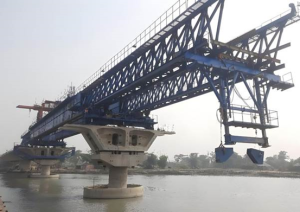
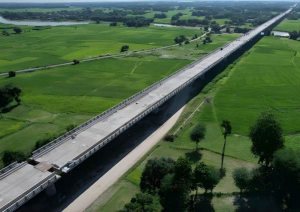
For decades, the people of Sahibganj (Jharkhand) and the surrounding districts have lived between two realities, one on their side of the Ganga, and the other just across it. The distance may be short in kilometres, but the struggle has been long: costly boat rides, missed appointments, families unable to reach hospitals on time, and traders paying extra because supplies arrived late. Now, as the new bridge linking NH-133B in Jharkhand with NH-131A in Bihar rises above the river, hope has taken the tangible shape of steel and concrete.
“For us, ₹100 for a boat is a big amount,” says Ramkesh, a local from Mahadev Ganj. He describes long waits, unpredictable steamers and the added strain of travelling to Manihari or Katihar. “We can’t travel at a time when we wish to. With this bridge, our river problem will finally end and once Katihar is easier to reach, many essentials will become affordable.”
Quick Facts:
- Length of the Project: 8 Km
- Total Project Cost: ₹1,977.66 Cr.
- Completion Date: Financial Year 2026-2027
By providing an all-weather, direct link between Jharkhand and Bihar, the bridge will speed up freight movement, especially mineral freight from Jharkhand’s resource-rich areas, making transport faster and more efficient. Reduced transit time will cut fuel and logistics costs, easing prices for consumers and helping local traders compete better.
“Sometimes even weddings could not be attended on time,” recalls Sushil, who remembers how the unavailability of a steamer could force travellers onto long, confusing detours. For him, the bridge stands for dignity and predictability. “We will save time and money. Life will be more peaceful.”
Emergency access is another life-changing promise. “In emergencies, the night becomes our enemy,” says Abdul, a shopkeeper. Ambulances stalled waiting for ferry service, and patients faced harrowing delays. With a permanent roadway, medical help will reach people faster. The bridge will also strengthen local resilience during floods by offering a dependable route when waterways surge.
Beyond personal relief, regional connectivity will be transformed. The bridge is expected to link Santhal Pargana ((Jharkhand) seamlessly to Bihar, West Bengal and the North-Eastern states, and to improve trade corridors toward Nepal, Bhutan and Bangladesh. For communities used to seasonal isolation, this means new markets, smoother cross-border trade and a stronger case for investment in the area.
“Trucks carrying stone, sand and other materials will save on diesel and time,” Abdul adds. “That will reduce costs here. People can work across districts and return the same day.”
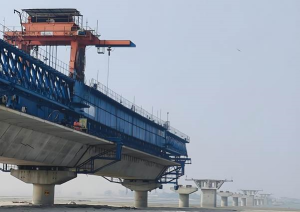
For the people standing on the riverbank today, watching cranes lift girders, the bridge already carries the weight of their hopes.
What was once a dividing current is becoming a road to opportunity. For Ramkesh, Sushil and Abdul, and for thousands across Sahibganj and beyond —the bridge is more than infrastructure: it is a promise fulfilled, a daily burden eased, and a future finally within closer reach.

Advertisement:



















Add Comment