





*Building a Future-Ready Network: Indian Railways’ 2025 Milestones Sets the Stage for 2026
*Innovation, Indigenisation, Track Renewals & Airport like Facilities at Redeveloped Stations Redefining Rail Travel in India
*Local Cuisine & Hygiene in Your Rail Travel Experience, Making It Memorable
*Track Renewal Ensures Faster, Safer & Comfortable Train Journeys
*Kavach, Use of AI in Safety & Alert Loco Pilots Help Bring Down Consequential Train Accidents to a Historic Low
*First Vande Bharat Sleeper All Set to Be Operational Soon; New Vande Bharat Express Trains to Enhance Passenger Mobility
*Comfortable Travel Expanded for the Common Man; 13 New Amrit Bharat Trains Introduced Nationwide in 2025, Taking the Total to 30
*Besides Regular Services, Railways Operated Over 43,000 Special Train Trips in 2025 to Handle Additional Rush; More Than 17,000 Train Trips for Maha Kumbh
*With Facilities like Upgraded Toilets, Lifts/Escalators, Food Courts, Modern Waiting Areas, 155 Fully Modernised Stations Offer a World-Class Experience to Rail Travellers; Rest 1182 Amrit Bharat Stations Being Modernised
*Strengthening All-Weather Regional Integration, Passenger & Freight Trains to Kashmir and Mizoram Serve the Economic Needs of People in Remote Areas
New Pamban Bridge Enhances Pilgrimage & Tourism, Strengthens Regional Connectivity & Opens Door to Future India–Sri Lanka Transport Links
*42 Projects Worth Over ₹25,000 Crore Dedicated to the Nation in 2025
*Indigenous Electric Locomotives Drive Aatmanirbhar Bharat Meeting Domestic as well as Global Demand
*High-Tech use Helps Rapid Work Progress on High-Speed Corridor
TTT NEWS NETWORK
NEW DELHI | 28 DECEMBER 2025
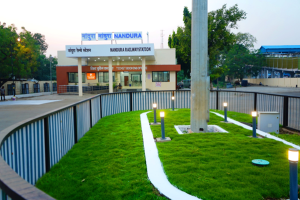
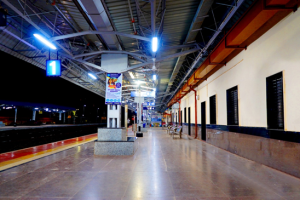
Focused Efforts, Innovation & Indigenisation is helping transform Indian Railways into a World Class Network. Keeping the common man at its focus, Railways made significant strides toward realising its vision of a world-class network this year. As curtains are set to fall on the year 2025, Indian Railways is set to bring in more & more comfort to your rail travel experience in the New year 2026 by making it truly memorable. After expanding the luxury of a comfortable travel to non-AC passengers through Amrit Bharat trains, Indian Railways is all set to soon operationalise first Vande Bharat Sleeper for AC class travellers. This long awaited public centric initiative will truly redefine the train travel for long distances, drastically cutting short travel time, first on busy routes and thereafter with time on all the routes. Redeveloped Stations across India are offering airport-like facilities to passengers like modern & wider entrances, upgraded toilets, escalators, lifts, food courts & state of the art waiting halls etc.
In a paradigm shift in its catering, Railways is introducing local cuisine taste in various trains. It will add taste & hygiene to our journey’s food experience. Besides the improved experience of passengers, Railways is aiming to become a top carrier in freight services also. Gati Shakti Cargo terminals, record number of wagon productions & running of more trains on our freight corridors is scripting the growth story of India, helping us become world’s second largest freight carrier leaving USA behind. We all can see upgraded stations, modern trains, and enhanced safety systems becoming part of our modern rail travel experience, be it improved passenger experience or an increased ease of doing business that traders, transporters, and industries are experiencing.
With a strong focus on modern infrastructure and connectivity, Indian Railways is driving national growth by delivering superior travel experiences, efficient freight services and modern technology. Prioritizing sustainability & fuelled by innovation, Railways is moving toward eco-friendly & green operations while boosting our country’s economic progress with infrastructure improvements at large scales & capacity addition. The efforts this year reflects Indian Railway’s ongoing commitment to create for its people, a world-class transport network that balances innovation with tradition while serving the needs of a rapidly growing country in its quest for being a Developed Nation. The Year 2025 laid a strong foundation in giving us safer, faster & comfortable rail travel. The New year is all set to offer comfortable sleeper journeys in “long distance travels” through Vande Bharat & Amrit Bharat trains, cutting short the journey time, as well as giving travellers the branded Food & beverage options at Railway Stations.
Faster, Safer & Comfortable Travel at Affordable Cost
Vande Bharat Train:
- As on 26th December, 2025, a total of 164 Vande Bharat train services are running across the Indian Railways network.
- During the Calendar year-2025, Indian Railways introduced 15 Vande Bharat express trains.
- Looking ahead, the upcoming Vande Bharat Sleeper is set to transform overnight travel. It will combine speed, comfort, and modern amenities for long-distance passengers.
Amrit Bharat Train:
- Amrit Bharat services, which are fully non-AC trains, presently comprising 12 Sleeper Class Coaches and 8 General Class coaches, are providing high quality services to the passengers.
- During the calendar year-2025, 13 Amrit Bharat Express trains have been introduced and are operational. A total of 30 Amrit Bharat train services are running across the Indian Railways network.
Namo Bharat Rapid Rail:
- Namo Bharat Rapid Rail Services are designed for high-frequency and regional connectivity, strengthening short and medium-distance mobility in high-demand corridors.
- 2 Namo Bharat Rapid Rail Services have been operational in the country between Bhuj – Ahmedabad and Jaynagar – Patna.
Special Train Services:
In 2025, Special Train operations were significantly scaled up to cater to seasonal rush, highlighting enhanced planning and a stronger focus on passenger comfort.
- Indian Railway operated a record number of over 43,000 special train tripsduring the year 2025.
- To cater to Festive and Summer rush 17,340 Special Train Trips for Maha Kumbh, 1,144 for Holi, 12,417 Summer Specials, and 12,383 for Chhath Puja were operated in 2025.
Besides, faster & comfortable trains and Modern Railway Stations, focused efforts are being made towards systematic track renewals, enhancement of sectional speeds, induction and upgradation of modern track machines, strengthening of bridges, elimination of level crossings to enhance safety, effective management & protection of railway land. The key achievements in these areas are outlined below.
Enhancing Rail Track Infrastructure
Commissioning of Tracks
Between 1 April and 30 November 2025, Indian Railways commissioned over 900 kilometres of new track lines. Besides laying the new tracks the focus is to renew the existing rail tracks to ensure safer, faster & comfortable travel. Accordingly for the year 2025, following total renewal works were done.
Track Renewal Works
(a) 6880 Track km rails have been renewed with new rails.
(b) Complete track renewal for 7051 track km has been done.
(c) Through Turnout Renewal of 9277 sets have been done.
During the period 2014–25, total 34,428 km of new track was laid across Indian Railways at an average of 8.57 km/day, which is more than twice the average daily commissioning (4.2 km/day) during the period 2009–14.
To support this infrastructure expansion and maintenance, Indian Railways is modernising its track machinery. One tamping machine (HOT-3X) has been upgraded to the high-output 3X-Dynamic (HOT-S-3X) machine, integrating three-sleeper ballast packing with track stabilization. This integration improves traffic block utilisation and reduces manpower requirements. Additionally, during 2025 (till November), 61 new track machines have been inducted, with plans for further upgrades to enhance track maintenance efficiency and reliability.
Raising of Sectional Speed
These modernisation efforts are complemented by raising of sectional speeds to improve train operations and passenger convenience. Sectional speed has been increased to 130 kmph over 599 track km, covering parts of the Golden Quadrilateral, Golden Diagonal, and other B routes. Further, speeds of 110 kmph have been achieved over 4,069 track km, combining infrastructure upgrades with advanced track machinery to ensure faster, safer, and more efficient train operations.
Electrification
Electrification of the railway network on Indian Railways (IR) has been taken up in mission mode. So far, about 99.2% of the Broad Gauge (BG) network has been electrified. Electrification in the remaining network has been taken up. This achievement is significantly higher than the electrification levels of the UK (39%), Russia (52%) and China (82%). A total of 14 Railway Zones and 25 States/Union Territories have now achieved 100% electrification.
Construction of ROBs/ RUBs
In 2025, Indian Railways completed construction of 1,161 ROBs and RUBs, improving safety and traffic flow. Sanctioning and execution of Road Over Bridges (ROBs) and Road Under Bridges (RUBs) is a continuous and ongoing process on Indian Railways. Over the past 11 years, the pace of construction has been significantly accelerated, with more than 13,600 bridges completed—over three times the 4,148 bridges constructed between 2004 and 2014.
In parallel, elimination of manned level crossings (MLCs) continues to enhance safety, with 268 MLCs removed during 2025-26 (till November). Railway bridge safety is further strengthened through rehabilitation efforts, with 1,799 bridges repaired or upgraded during the same period.
LHB Coach Manufacturing and Modernisation
In FY 2025-26 (up to November 2025), more than 4,224 LHB coaches were produced, 18% higher than the corresponding period last year. Between 2014-25, production increased 18-fold compared to 2004-14, ensuring safer, smoother and more comfortable journeys.
Indian Railways has made a major leap in modernisation by manufacturing over 42,600 LHB coaches in the last 11 years. LHB coaches are known for higher safety standards, lower maintenance costs and superior operational efficiency. Railways are further scaling production to meet future demand. Through indigenous production of LHB coaches, Indian Railways is strengthening the Atmanirbhar Bharat and Make in India initiatives.
Production details:
- ICF Chennai: 1,659 coaches
- MCF Raebareli: 1,234 coaches
- RCF Kapurthala: 1,331 coaches
Landmark Projects
Landmark projects were completed or inaugurated across the country, exemplifying this progress. Notably, India opened its first vertical-lift rail bridge at Pamban, bolstered Kashmir connectivity with all-weather rail links (including the world’s highest Chenab bridge), and extended rail access into the Northeast with the new Bairabi–Sairang line. At the same time, the railways expanded modern train services (Vande Bharat, Amrit Bharat, Namo Bharat) and aggressively redeveloped stations and freight corridors, underscoring its role in driving economic growth and sustainability.
All-Weather Rail Connectivity: USBRL and Kashmir Bridges
The Udhampur–Srinagar–Baramulla Rail Link (USBRL), a 272 km project through the Himalayas, was completed and dedicated in 2025. It comprises 36 major tunnels and 943 bridges, reflecting exceptional engineering in one of the most challenging terrains in the world. The project features iconic engineering landmarks, including the world’s highest railway arch bridge ‘Chenab Bridge’, a 1,315 m steel arch over the Chenab River (359 m high), India’s first cable-stayed railway bridge ‘Anji Bridge’(deck 331 m above the river) and India’s longest operational railway tunnel ‘T-50’. Together, these three landmarks enable an all-weather rail route into Kashmir, cutting travel times by hours. These bridges and tunnels – built with state-of-the-art safety and environmental measures – symbolise India’s ability to tame extreme terrain for seamless connectivity. The project strengthens connectivity across over 95 villages while ensuring reliable, all-weather transportation and driving growth in employment, tourism, education, and the regional economy.
North East Rail Link: Bairabi–Sairang Line
The 51 km Bairabi–Sairang broad-gauge line in Mizoram was inaugurated in September 2025, placing Aizawl on India’s rail map for the first time. Traversing rugged hills, the line includes 45 tunnels, 55 major bridges and 88 minor bridges. On inauguration day the Prime Minister also flagged off three new trains on this route – including the Sairang–Delhi Rajdhani Express – to link Mizoram directly with Delhi, Guwahati and Kolkata. This strategic project is expected to transform regional travel and trade, improving access to markets, education and healthcare for the Northeast.
Strategic Sea Link: New Pamban Bridge
The New Pamban Bridge, inaugurated on 6 April 2025, is India’s first vertical-lift railway sea bridge. The New Pamban Bridge, spanning a total length of 2.08 kilometres, connects Rameswaram to the Indian mainland. Spanning 2.08 km over the Palk Strait, it replaces the 110-year-old cantilever bridge, blending heritage with modern design. A 72.5 m central span can be lifted 17 m to let ships pass, and the deck is 3 m higher than the old bridge. Built with stainless-steel reinforcement, special anti-corrosion coatings and a design life of 100+ years, this bridge restores the vital rail link to Rameswaram and boosts regional connectivity. Its completion not only eases pilgrimage and tourism but even revives prospects of future India–Sri Lanka transport links across the Palk Strait.
Mumbai-Ahmedabad High Speed Rail (MAHSR) Project
Mumbai-Ahmedabad High Speed Rail (MAHSR) Project: Government of India has sanctioned 508 km Mumbai-Ahmedabad High Speed Rail (MAHSR) Project in December, 2015 which is under execution with technical and financial co-operation from Government of Japan. The progress of the MAHSR project for the period of 2025-26 is as under:-
- Physical Progress: Overall physical progress of 55.63% has been achieved as on 30th November 2025.
- Financial Progress: Overall financial progress of 69.62% with an expenditure of ₹ 85,801/- crore has been achieved as on 30th November 2025.
- Important Civil Engineering Parameters: Total 412 km of foundation, 405 km of Piers, 344 km of Girder Casting and 330 km of Girder launching completed till 30th November 2025.
Commissioning of Projects in 2025 (Till date)
FY 2025-26 saw policy approvals translating into assets on the ground. Hon’ble Prime Minister dedicated 42 projects to the Nation, inaugurated 13 projects and laid the foundation stone for 21 projects, collectively valued at over ₹25,000 crore.
During the current year, the following projects have been commissioned:
- Vijapur–Ambliyasan Gauge Conversion
- Domingarh–Gorakhpur–Gorakhpur Cantt.–Kusumhi – 3rd running line and Gorakhpur–Nakaha Jungle Doubling
- Bahraich–Nanpara–Nepal Ganj Gauge Conversion
- Provision of connectivity at Northern end of Karaikal Port to directly access PEM–KIK NL to improve mobility
- Bypass line at Peddapalli for connecting Kazipet–Ballarshah main line to Peddapalli–Karimnagar line
- Himmatnagar–Khedbrahma Gauge Conversion
- 3rd Line connectivity between Chhapra Jn. to Chhapra Kacheri (3.0 Km)
- Araria–Galgalia (Thakurganj) New Line
- Provision of laying of additional track at Somnath station (2.5 Km)
- Bhairabi–Sairang New Line
- Tori–Shivpoor 3rd Line
- Doubling of Churu–Ratangarh
- Deoband (Muzaffar Nagar)–Roorkee New Line
- Yamuna Bridge–Agra Fort – Double line with major bridge at Yamuna river
- Pune–Miraj–Londa Doubling
- Manmad–Jalgaon 3rd line
Safety
Indian Railways has achieved remarkable progress in safety performance. Consequential Train Accidents during the period 2004-14 was 1711 (average 171 per annum), which has declined to 31 in 2024-25 and further to 11 in 2025-26 (upto November, 2025). The safety budget has nearly tripled, rising from ₹39,463 crore in FY 2013-14 to ₹1,16,470 crore in the current financial year. Fog safety devices increased from 90 in 2014 to 25,939 in 2025. In the last four months alone, Centralised Electronic Interlocking and Track Circuiting have been completed at 21 stations.
Kavach is an indigenously developed Automatic Train Protection (ATP) system which assists the Loco Pilot in operating trains within prescribed speed limits by automatically applying brakes in case of human failure and also enables safe train operations during adverse and inclement weather conditions. In this direction, Kavach Version 4.0 has been commissioned over 738 route kilometres. Major enhancements in Kavach Version 4.0 include increased location accuracy, improved signal aspect information in large yards, station-to-station Kavach interface over Optical Fibre Cable (OFC) and direct interfacing with the existing Electronic Interlocking systems. With these technological upgrades, Kavach Version 4.0 is planned for large-scale deployment across the Indian Railways network.
Complementing these safety measures, Indian Railways is also strengthening surveillance infrastructure at stations and onboard trains. Installation of CCTV cameras at stations and in coaches is an ongoing process, and so far, CCTV surveillance systems have been provided at 1,731 stations and in 11,953 coaches to ensure a safe and secure journey for passengers. These CCTV surveillance systems are being installed under capital expenditure, reflecting Indian Railways’ sustained commitment to integrating safety, security and technology.
Enhanced Passenger Experience at Redeveloped Stations
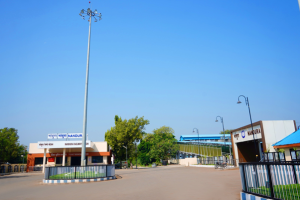
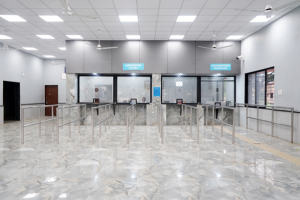
The Amrit Bharat Station Scheme has mobilized a massive rebuild of passenger stations. Under the scheme, Railway stations have been reimagined as city centres and not just as transit points. To date, 1,337 stations have been selected for overhaul under this program – one of the world’s largest station reconstruction initiatives. Redevelopment works (all done without halting rail traffic) are underway across the country, and as of Dec 2025, 155 stations have been fully modernized. Upgrades include expanded foot-over bridges and concourses, lifts/escalators, improved waiting halls, toilets and seating, multimodal integration (bus/taxi), local kiosks (‘One Station One Product’), digital signage and better amenities for disabled passengers. These enhanced stations improve passenger experience and reflect Railways’ focus on customer comfort and urban integration.
Solar-Powered Railway Stations
Indian Railways has taken a major step towards clean and sustainable energy by making 2,626 Railway stations solar-powered nationwide. A total of 898 MW of solar power has been commissioned, with approximately 70% utilised for traction purposes. This has strengthened energy security, reduced electricity expenditure, lowered carbon emissions, and promoted eco-friendly Rail operations.
Free Wi-Fi
Indian Railways provides free Wi-Fi services at 6,117 stations, prioritising passenger convenience.
RailOne App: One-Stop Solution for Passengers
Indian Railways has launched the RailOne App, a comprehensive one-stop solution for passenger services, available on Android and iOS platforms.
Key features include:
- Unreserved UTS ticketing (3% discount via R-Wallet)
- Live train tracking
- Grievance redressal
- E-catering
- Porter booking
- Last-mile taxi services
Aadhaar-Authenticated Reservation Reforms
Aadhaar verification of users is an important step which has been taken to make the system more robust. To prioritise genuine passengers, only Aadhaar-authenticated users are permitted to book general reserved tickets during the first 15 minutes of reservation opening on the IRCTC website or app. Only Aadhaar-verified users are allowed to book Tatkal tickets. Cutting-edge technology is also being used to identify and prevent unscrupulous users trying to misuse the e-ticketing system. As a result, 5.73 crore suspicious and inactive users registered with IRCTC have been deactivated or temporarily suspended. Continuous efforts are on to deactivate more suspicious users.
Major RPF Operations and Achievements
To provide security & facilitation to Railway passengers, the following initiatives have been undertaken by RPF to boost the confidence & sense of security to its passengers:
- I. Continuous assistance to passengers by RPF:
| Year | No. of complaints attended on Twitter | No. of complaints attended on Helpline No. 182/139 | Total |
| 2025 (upto Nov.) | 54648 | 321557 | 376205 |
ii. Focused issue based operations
i. Operation Nanhe Faristey & Rescue of children:
| Details of children in need of care and protection rescued by RPF | |
| Year | No. of children rescued by RPF |
| 2025 (upto Nov.) | 17231 |
i. Operation “Jeevan Raksha”:
| Year | Saving life on railways | ||
| Male | Female | Total | |
| 2025 (upto Nov.) | 1894 | 974 | 2868 |
iii. Operation Amanat & Luggage Retrieval:
| Year | No. of cases of retrieval of left behind luggage of passengers and its return | Value of recovered property (in Rs.) |
| 2025 (upto Nov.) | 53607 | 79,85,11,140 |
iv. Operation “Matrishakti”:
| Year | No. of cases attended and assistance provided in child birth | ||
| In Train | In railway premises | Total | |
| 2025 (upto Nov.) | 198 | 105 | 303 |
v. Mahila Suraksha:
Action taken against unauthorized passengers entering into carriage or other place reserved for females.
| Year | No. of cases registered | No. of persons arrested |
| 2025 (upto Nov.) | 107606 | 110940 |
vi. Operation “Upalabdh” & Action against touts:
| Year | No. of cases registered | No. of persons arrested | No. of Future journey ticket seized | Value of Future journey ticket seized | No. of IRCTC user IDs blocked |
| 2025 (upto Nov.) | 2449 | 2690 | 7974 | 1,98,92,275 | 8905 |
vii. Operation “SEWA”:
| Year | No. of persons (Elderly/ Women/ Divyangjan/ Sick/ Injured/ Infants) to whom RPF assisted during their travel in boarding & de-boarding and availing/providing other amenities i.e. Wheel Chairs, Stretcher, medical help, providing ambulance, medicine, infant food etc. |
| 2025 (upto Nov.) | 10146 |
viii. Operation AAHT & Human Trafficking:
| Year | No. of Trafficked Persons rescued by RPF | No. of traffickers arrested by RPF | ||||
| Juvenile | Adult | Total | ||||
| Boys | Girls | Male | Female | |||
| 2025 (upto Nov.) | 783 | 88 | 14 | 93 | 978 | 292 |
ix. Operation “NARCOS”:
| Year | No. of cases detected | Value of NDPS recovered | No. of persons arrested |
| 2025 (upto Nov.) | 1980 | 2,08,52,03,671 | 1601 |
x. Operation “WILEP”:
| Year | No. of cases detected | No. of persons arrested
| |
| Fauna | Flora | ||
| 2025 (upto Nov.) | 43 | 19 | 44 |
xi. Operation “Satark”:
| Year | Tobacco Product | Liquor Product | ||||
| Cases detected | Value | Persons arrested | Cases detected | Value | Persons arrested | |
| 2025 (upto Nov.) | 140 | 8,25,05,340 | 97 | 4044 | 6,01,64,423 | 3356 |
Economic Corridors
Indian Railways is undertaking a series of transformative infrastructure initiatives to enhance capacity, efficiency, and sustainability across the rail network. Key focus areas include the commissioning of dedicated freight corridors to decongest the conventional network, and promotion of Public-Private Partnership (PPP) models to supplement public investment. The following sections outline the progress and status of these major initiatives.
Three Major Economic Corridors
434 projects have been identified under 03 Economic corridors with cost outlay of Rs. 11.17 lakh crore.
Energy, Mineral & Cement corridor: 192 projects
High traffic density routes: 200 projects
Port connectivity: 42 projects
All 434 projects have been mapped on the PM GatiShakti portal. Out of which presently 121 projects covering track length 12,133 Km and costing Rs. 2,02,551 Cr. have been sanctioned, and 162 projects with track length of 16,910 Km and estimated cost of Rs. 3,30,545 crore are under different stages of appraisal/inter-ministerial consultation.
The corridor-based program is intended to improve logistic efficiency and reduce logistic cost.
Dedicated Freight Corridors (DFC’s) Project:
Dedicated Freight Corridor is a mega railway infrastructure project. Two Dedicated Freight Corridors (DFC) viz. Eastern Dedicated Freight Corridor (EDFC) from Ludhiana to Sonnagar (1337 Km) and the Western Dedicated Freight Corridor (WDFC) from Jawaharlal Nehru Port Terminal (JNPT) to Dadri (1506 Km) have been commissioned and operationalized (except 102 km Vaitarna-JNPT Mumbai section which is under progress).
DFC has contributed to creating additional paths on the conventional network by diverting freight traffic to EDFC and WDFC. In Nov. 2025, 403 average trains per day were run. As a result, Railways have been able to run additional goods and coaching services over its network with better punctuality.
Train operations are going on in commissioned sections as follows :-
| Corridor | No. of Trains run | NTKM (Millions) | GTKM (Millions) | |||
| Oct’25 | Cumulative (FY 25-26) | Oct’25 | Cumulative (FY 25-26) | Oct’25 | Cumulative (FY 25-26) | |
| EDFC | 5960 | 44,094 | 5,363 | 41,974 | 9,855 | 75,262 |
| WDFC | 5979 | 38,624 | 3,260 | 22,138 | 6,217 | 40,480 |
| Total | 11,939 | 82,718 | 8,623 | 64,111 | 16,072 | 1,15,743 |
The momentum generated by record freight performance and targeted policy interventions during the year has translated into tangible on-ground logistics outcomes across regions. In FY 2025–26, Indian Railways achieved the historic milestone of 1 billion tonnes of freight loading, with daily loading touching 4.4 million tonnes, driven by robust demand from coal, iron ore, cement, and container traffic.
This growth has been supported by structural reforms and capacity augmentation, including the introduction of a simplified flat-rate tariff of ₹0.90 per tonne per kilometre for bulk cement transportation, which has improved cost predictability and encouraged modal shift to rail. Simultaneously, the commissioning of 25 Gati Shakti Cargo Terminals during the current year has strengthened first- and last-mile connectivity, enhanced terminal efficiency, and reduced transit time for freight movement.
Wagon Production:
To increase freight earnings by maximizing induction of new wagons in Indian Railways, wagon manufacturing was scaled up during the last three years on account of the target of 3000 MT loading by 2029-30. In light of this, production of wagons was reinforced, which led to wagon production of 3651, 3880, 4135 in Jan, Feb, March 2025 respectively resulting in the maximum production of wagons i.e. 41,929 in FY 2024-25 (highest among the last 3 years).
During the current calendar year, Jan ’25 to Nov 25 wagon production is 33,703 nos. seeing continuous improvement in wagon supply.
Together, these developments have enabled Indian Railways to not only handle higher freight volumes efficiently, but also to undertake region-specific, first-of-their-kind freight operations, particularly in remote and strategically important areas. The following examples highlight how enhanced freight capacity, tariff rationalisation, and infrastructure expansion have been leveraged to deliver critical logistics solutions during the year.
First Foodgrain Freight Train to Anantnag
In a historic first for the Kashmir Valley, a foodgrain freight train reached the Anantnag Goods Terminal. The train was dispatched from Ajit Wal Railway Station, Punjab, carrying approximately 1,384 tonnes of foodgrains, marking the first bulk rail-based foodgrain supply to Anantnag Railway Station, Jammu & Kashmir.
This development formally integrates the Valley with the national freight rail network, strengthening food supply systems, reducing transportation time and cost, and significantly enhancing regional logistics capacity.
Cement Transportation in the Northeast through Rail
Freight operations on the Bairabi–Sairang line began soon after its inauguration. The first freight movement on 14 September 2025 carried 21 cement wagons from Assam to Aizawl. Since then, the route has transported essential goods such as cement, construction materials, automobiles, sand, and stone chips, supporting infrastructure development and market access in the region.
Supply of Cars to Mizoram by Rail
For the first time, cars have been supplied to Mizoram by rail, marking a historic logistics achievement. An automobile rake carrying 119 Maruti cars from Changsari (near Guwahati) reached Sairang Railway Station near Aizawl.
This development is expected to increase vehicle availability in Aizawl and surrounding areas, reduce dependence on long-distance road transport, and benefit dealers, service providers, and consumers.
Integrated Logistics Hubs and New Freight Services
Indian Railways has also launched new door-to-door freight and parcel services to strengthen integrated logistics, including:
- Assured transit container rail service between Delhi and Kolkata
- Door-to-door parcel service on the Mumbai–Kolkata route
PPP in Indian Railways:
In a rapidly expanding economy, to meet both economic and environmental goals, the role of Railways is important. In the last few years, increased funding through GBS (Gross Budgetary Support) is provided to expand the network. This alone is not sufficient to match the pace of economic expansion. Both Government and Private Sector Investment is required. PPP Projects in Railways are currently executed under 2012 PPP Policy. So far, 18 projects of ₹ 16,686 crore have been completed through PPP model. 7 projects of ₹ 16,362 crore are under implementation including coal connectivity and port connectivity projects. To make this policy attractive the restructuring & revisions of PPP models are underway.
PPP-Led Locomotive Manufacturing under the Make in India Programme
Between 1 January and 30 November 2025, Indian Railways produced 1,542 electric locomotives. To strengthen self-reliance in locomotive manufacturing and enhance haulage capacity, Indian Railways has adopted advanced public-private partnership models for setting up state-of-the-art locomotive manufacturing units in the country. These initiatives support the ‘Make in India’ programme, promote indigenous supply chains, and ensure long-term maintenance reliability. The status of major locomotive manufacturing projects is outlined below.
Madhepura Electric Locomotive Factory
Indian Railways has supplied 576 high-power 12,000 HP electric locomotives from the Madhepura factory in Bihar under a PPP model, including 76 locomotives delivered during April–November 2025. Set up in partnership with Alstom Transport India Limited, the facility is manufacturing 800 locomotives over 11 years, with over 90% indigenous sourcing, strengthening Make in India and boosting freight haulage capacity.
Marhowra Diesel Locomotive Factory
The Marhowra diesel locomotive factory in Bihar has delivered 773 locomotives (569 of 4,500 HP and 204 of 6,000 HP) so far under a PPP arrangement with Wabtec Locomotive Private Limited, including 73 units supplied in FY 2025–26 (up to November). Around 65% of components are sourced within India. In a major export milestone, the factory has secured USD 400 million in export orders for 150 locomotives to Guinea, Africa, with 14 locomotives already dispatched, marking India’s growing presence in the global rail market.
Dahod Electric Freight Locomotive Facility
The Dahod locomotive manufacturing facility in Gujarat, set up with Siemens Limited, will produce 1,200 electric freight locomotives of 9,000 HP under a long-term manufacturing and maintenance agreement. The facility, dedicated to the nation in May 2025, has completed RDSO trials and statutory safety inspections, paving the way for the large-scale induction of high-power electric locomotives with around 90% indigenous components. Prime Minister Shri Narendra Modi flagged off the first new D9 series 9,000-HP electric locomotive from the facility this year.
AI & Tech led Signalling & Telecom
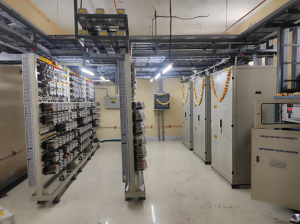
Indian Railways is also leveraging advanced telecom and digital technologies to enhance operational safety, improve communication reliability, and strengthen passenger information systems. Key initiatives in this domain include AI-enabled intrusion detection, network-wide video surveillance, digital radio communication, optical fiber expansion, and modern passenger guidance systems. The major developments are outlined below.
- Intrusion Detection System: Indian Railways has developed an AI enabled solution based on Distributed Acoustic Sensing (DAS) technology for detecting the presence of elephants and other wild animals on railway tracks in identified corridor locations. The system provides advance alerts regarding the movement of such animals, enabling timely preventive action and transmission of warnings to loco pilots, station masters and control rooms thereby reducing the risk of accidents. Presently, the system is operational across 141 Rkm in Northeast Frontier Railway.
- Video Surveillance System: Indian Railways has commissioned Video Surveillance System (VSS) at 1731 railway stations across the railway network. The system is equipped with AI based Video Analytics (VA) for automated event detection (such as intrusion detection, loitering detection) and Facial Recognition Software (FRS) for real-time identification and monitoring.
- Use of Digital VHF sets over Indian Railways: Communication between Loco pilot and Guard is very critical from a safety point of view. This communication needs to be reliable with clarity in speech. In order to harness the advantages offered by Digital technology based VHF sets, the Railway Board has approved that only Digital 5W Walkie-Talkie sets shall be procured over Indian Railways.
- Tunnel Communication System: The project for provision of Tunnel Communication has been taken up in various Railways including the USBRL project for the uninterrupted radio communication from inside the tunnel to headquarters and operation control centers.
- Optical Fiber Cable (OFC): Indian Railways have provided 619 Rkms of Optical Fiber Cable till Oct’2025. Thereby, reaching a cumulative total of approx. 67233 RKms of IR network.
- Coach Guidance System: Coach Guidance System (CGS) displays the coach position of a scheduled train on a platform. The system considerably enhances passenger convenience by helping them quickly and easily locate their coaches. So far, Coach Guidance Systems have been provided at 1064 stations.
- Train Indication Board: The Train Indication Board displays Arrivals/Departures of trains indicating train number, name, time of arrival/departure and platform number. So far, Train Indication Boards have been provided at 1449 stations.
Recruitment
Occurrence and filling up of vacancies are continuous processes on Indian Railways considering its size, spatial distribution and criticality of operation. Adequate and suitable manpower is provided to cater to the regular operations, changes in technology, mechanisations and innovative practices. The vacancies are filled up primarily by placement of indents by Railways with Recruitment agencies as per operational and technological requirements. As per Annual Calendar 2024 and 2025, recruitment of 1,20,579 vacancies has been taken up on Indian Railways including Zonal Railways and Production Units.
Recruitment in the Railway Protection Force (RPF) has been progressing steadily, with the recruitment process for 452 posts of Sub-Inspectors (Executive) having been completed, while recruitment for 4,208 posts of Constables is currently underway.
Sports
Indian Railways has long played a pivotal role in nurturing India’s sporting talent, with its sportspersons bringing laurels to the nation across disciplines. As a mark of recognition and reward for their outstanding achievements, it has, during the year, granted out-of-turn promotions to Pratika Rawal, Sneh Rana and Renuka Singh Thakur to the Group ‘B’ officer-grade post of Officer on Special Duty (Sports). The promotions were awarded for their exceptional performances in India’s victorious ICC Women’s World Cup 2025 campaign.
A Year of Transformation, A Future of Assurance: Indian Railways’ Message for 2026
As 2025 comes to a close, Indian Railways extends warm New Year wishes to the people of the nation and reflects with pride on a year of steady progress and purposeful transformation. Significant strides in station redevelopment, strengthened safety systems, wider adoption of digital and sustainable technologies, and continued enhancement of freight corridors have reinforced Indian Railways as a key driver of national growth. These efforts have laid a strong foundation for a future-ready rail network that is faster, safer, greener, and more inclusive.
Welcoming 2026 with renewed confidence and commitment, Indian Railways reaffirms its promise to the nation to deliver rail services with full sincerity and dedication. With a clear vision and continued investment, Indian Railways remains committed to connecting people, empowering regions, strengthening infrastructure, enhancing safety, advancing technology, and improving the overall passenger experience, while driving the nation forward with reliability and excellence.

Advertisement:











Add Comment