





BY INDER RAJ AHLUWALIA
( THE WRITER IS AN INTERNATIONALLY RENOWNED , MULTIPLE AWARD – WINNING TRAVEL JOURNALIST AND AUTHOR)
NEW DELHI | 3 JANUARY 2026
It’s almost a case of ‘too much, too easily…’
The train ride from Zurich to Lucerne takes less than an hour and the scenery leaves little one rather impressed, with low mountains and sparkling lakes providing a scenic backdrop.
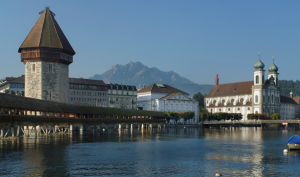
Out of the station, onto the street, and you’re actually smack in the centre of the famous town which unfolds itself as a centre of bridges and towers, its major claim to universal appeal.
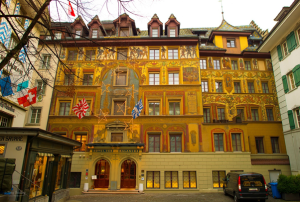
Known as the ‘city of lights’, not because of any singular inspiration but because of a miracle of light that allegedly happened here, Lucerne can grab your fancy almost immediately. An old legend has it that an angel showed the town’s first settlers with a light, the spot where they should build a chapel in honour of St. Nikolaus, patron saint of sailors and fishermen.

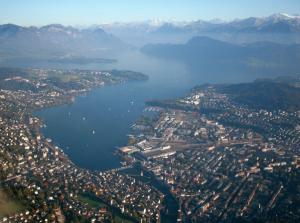
Lucerne was a small fishing village in the Middle Ages, teasingly called “little wooden stork’s nest”. However, it went on to develop into a booming trade centre over the centuries, and attaining international fame because of its its uniquely beautiful location. Nestled between gentle hillsides, the city hugs the edge of a lake, and unfolds an incredible panorama that begins here and stretches from Mount Rigi to Mount Pilatus, and sets dramatically different moods depending on the weather, season, or time of day.
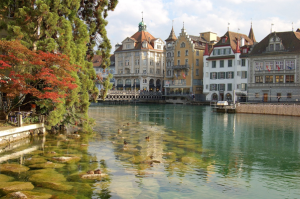
Glorified by composers and poets, it is today a major tourist centre, with worldwide visitors flocking here to see the famous towers and bridges, and ensuring that tourism remains the region’s largest industry. Lucerne is Switzerland’s eighth largest city and the capital of Central Switzerland owing to its size, location, and economic potential.
The tourist’s starting point is always the two medieval covered bridges that connect the old and new parts of town, and are the local points. The famous Chapel Bridge bends at an angle over the Reuss, and is named after St. Peter’s chapel, and was built shortly after the Water Tower (1300). The sturdy octagonal tower here, Lucerne’s landmark, served several functions as an archive, a place to store captured loot, treasury, jail, and torture chamber. The well-known Mill Bridge was built below the city’s mills connecting the two lower ends of town. Both bridges were given a facelift and adorned with triangular paintings, sometime in the 17th Century.
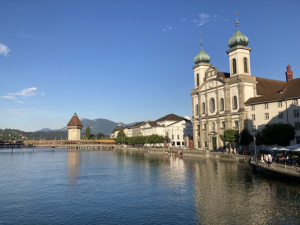
The so-called Musegg Wall, preserved in its near original state, is another local landmark. Today, everyone walks along the walls and soaks in the local ambience. The other famous city symbol is the Lion Monument. The Dying Lion is among Europe’s most famous monuments, hewn out of natural rock in commemoration of the heroic death of the Swiss mercenaries at the Tulleries in 1792. Mark Twain described the lion as “the saddest and most poignant piece of rock in the world”, and at dusk, it appears exactly so.
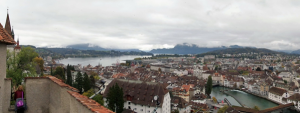
Always worth the effort, is strolling by the Town Hall, an impressive renaissance building with impressive masonry and roofing. If you’re around on Tuesdays and Saturdays you can mingle with the market day crowds under picturesque arcades.

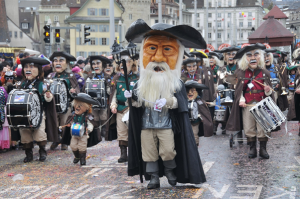
A winter burst of gaiety comes at carnival time, when locals mingle with musicians dressed in weird costumes, haunting the Old Town, producing ear-splitting sounds from kettles, trumpets and drums. Twice yearly, the city hosts the ‘International Festival of Music’ which attracts visitors from the world over, engendering an unusually crowded look. Towers and bridges apart, Lucerne has another bonus, a special attraction, the ‘new stage’, if you like. It’s become a popular venue for foreigners to marry, especially Japanese couples who flock here to tie the knot in a special atmosphere far removed from the one back home. The city has a chapel that has been performing wedding ceremonies in proper fashion. Through the year, you might glimpse Japanese couples in wedding finery, going through the nuptials in this picturesque city. Not surprisingly, the wedding business has become a big-time contributor for the city’s exchequer.
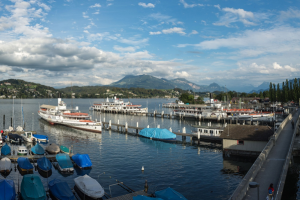
This is a town for walking, or cycling, with lots of ice creams and coffees around, happily consumed at little cafes. With the setting sun etched across the lake, the local physical contours are shown to good effect, with spires, towers, and bridges casting a haunting, soulful shadow across the water. You rub shoulders with thousands of tourists strolling along the water, taking boat rides, or just sitting and watching the gentle milieu around. On offer, year-round, is a smart package of sights and sounds within reach, within an assortment of budgets and without any unnecessary frills.
The fact that, in a country with so many famous resorts, Lucerne manages to hold its own, and occasionally scores a few points over others, clearly defines it’s class and status.
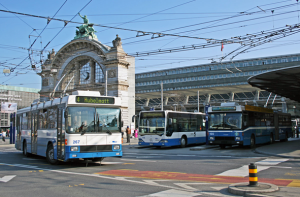
Less traffic, less noise, more comfort, more attractions! That just about sums up the story of this famous town that never had to work too hard for its fame.
Travel Facts
Lucerne is an hour’s train ride, and 90 minutes drive from Zurich.
The town has an elaborate accommodation infrastructure comprised of deluxe and standard hotels.
Eating out is easy and delightful, with hundreds of cafes and restaurants.
Almost all local attractions can be seen by walking around.

Advertisement:















Add Comment