


ANCHOR NEWS: KERALA LITERATURE FESTIVAL 2026 CONCLUDES AS A GRAND CONFLUENCE OF IDEAS, IMAGINATION AND GLOBAL VOICES
TTT NEWS NETWORK
KOZHIKODE | 31 JANUARY 2026
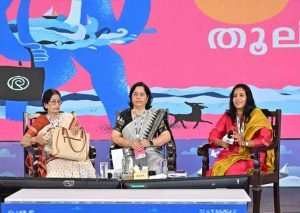
The ninth edition of the Kerala Literature Festival (KLF) concluded on a spectacular and memorable note on the beaches of Kozhikode, reaffirming its stature as Asia’s largest and one of the world’s most vibrant literary and cultural gatherings. Held from January 22 to 25, 2026, the festival transformed Kozhikode’s iconic seafront into a major public forum for ideas, drawing over 700,000 attendees across four days. With more than 586 speakers from 18 countries participating in over 350 sessions, KLF once again demonstrated how literature, culture, and public dialogue continue to shape not only minds, but cities and societies.
KLF 2026 was inaugurated by NASA astronaut Sunita Williams and Kerala Tourism Minister Shri Mohammed Riyas. The ceremony was attended by prominent public figures from diverse fields, including film actor and survivor Bhavana. With Germany as the Guest Nation, this year’s edition stood out for its international breadth, intellectual ambition, and carefully curated engagement with literature, history, science, politics, cinema, philosophy, and the arts.
A defining and historic highlight of KLF 2026 was the presence of Sunita Williams, whose participation marked a landmark moment in the festival’s journey and created some of the most unforgettable chapters in its history. Greeted with an emotional standing ovation, Williams drew massive audiences across multiple sessions, including “Dreams Reach Orbit: Meet the Astronaut Who Touched the Sky” and special interactions with children.
Speaking with warmth, humour, and purpose she reflected on her journeys in space, the courage and mental resilience required during long missions, and the profound sense of unity one feels when viewing Earth from orbit. She spoke about how borders disappear from space, how the planet appears fragile and shared, and how this perspective reshapes one’s understanding of humanity. In deeply personal moments, she spoke of missing simple earthly experiences – rain, wind, the presence of loved ones – and the emotional discipline required to live and work in extreme isolation. Her sessions, which also touched upon curiosity, imagination, leadership and the harmony between science and spirituality, became some of the most attended and talked-about moments of KLF 2026, inspiring students, young people and audiences across generations.
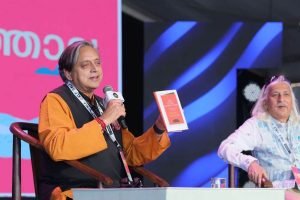
Another major intellectual presence at the festival was Dr. Shashi Tharoor, whose sessions drew packed halls and sustained public engagement. In his conversation on the Indian Constitution, Tharoor described it as a living document, reflecting on its moral vision, adaptability, and relevance in contemporary India. In another widely discussed session on Sree Narayana Guru, moderated by festival director K. Satchidanandan, he spoke of the reformer as an epoch-maker who united spirituality with social transformation, offering insights into Kerala’s social history and the continuing relevance of Guru’s ideas. His sessions reaffirmed KLF’s role as a space for serious, accessible, and democratic public discourse.
KLF 2026 brought together an extraordinary gathering of global thinkers, writers, artists, and public intellectuals. Nobel laureate Abdulrazak Gurnah offered reflections on post-colonial identity, migration, and the enduring violence of history in everyday life, while Nobel laureate Abhijit Banerjee brought together economics and food, using questions of cooking and care to reflect on contemporary economic concerns. Booker Prize–winning novelist Salman Rushdie joined the festival online for a conversation with Manasi Subramaniam on his writing life, his relationship with language and India, and the power of storytelling. Eminent historian Romila Thapar urged audiences to resist the fragmentation of history and called for rigorous, evidence-based engagement with the past. Booker Prize–winning novelist Kiran Desai spoke on contemporary life, identity, and solitude, while Pratibha Ray addressed literature’s role in questioning social hierarchies and giving voice to the marginalised. Scholar and writer Martin Goodman added further intellectual depth with perspectives that bridged history, culture, and literary traditions.
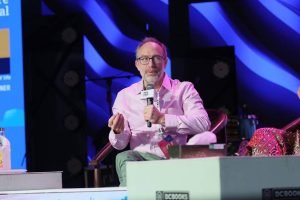
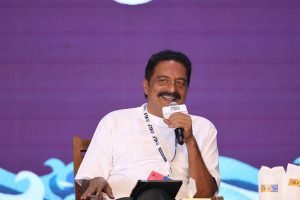
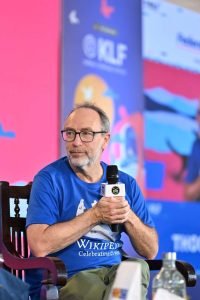
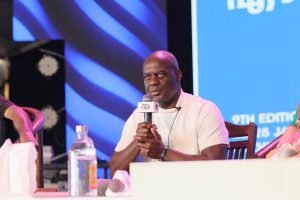
Among other widely attended sessions, Olympian Ben Johnson delivered a personal account of life beyond sport, speaking about identity, public judgement, and survival. Jimmy Wales, marking 25 years of Wikipedia, reflected on trust, truth, and the future of knowledge in an increasingly polarised digital world. Japanese author Satoshi Yagisawa spoke on remaining true to creative impulses rather than following trends, while essayist Pico Iyer offered a contemplative session on silence and the inner life. Actor and cultural commentator Prakash Raj engaged audiences in conversations on cinema, politics, and dissent.
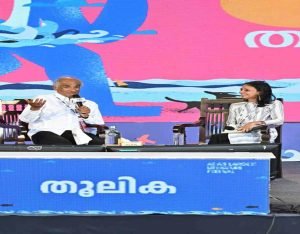
With nearly 350 sessions overall, KLF 2026 was marked by a distinct balance: approximately half the sessions were conducted in English, while the remaining took place in other vernacular languages. The result was not a single festival with translated margins, but two festivals of comparable depth and scale – one global and one regional – coexisting and intersecting throughout the four days.
As Guest Nation, Germany presented a richly curated cultural and literary programme in partnership with the Goethe-Institut, featuring contemporary German writers, artists and thinkers. The German Pavilion emerged as one of the festival’s most vibrant cultural hubs – hosting conversations, performances, workshops and culinary experiences, while a special light installation at the beachfront symbolised the spirit of international collaboration and shared artistic values.
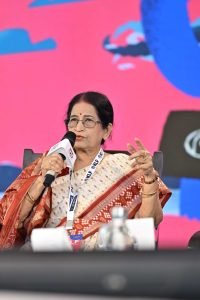
Beyond its cultural and intellectual significance, KLF 2026 once again underlined its role as a major driver of tourism and the local economy. With an estimated economic impact of over ₹130 crore, the festival generated widespread benefits for hotels, homestays, transport services, restaurants, artisans and local businesses, further strengthening Kozhikode’s identity as a global destination for ideas and culture and reinforcing its status as India’s first UNESCO City of Literature.
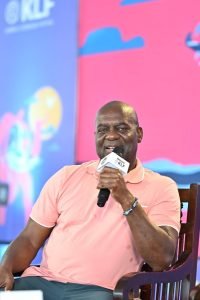
Speaking about the festival, Ravi Deecee, Chief Facilitator, Kerala Literature Festival, said, “Each edition of KLF is an attempt to create a space where ideas can move freely across borders and disciplines. KLF 2026 has shown how a literature-led movement can bring together science, culture, history, politics and imagination, while also creating real impact for the city and the state.”
Organised by the DC Kizhakemuri Foundation and DC Books, the Kerala Literature Festival continues to play a pivotal role in shaping Kerala’s contemporary cultural and literary ecosystem and has been widely acknowledged as a key catalyst behind UNESCO declaring Kozhikode as India’s first City of Literature.
As the sun set on another edition at Kozhikode’s shores, KLF 2026 left behind not only memories of packed halls and engaged audiences, but a renewed faith in the power of stories, ideas, and dialogue to shape a more thoughtful, imaginative and humane world.

Advertisement:









Add Comment