







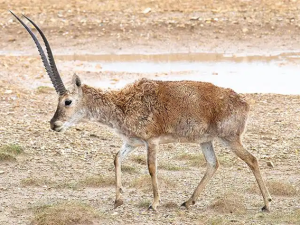
(First Wildlife Offence Prosecuted through CBI, highlighting Seamless Inter-agency Coordination)
TTT NEWS NETWORK
NEW DELHI | 15 APRIL 2026
In a landmark ruling for wildlife law enforcement in India, a New Delhi court has convicted a Jaipur art gallery owner for attempting to illegally export Shahtoosh shawls – made from the hair of the critically endangered Tibetan Antelope (Pantholops hodgsonii) – in violation of the Wildlife Protection Act, 1972.
The Chief Judicial Magistrate at Rouse Avenue District Courts delivered the judgement against Syed Shahid Ahmed Kashani, proprietor of M/s Indian Art Gallery, Jaipur, on March 12, 2026, bringing to a close a case first detected in December 2008.
The Tibetan Antelope, locally known as Chiru, is listed in Schedule I of the Wildlife (Protection) Act, 1972, and its trade is strictly prohibited under domestic law. The Shahtoosh shawl trade has also been banned globally since 1975 under CITES, to which India is a signatory.
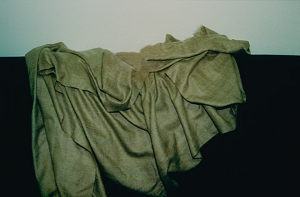
What makes this case unique is the sustained coordination between four agencies – Wildlife Crime Control Bureau (WCCB), Central Bureau of Investigation (CBI), Customs, and Wildlife Institute of India (WII) – for nearly 17 years. WCCB identified the presence of 1,290 Shahtoosh shawls in an export consignment at Indira Gandhi International Airport, New Delhi, and filed a complaint with the CBI’s EOU-V Branch, New Delhi, in February 2009 – the first time a wildlife offence has been prosecuted through the CBI.
Since a No Objection Certificate from wildlife authorities is required for Pashmina shawl exports, Inspector Aarti Singh of the Wildlife Crime Control Bureau (WCCB), Northern Region, examined the consignment and identified shawls suspected to contain Shahtoosh fibre. Forensic examination by the Wildlife Institute of India (WII), Dehradun, confirmed Tibetan Antelope hair in 41 shawls – 5 in the first round and 36 more in further testing.
The complainant was Shri Ramesh Kumar Pandey, then Regional Deputy Director (Northern Region), WCCB, who formally initiated the CBI complaint and coordinated the referral of forensic samples to WII. Shri Pandey, currently serving as ADG Wildlife and Director (Ex-Officio), WCCB, remained associated throughout.
The Customs Department kept the shawls safe and managed the evidence chain. WII’s Wildlife Forensic Cell gave strong scientific evidence with reports on seized shawls, identifying the presence of hairs from Tibetan Antelope. The then Inspector Sh. Sanjay Dubey of CBI was the Investigating Officer, handling everything from collecting evidence to court arguments. Inspector Aarti Singh of WCCB played an important role in spotting and seizing at site. Dr. S.P. Goyal, Scientist at WII, gave expert witness that stood up to questioning in court.
The accused had stated that he bought only machine-made Pashmina from a Delhi seller and that he was not involved in any wrongdoing. His lawyers questioned the field examination, tests, and evidence handling. But the court turned down all points, upheld WII reports, and that the behaviour of the accused did not match innocent claims. The accused was sentenced to 3 years of simple imprisonment and Rs. 50,000 fine under Section 49B(1)/51(1A), plus additional 2 years each concurrently under Sections 40 and 49. Seized shawls will become government property.
The case is among the earliest instances of a Shahtoosh smuggling offence being investigated by the CBI at the instance of WCCB. It highlights that the enforcement of wildlife law in India needs a coordinated approach of detection, investigation, forensics, and prosecution with ability to sustain the proceedings for over a decade.

Advertisement:















Add Comment