







BY PRASHANT KUMAR MISHRA
( Ex. General Manager, Modern Coach Factory, Raebareli & Rail Coach Factory, Kapurthala)
NOIDA | 17 JUNE 2026
One of the occupational hazards of spending four decades in the railways is that one never quite stops being a railwayman. Wherever railwaymen travel, they find themselves unconsciously gravitating towards stations, locomotives, bridges, workshops, and railway tracks disappearing into the distance and for mechanical engineers rolling stocks act like magnets silently spinning their web of attraction, what physicists call lines of force.
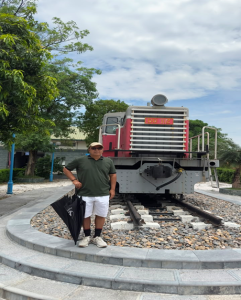
I experienced this once again during my recent visit to Ninh Binh in Vietnam.
Outside the railway station stands a preserved diesel locomotive bearing the number DD 112. To most visitors, it is simply a relic from another age, to me, however, it immediately opened a door to memories stretching back many decades of WDS4B, the shunting locomotives of ER.
I had maintained these locomotives during my years at Jamalpur. Although DD 112 is not identical, there was something about its compact dimensions, rugged construction and unmistakably utilitarian appearance that felt familiar. It belonged to the same breed of hardworking locomotives that rarely found their way into publicity brochures but without which railway operations would have come to a standstill. These work horses ensured that all passenger and mail express trains could start right time from their terminals.
These locomotives were the unsung workhorses of the Indian railway system. They spent their lives shunting wagons, marshalling trains, positioning coaches and performing the innumerable tasks that kept yards functioning day and night. They neither hauled prestigious expresses nor attracted the admiration reserved for powerful main-line locomotives, yet their contribution to railway operations was immense.
Looking at DD 112, I realised that I had been fortunate enough to witness the complete lifecycle of that generation of locomotives. I had seen the WDS4Bs during their years of active service, witnessed their gradual replacement by the more powerful and modern WDS6 locomotives in 1999-2000, and observed the final stage that rarely receives attention in railway histories : the scrapping of locomotives and disposal of huge inventory of spare parts. It was the end of a technological era.
Every locomotive leaves behind more than machinery. It leaves behind a culture of maintenance, a body of accumulated knowledge, and generations of railwaymen who understood its strengths, weaknesses and peculiarities. The retirement of a locomotive class is therefore not merely the withdrawal of equipment; it is also the gradual disappearance of an entire ecosystem of skills and experience.
Standing before DD 112 in Ninh Binh, I found myself wondering about the railwaymen who had maintained it during its working life. Luckily these shunting locomotives are still in use there as i saw them placing goods trains in a goods yard.

Advertisement:
















Add Comment