


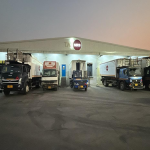



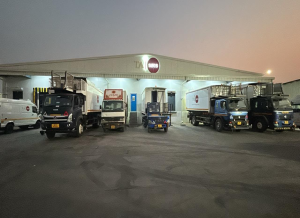
- Navi Mumbai International Airport’s (NMIA) TajSATS flight kitchen currently serves 40+ daily flights, with capacity to produce 7,500 meals a day and scale to 15,000 as airline operations and passenger traffic grow.
- The facility supports domestic and international carriers, offering local meal-uplift and specialised catering capabilities from within the airport precinct.
- The scalable facility strengthens NMIA’s ability to support growing airline operations, with TajSATS also operating the flight kitchen at Mumbai’s Chhatrapati Shivaji Maharaj International Airport (CSMIA).
TTT NEWS NETWORK
NAVI MUMBAI | 6 OCTOBER 2026
Navi Mumbai International Airport (NMIA) expands its airline network ahead of the Winter Schedule 2026-27, which runs from 25 October, 2026 to 27 March, 2027, its dedicated flight kitchen, operated by TajSATS, one of India’s leading aviation catering companies, is ready to support the growing requirements of domestic and international carriers.
Located within the airport precinct, the facility currently serves more than 40 departing flights a day and can produce up to 7,500 meals daily. Its capacity can be scaled to 15,000 meals a day as flight movements and passenger volumes increase.
Mr. Subhash Murikenchery, Chief Airport Officer, Navi Mumbai International Airport, said, “As NMIA expands its airline network, it is important that our supporting infrastructure grows with it. The TajSATS flight kitchen gives airlines the flexibility to meet rising demand and enhances the culinary experience for passengers.”
The facility combines scalable production infrastructure, modern refrigeration systems and streamlined processes to respond to changes in airline schedules and demand. Its location within the airport precinct also enables efficient meal delivery to departing aircraft.
For international carriers operating to and from India, the facility provides local meal-uplift capabilities, giving airlines an additional option to manage catering requirements closer to their point of departure.
Approximately 40 per cent of international carriers operating from India rely on back catering from their own flight kitchens. NMIA’s inflight catering infrastructure has been developed to support this requirement, alongside the catering needs of domestic carriers.
Built for Scale
The TajSATS facility provides airlines with:
- Production capacity of 7,500 meals a day, scalable to 15,000 meals.
- Catering support for domestic and international airlines.
- Local meal-uplift capabilities for international carriers.
- A strategic location within the airport precinct for efficient aircraft servicing.
- Catering for diverse dietary requirements, including special meals, allergen-sensitive menus and halal meals.
- Modern refrigeration and production systems to maintain quality and consistency.
Focus on Quality and Safety
The facility follows stringent food safety and quality requirements, including Hazard Analysis and Critical Control Points (HACCP), International Organization for Standardization (ISO) 22000 and Food Safety and Standards Authority of India (FSSAI) requirements.
Comprehensive quality-control processes cover food preparation, handling, storage and dispatch, helping ensure that meals delivered to airlines meet consistent standards of hygiene, freshness and quality.
TajSATS, which has more than four decades of experience in aviation catering, also operates the flight kitchen at Mumbai’s Chhatrapati Shivaji Maharaj International Airport (CSMIA).
With the flight kitchen already operational and designed to scale with demand, NMIA is equipped to support the next phase of airline connectivity and passenger growth.
About Navi Mumbai International Airport (IATA: NMI, ICAO: VANM)
Navi Mumbai International Airport (NMIA), developed and managed by Navi Mumbai International Airport Limited (NMIAL)—a public-private partnership between Adani Airport Holdings Limited (AAHL) and City and Industrial Development Corporation of Maharashtra Limited (CIDCO)—is poised to become a world-class aviation gateway for the Mumbai Metropolitan Region and western India. As the second international airport in the Mumbai Metropolitan Region, NMIA plays a transformative role in decongesting existing aviation capacity while catalysing economic growth and urban development across Navi Mumbai.
Backed by AAHL, a subsidiary of Adani Enterprises, the flagship of the globally diversified Adani Group, NMIA represents the next frontier in India’s aviation growth story. Designed to handle up to 90 million passengers annually on completion, and 20 million passengers in its initial phase, the airport will also manage 0.5 million metric tonnes of cargo through advanced, future-ready infrastructure.
Aligned with AAHL’s hub-and-spoke vision, launched in December 2025, NMIA offers a seamless, digital-first travel experience, with a strong focus on sustainability, efficiency, and passenger-centric design—setting new benchmarks for greenfield airports globally.
About Adani Airport Holdings Limited (AAHL):
Adani Airport Holdings Limited (AAHL) is India’s largest operator of Public Private Partnership airports dedicated to transforming the country’s aviation landscape with innovative, sustainable, and customer-centric solutions. Adani Airports is a part of the Adani Group’s flagship company, Adani Enterprises Ltd., that aims to extend the company’s vision as a global integrated leader in infrastructure and transportation. AAHL operates eight airports including Mumbai, Ahmedabad, Lucknow, Mangaluru, Jaipur, Guwahati, Thiruvananthapuram and the newly constructed Navi Mumbai airport. As part of its broader vision to redefine airport-led urban development in India, AAHL is also developing integrated, hospitality-led Airport City destinations that bring together hospitality, retail, entertainment, commercial, and lifestyle infrastructure around key aviation hubs.
AAHL strives to deliver world-class passenger experiences, enhance connectivity, and foster economic growth to shape the future of air travel and contribute to India’s global standing in the aviation sector.

Advertisement:
















Add Comment