






TTT NEWS NETWORK
NEW DELHI | 23 FEBRUARY 2026
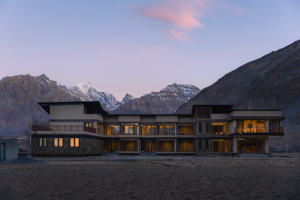
RARE India, the largest community of boutique, owner-run hotels, lodges, camps and travel experiences across the Indian subcontinent, has announced the inclusion of The Doksa to its collection. Located in Mane Village in Himachal Pradesh’s Spiti Valley, The Doksa is rooted in the land, climate and community representing a sensitive and future-forward model of hospitality in one of India’s most fragile high-altitude regions.
Set at 12,000 feet between Tabo and Kaza, within the Cold Desert Biosphere, the farm stay reflects a way of living shaped by extreme winters, short farming seasons and limited water resources. Open from mid-May each year, with a brief monsoon pause depending on access, it encourages travellers to stay at least three nights, allowing the experience to unfold gradually through changing light, landscape and the rhythms of the valley rather than as a brief stop on a road journey.
“This region in Spiti is beautiful and fragile both as a culture and landscape. To promote a hospitality project that is a blue print for what tourism can look like is an opportunity for RARE. It helps us build value for the destination by benchmarking true sustainable design that is powered by Doksa’s young owners.” says Shoba Rudra, Partner & Founder, RARE India.
Designed by Windows to Vernacular, the architecture responds directly to altitude and climate through rammed-earth walls, local stone, passive solar gain and high-performance insulation that reduce dependence on external energy. A butterfly roof harvests snowmelt for reuse, while topsoil preserved during construction was returned to the land to keep it productive. Built for seismic resilience and minimal ecological disturbance, the project demonstrates how comfort in remote landscapes can be achieved through performance and restraint rather than excess.
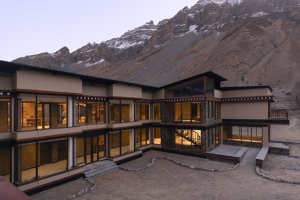
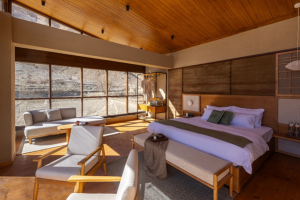
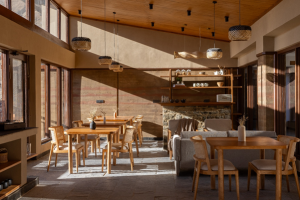
The ten rooms are conceived for warmth, simplicity and continuity with the outdoors. Naturally temperature-regulated by earth construction and supported by central heating and heated floors in colder months, they feature large windows that draw in solar light and uninterrupted views of the Manirang massif and surrounding plantations. Interiors remain uncluttered, with comfort defined by space, quiet and the presence of the valley beyond. A central dining room doubles as a shared living space where guests gather informally, while meals at Tshera follow seasonal availability and locally sourced produce. Experiences such as village walks, farm interaction, stargazing, traditional meals in local homes, visits to Ki Monastery and the Spiti river landscape foster a deeper understanding of the region’s living culture.
Founded by Bharat Seth and Mohit Gulia, whose long engagement with Spiti informs the project, The Doksa maintains close ties with nearby villages through employment, sourcing and guided experiences. Its low room count, climate-responsive infrastructure and emphasis on awareness-led travel ensure minimal ecological impact while supporting the local economy.
According to Mohit Gulia, Co-Founder, The Doksa, “Travel can and should be sustainable, immersive, inclusive and respectful in equal measure, even more so in remote areas with fragile ecosystems. With Doksa, we aim to set a responsible benchmark in a relatively unknown corner of Spiti. It isn’t just about first mover advantage but also first mover responsibility.”
The Doksa’s inclusion in the RARE Community is a result of a shared commitment to biodiversity conservation, water stewardship through snowmelt capture and controlled discharge, energy efficiency through passive design and light-footprint tourism that privileges participation over consumption, principles that are essential for the long-term sustainability of high-altitude destinations.

Advertisement:












Add Comment