





BY DEBAJYOTI CHAKRABORTY
MUMBAI | 31 MARCH 2026
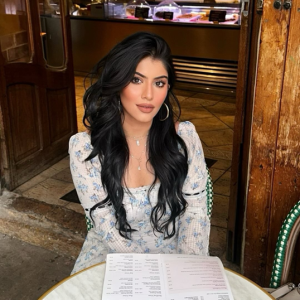
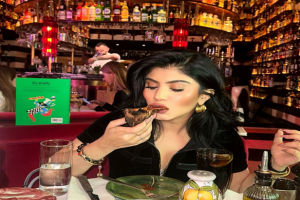
Karreena Bulchandani is the founder of Mokai, a Bandra-based experiential café that has quickly become a defining part of Mumbai’s new-age café culture. Founded in 2024, Mokai reflects her instinct for building spaces that go beyond dining—centred instead around design, community, and everyday experiences.
Her journey into hospitality has been shaped by a global upbringing and an early sensitivity to culture and space. Having lived and studied across China, Singapore, and London, Karreena was exposed to café environments that felt lived-in and personal rather than purely functional. These experiences shaped her perspective early on, building an understanding that hospitality is as much about emotion and memory as it is about food and service.
Before entering the F&B space, she trained in advanced makeup and prosthetics under Oscar-winning artist Christine Blundell. This phase sharpened her attention to detail and introduced her to the discipline of creating experiences that feel immersive and complete. It also reinforced her inclination toward storytelling, an aspect that continues to influence how she builds and evolves Mokai.
What defines Karreena’s journey is her willingness to step into a space without a conventional roadmap. Without a traditional hospitality background, she relied on instinct, observation, and a clear sense of what she wanted to create. That clarity translated into Mokai not as a replication of existing café formats, but as a space built from lived experiences and personal references.
Mokai, sometimes jointly credited to Karreena and co-founder Mohit, is a Japanese-inspired café located on Chapel Road. The name combines “moka,” referencing the coffee pot, and “ai,” the Japanese word for love, reflecting a philosophy rooted in craft and warmth. Drawing from a wabi-sabi aesthetic, the space is minimal yet expressive, with a strong emphasis on texture, light, and evolving design elements.
In a candid interview with The Trael and Tourism Times , Karreena Bulchandani speaks about herself and her creation, Mokai. Here are the excerpts …..
- Can you walk us through your global educational journey in China, Singapore, and London, and how it shaped your cross-cultural perspective on hospitality?
- A) Having lived and studied across China, Singapore, and London, I was constantly exposed to very different interpretations of hospitality. In cities across Asia, cafés often felt deeply personal—spaces where people lingered, built routines, and formed a sense of belonging. In London, I experienced a more design-forward, culture-driven café scene where storytelling and individuality played a strong role. These contrasts shaped my understanding early on—that hospitality isn’t just about efficiency or service, but about how a space makes you feel. It’s about memory, familiarity, and emotional connection. That cross-cultural exposure helped me develop a lens where I naturally look at spaces not just as businesses, but as lived experiences.
- What personal experiences or “aha” moments inspired you to launch Mokai, blending Eastern and Western influences in Mumbai’s café scene?
- A) There wasn’t one single “aha” moment—it was more of a gradual realisation built over time. Having experienced cafés globally, I felt there was space in Mumbai for something that didn’t follow a fixed format. I didn’t want to replicate what already existed; I wanted to create something that felt intuitive and personal. Even my background in makeup and prosthetics played a role here. That phase taught me how to think about detail, layering, and immersion how every small element contributes to a larger experience. Mokai came from that mindset of building something holistic, where design, food, and feeling come together seamlessly. The idea was to create a space that felt global in its influences but still accessible and rooted in how people here like to experience cafés.
- Tell us about your seasonal menus, evolving spatial concepts, and premium matcha program. How do these elements create a cohesive brand identity?
- A) For me, Mokai was never meant to be static. The seasonal menus allow us to keep evolving while staying relevant whether it’s introducing new flavour profiles or reinterpreting familiar ones with a different perspective. The space itself also changes subtly over time. Inspired by a wabi-sabi approach, we embrace imperfection and evolution. Small design shifts, textures, and lighting changes keep the environment feeling fresh without losing its core identity. Our matcha program is a big part of that identity as well. It reflects a more mindful, craft-led approach to beverages, which aligns with the overall philosophy of Mokai. Together, these elements create a balance—there’s consistency in how the brand feels, but also enough change to keep people curious and engaged.
- Mokai’s women-led barista team is a standout feature—how did you build this team, and what impact has it had on challenging gender norms in the hospitality industry?
Building a women-led barista team was a very conscious decision. The café industry, especially in certain roles, is still quite male-dominated. I wanted to create a space where women felt equally confident stepping into these positions.It started with hiring for attitude and openness rather than just experience, and then investing in training and creating a supportive environment. Over time, the team has grown into one of Mokai’s strongest pillars. The impact has been both internal and external. Internally, it’s created a sense of ownership and confidence within the team. Externally, it subtly challenges perceptions showing that skill and leadership in hospitality aren’t defined by gender.
- Launching during 2022 must have come with unique hurdles like post-pandemic recovery—what were the biggest challenges, and how did you overcome them?
Launching in a post-pandemic environment definitely came with its uncertainties. Consumer behaviour was still evolving, and there was a level of unpredictability around footfall and spending patterns. One of the biggest challenges was building trust and consistency during that time. Instead of focusing only on scale, we focused on creating a strong foundation ensuring that the experience was thoughtful, consistent, and worth coming back for. We also leaned heavily into understanding our audience both offline and digitally. That helped us stay adaptable and responsive, which was crucial in navigating that phase.
- Looking ahead, what are your plans for expanding Mokai—new locations, products, or experiences—and how will you maintain its experiential core?
Expansion is definitely something we’re thinking about, but very mindfully. Whether it’s new locations, product extensions, or different formats, the idea is to grow without diluting what Mokai stands for. For me, the experiential core is non-negotiable. Every new step has to feel aligned with the same philosophy attention to detail, a strong sense of identity, and an emotional connection with the audience. It’s less about scaling quickly and more about scaling meaningfully. As long as we’re able to retain that sense of familiarity and intent, I think Mokai can evolve in many interesting ways.

Advertisement:










Add Comment