


BY INDER RAJ AHLUWALIA
NEW DELHI | 14 FEBRUARY 2026
By any account she is no ordinary woman!
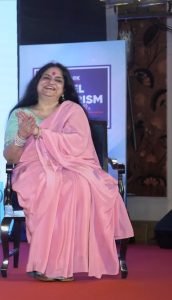
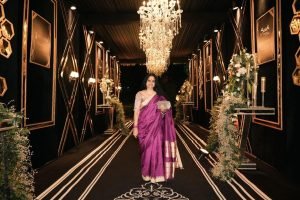
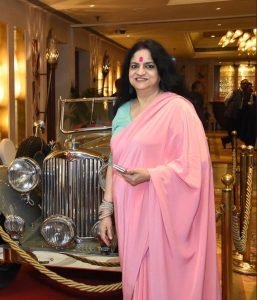
Having spent several decades working across India’s travel, tourism, and communications landscape, she has contributed to the sector’s growth through leadership and collaborative roles. Meet Jyoti Mayal, Chairperson of Tourism & Hospitality Skill Council and Indian tourism’s ‘woman for all seasons’ in an exclusive tete- a -tete with Inder Raj Ahluwalia of The Travel and Tourism Times.
- How did you get involved with the tourism industry?
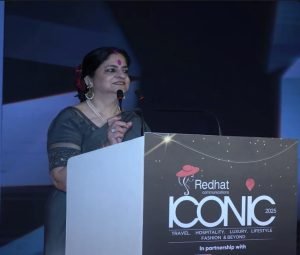
A)Well, I joined a company called New Airways Travels after marrying my husband, Balbir, who had already established a reputed, awarded company. This became a turning point in my life, opening doors to a sector I had never imagined being part of. As the business grew, I later founded Red Hat Communications to focus on events, destination marketing, and creating Iconic industry platforms such as summits and awards.
2.What has been the scope of your activities?
A)As Chairperson of the Tourism and Hospitality Skill Council (THSC), under the aegis of MSDE my focus today is on strengthening skill development, workforce readiness,and industry partnerships, with a strong commitment to women empowerment, inclusivity, and sustainability. I continue to advocate for technology enabled growth and responsible tourism to help build a resilient and globally competitive Indian travel ecosystem.
In my roles as CEO of Red Hat Communications and Managing Director of New Airways Travels (Delhi) Pvt. Ltd., I have worked to integrate strategic communication with destination and travel marketing.
3.You’ve had a long association with TAAI.
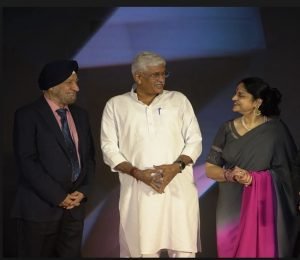
A)My journey with TAAI has been both enriching and defining. I began as Chairperson of the Northern Region, later served as a Managing Committee Member, then as Honorary Secretary General, and ultimately as President from 2019 to 2024—the longest presidential term in TAAI’s history. I wasthe second woman President. During this period, we navigated an exceptionally challenging global environment.
Leading the association through this period, I worked closely with government stakeholders on key policy issues including GST and IGST reforms, restoration of flight operations post-pandemic, border reopening, visa facilitation, and ease of doing business measures. I also facilitated long pending refunds for Indian travel agents through IATA and became the first Indian Chair of the APJC.
Beyond TAAI, I contribute to policy and industry development through various governing body and advisory roles across FICCI-FLO, CII, PHD Chamber, ASSOCHAM, and ICC, and work with state governments, corporates, and educational institutions on tourism strategy, skilling, and capacity-building. I have also served as Vice President of FAITH, supporting unified industry advocacy.
4.Where do you feel Indian tourism stands today?
A)Indian tourism today stands at a pivotal moment—one defined by resilience, reinvention, and remarkable potential. The post pandemic recovery has been driven by a surge in domestic travel, improved infrastructure, and growing global interest in India as a year round destination. But with this growth comes responsibility and sustainability.
Our focus must now shift from counting arrivals to building a tourism ecosystem rooted in quality, sustainability, and inclusivity. Skilling remains central to this transformation. I see firsthand the need for a future ready workforce and the importance of creating meaningful opportunities, especially for women and local communities.
We are witnessing stronger connectivity, enhanced infrastructure, and a renewed appreciation for India’s cultural and experiential richness. Government initiatives around skilling, ease of doing business, and digital transformation are beginning to show real impact, while the private sector continues to innovate and invest.
We must strengthen our skilling frameworks, simplify processes for travel trade stakeholders, and build a unified national tourism narrative that reflects India’s diversity and dynamism. Sustainability, safety, and responsible tourism practices must remain at the core of our strategy.
Indian tourism is no longer just recovering—it is evolving. With supportive policies, seamless connectivity, and a shared commitment across stakeholders, India has the potential to set global benchmarks. Our goal is not merely to attract travellers, but to build a resilient, responsible, and globally competitive tourism industry.
5.What is the main requirement for tourism personnel – hoteliers, travel agents etc?
A)The most important requirement for tourism personnel today is the right blend of skills, adaptability, and attitude. While digital capability and technical knowledge are increasingly essential, tourism at its core remains a people-driven industry built on trust, empathy, and meaningful experiences. One needs to connect with travellers.
As traveller expectations evolve and technology reshapes the way we operate, continuous up-skilling and a customer-centric mindset become non-negotiable.
Professionals must embrace responsible tourism practices, prioritise safety, inclusivity, and sustainability, and adapt new tools, trends, and global shifts.
Skills can be taught, but the willingness to serve with dignity, respect, and genuine care is what defines exceptional hospitality. Investing in structured training, empowering our workforce, and creating dignified career pathways will determine the long-term strength and resilience of India’s tourism industry.
6.Will tourism rely more on digitalisation?
A)Tourism will increasingly rely on digitalisation, but it will never replace the human essence of our industry. What we are witnessing today is a shift toward smarter, more efficient, and more connected systems—digital payments, enabled customer service, virtual tours, data-driven marketing, and seamless online booking platforms.
For India, digitalisation is a powerful enabler. It enhances transparency, improves service delivery, strengthens safety, and opens new opportunities for small businesses and local communities to participate in the tourism economy.
But digitalisation must complement—not overshadow—the human touch. As we adopt new technologies, we must ensure our workforce is trained, confident, and empowered to use them effectively while still delivering authentic, culturally-rich experiences.
The future of tourism will be a balanced blend of digital efficiency and human hospitality.
7.Has India sold itself properly for inbound tourism?
A)India has made progress in promoting itself globally, but we have not yet unlocked our full potential in inbound tourism. The world knows India for its heritage, spirituality, and diversity, but we have not marketed our experiences with the consistency, creativity, and investment that global competition demands.
What India needs today is a sharper, more sustained global marketing strategy—one that showcases not just monuments, but immersive experiences, local cultures, wellness, cuisine, adventure, and our rapidly evolving hospitality landscape. We must move from generic campaigns to targeted storytelling that resonates with different traveller segments across key markets.
A skilled, confident, and service-oriented workforce is the backbone of any successful tourism economy. When we empower our frontline professionals—guides, hoteliers, travel agents, transport providers—we elevate the entire visitor experience.
India also needs to strengthen its MICE positioning. We have the infrastructure, but we must allocate dedicated funds, build strong bidding capabilities, and promote India aggressively as a world-class destination for conferences, exhibitions, and global events. MICE tourism has the power to transform local economies, yet it remains under-leveraged.
Inbound tourism will grow when marketing, experience creation, and human capital development move hand in hand. With strategic investment, unified branding, and a stronger global presence, India can position itself not just as a destination, but as an unforgettable journey.

8)What are your major hobbies or interests?
A)My interests have always been shaped by curiosity, creativity, and a deep desire to connect with people. Travelling remains my greatest passion.
Reading keeps me constantly learning, while music helps me unwind and find inspiration in the rhythm of everyday life.
I genuinely enjoy meeting people and listening to their journeys. Cooking is another joy.
Beyond personal hobbies, I am deeply committed to empowering and supporting women in the tourism sector.
I also find great fulfilment in engaging with students and young professionals.
Together, these interests and commitments keep me grounded, inspired, and connected to the world—both personally and professionally.
( THE WRITER, INDER RAJ AHLUWALIA IS AN INTERNATIONALLY RENOWNED , MULTIPLE AWARD – WINNING TRAVEL JOURNALIST AND AUTHOR)

Advertisement:







Add Comment