



TTT SPECIAL: DURBAN – SOUTH AFRICA’S COASTAL GEM
BY INDER RAJ AHLUWALIA

( THE WRITER IS AN INTERNATIONALLY RENOWNED , MULTIPLE AWARD – WINNING TRAVEL JOURNALIST AND AUTHOR)
NEW DELHI | 20 JANUARY 2026
Some frown upon the city, but most like it for a variety of reasons, that range from its highly visible beachfront to top-quality fresh prawns.
This may be true, but the fact is that Durban tends to leave a distinct impression on visitors. This explains why, over the years and with loads of effort put in, Africa’s largest and busiest port, it has become not just a major tourist hub, but also South Africa’s premier business, convention and exonomic centre.
The greatest prop for the local tourism boom is nature. A salubrious climate and superb beaches make this genuine sun and surf country, and within a couple of hour’s drive from the city, one finds himself smack in high-quality game parks with the ‘Big-5’ (lion, leopard, elephant, rhino and buffalo).
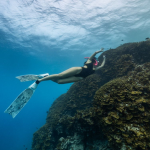
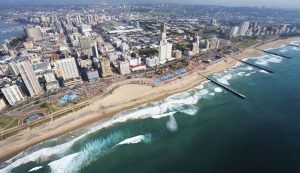
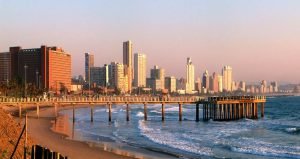
Inspired by the fresh air, I started things off with a morning stroll along the huge sweep of sand that forms Durban Bay. Addington Beach is the first of a series of beautiful bathing beaches, and like most of KwaZulu Natal’s resort beaches, is protected by shark nets, patrolled by life-guards, and offers safe bathing in warm water. Also part of the bay is the country’s most popular South Beach, the bronze-sand North Beach and the Bay of Plenty, a surfer’s paradise and the venue for the Gunston 500 annual surfing spectacular. Northwards lies ‘Water Wonderland’, a complex of pools, waterslides, ski jumps and rapids, set in landscaped gardens. Scenic and beautiful they may be, but the beaches do have strong currents and backwash. And at sea, there are the omnipresent sharks.
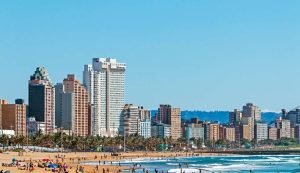
Sights to explore come by the dozens. Seaworld is a dolphinarium and aquarium complex with over a thousand species of sharks, turtles, dolphins and penguins. One can watch dolphins perform antics, or peer into the gaping jaws of ragged-tooth sharks.
Minitown – an ingenious Durban replica – shows miniaturized versions of a finely detailed modeled harbour game park, airport and rail station.
The Fitzsumons Snake Park features some eighty species of snakes, crocodiles, leguaans and other reptiles being fed. Move on to Bluff Nature Reserve and see the birds. Comprised of grassland and coastal forest, the reserve houses several African bird species, in a near perfect natural setting.
But while nature plays a pivotal role here, Durban’s attractions go far beyond. The main activity revolves around the famous, carnival-type ‘Golden Mile’, a strip of activity with pavilions, amusement parks, pools and pleasure emporia lining the beachfront. This is where the local version of fun is best experienced, with restaurants and hotels lining the boulevard, and tourists’ hubbub mixing with the squeal of overhead cable cars and the bump and grind of dodgen cars. There’s plenty to indulge one’s fancy. One can do helicopter flips over the beachfront, watch sharks at the Seaworld Aquarium, or eat authentic Afrikaan food.
Don’t miss out on a rickshaw ride with a Zulu decked out in beaded finery and large horns protruding over his head, hauling you along in a brightly painted, decorated rickshaw. The rickshaw puller talks and smiles a lot, but don’t forget to pay him if you want him photographed.
It was afternoon when I visited ‘The Wheel’, a bustling entertainment centre with elaborate shopping. Before I knew it I was taking a ride on the ten storey-high ferris wheel, that provided panoramic views. Luring visitors into the centre’s decorative interior are restaurants, bars, cinemas and dozens of shops. Elsewhere, entertainment ranges from symphony concerts and cabarets, to beachfront cinemas.
With Africa’s largest, busiest and safest harbour, Durban invites visitors to drop in at places like the Mole Basin, the ocean terminal with its viewing galleries, the small-craft harbour, the giant sugar terminal, the floating and graving docks, and the fishing jetty. Soak up harbour atmosphere by cruising the sea beyond the bay in the Sarie Marais pleasure boat from the Gardiner Street jetty. Or taking a bay trip on the harbour ferry. Or the more upscale harbour pleasure cruise from the Dick King jetty.
While the town is cosmopolitan, I couldn’t help noticing a distinct Oriental flavor. The Victoria Street Market provides an Indian experience with the aroma of pungent curries, chilli powders, spices and exotic incense perfumes. A hundred tightly packed stalls sell Oriental goods like silks and satins, leatherware, curios and basket weaves. The fish market sells deep sea prawns and famed crabs from Mozambique. The floor above features more shops that house tantalizing Oriental food restaurants, and shops that relish haggling.
If you’re interested in casual shopping, just stay put in the Golden Mile that is choked with roadside merchants who splay the boulevard with African curios. Tribal-ware like drums, shields, masks, beadwork, traditional Zulu items and souvenirs, proliferate. For Zulu craftsmanship – woodcarvings, fabrics, and semi-precious stones – try the African Art Centre in Gardiner Street. Zimbabwan carvings and ceramics are good buys at the Africa Gallery at Umhlanga Rocks.
The Exhibition Centre provides insight into Durban’s industrial and commercial pulse. Set in some 30,000 square metres of plaza and gardens with extensive covered exhibition space and facilities to host up to 3,000 delegates, this is a city within a city.
Raging from segments like manufacturing to tourism, Durban is expanding. Unmatched in Africa for its mix of natural diversions, culture, and business potential, it also gets in the tourists who flock here to enjoy the sea, sand, sun, and among the world’s finest game-viewing in the KwaZulu Natal region.
All in all, it is a deal every bit worth its money…
Fact File:
Durban is a major South African international air hub.
There is a room for everyone, thanks to a vast and varied accommodation network that includes deluxe, standard, and budget hotels.
Eating out is a exciting as it is easy. There is international cuisine that includes Indian, Chinese, Arab, and pure vegetarian. And there is traditional African cuisine including game meats.
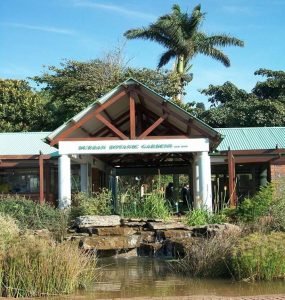
The city is a year-round destination. A 3-night visit is ideal for discovering the city.

Advertisement:





Add Comment