







(Breakthrough finding shows naturally occurring immune protein can prevent stubborn Escherichia coli infections without promoting antibiotic resistance)
TTT NEWS NETWORK
JODHPUR | 24 FEBRUARY 2026
In a major scientific breakthrough, researchers from Indian Institute of Technology Jodhpur (IIT Jodhpur) have discovered that a naturally occurring human protein can prevent bacteria from forming highly resistant biofilms — one of the leading causes of chronic infections and antimicrobial resistance (AMR).
The findings have been published in the prestigious international journal Proceedings of the National Academy of Sciences (PNAS) of the United States of America.
When we think of bacteria, we often imagine single, free-floating cells. However, in reality, many bacteria live in tightly packed communities called biofilms. These biofilms are like microscopic cities where bacteria stick to surfaces and protect themselves inside a shield made of proteins, sugars, and DNA.
This protective shield makes them extremely hard to eliminate. In fact, bacteria inside biofilms can be up to 1,000 times more resistant to antibiotics than individual bacterial cells.

Biofilms are commonly found on:
- Catheters
- Artificial heart valves
- Orthopaedic implants
- Chronic wounds
They are responsible for long-lasting infections and significantly contribute to the global antimicrobial resistance crisis.
One of the key structural components of biofilms in Escherichia coli (E. coli) is the amyloid protein curli. Curli act like scaffolding, helping bacteria attach to surfaces and to one another. Without curli, the biofilm becomes weak and unstable.
The IIT Jodhpur team identified that β2-microglobulin (β2m) — a protein naturally present in the human body as part of the immune system — can stop this process.
Instead of killing bacteria directly, β2m blocks the early formation of curli amyloids. Stopping curli assembly prevents the biofilm from forming in the first place.
This is important because:
- It targets the biofilm structure rather than the bacteria themselves
- It reduces the chance of bacteria developing resistance
- It offers a new strategy beyond traditional antibiotics
- It may also possess wound-healing properties
This study reveals a completely new function of β2m beyond its well-known immune role.
Dr. Neha Jain, Associate Professor, Department of Bioscience and Bioengineering, IIT Jodhpur and Principal Investigator of this research and corresponding author of the study, said:
“Biofilms are one of the biggest challenges in treating chronic infections because they protect bacteria from antibiotics and the immune system. Our study shows that β2-microglobulin, a naturally occurring human protein, can prevent biofilm formation by selectively blocking curli assembly. Instead of killing bacteria, it weakens their protective structure. This approach reduces the risk of resistance and opens new possibilities for designing therapies inspired by the body’s own molecular tools.”
Antimicrobial resistance is one of the most pressing global health threats. Conventional antibiotics aim to kill bacteria, but this often leads to the development of resistant strains.
This research suggests a smarter alternative: Disarm the bacteria by disrupting their protective shield instead of trying to destroy them.
By harnessing molecules already present in the human body, scientists may be able to develop safer, more sustainable treatments for persistent infections.
This pioneering work from IIT Jodhpur highlights how cutting-edge research from India is contributing to global solutions against chronic infections and antimicrobial resistance.
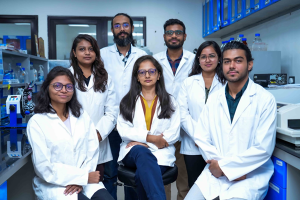
The study was led by Dr. Neha Jain at the Indian Institute of Technology Jodhpur, bringing together a multidisciplinary team of researchers with expertise in biophysics, microbiology, structural biology, molecular biology, and animal models for infection. The collaborative effort included H. Agarwal, H. Ben, A. Chaini, B. Gurnani, N. Mukherjee, A. Pal, A.K. Upadhyaya, S. Ghosh, D. Kumar Sasmal, and N. Jain. The team combined advanced molecular analysis, biofilm studies, and mechanistic investigations to uncover how β2-microglobulin selectively blocks curli assembly in Escherichia coli. Their integrated approach — spanning fundamental biology to translational relevance — was key to revealing this previously unknown function of a human immune protein. The study reflects the strength of collaborative, interdisciplinary research in addressing global health challenges such as antimicrobial resistance.

Advertisement:
















Add Comment