







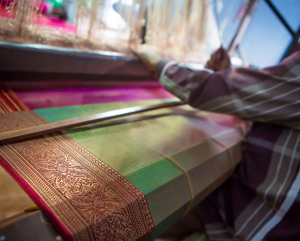
(Chanderi Handloom Weaving)
(Medieval architecture, UNESCO-recognized handloom traditions, and immersive craft experiences define this central Indian destination)
TTT NEWS NETWORK
BHOPAL | 7 APRIL 2026
The Madhya Pradesh Tourism Board is bringing renewed focus to Chanderi, a historic town that offers one of India’s most distinctive heritage tourism experiences, where centuries-old handloom weaving and medieval architecture are not preserved as relics but lived as part of everyday life.
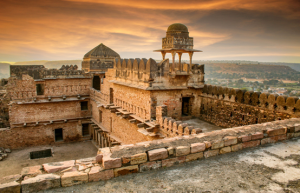
(Chanderi Fort – A Legacy in Stone)
Located in the Ashoknagar district, Chanderi is home to over 3,500 handloom weavers. Its skyline is shaped by a 10th-century fort, Bundela-era palaces, ancient Jain temples, and intricately carved stepwells (baolis), making it one of the most culturally layered small towns in central India.
Chanderi’s handloom tradition defines its identity. The town produces the iconic Chanderi fabric, a handwoven textile celebrated for its sheer texture, lightweight weave, and subtle luster, created through a delicate blend of silk and cotton. Practiced continuously for centuries, this craft remains a vital source of livelihood for a large section of the local population. In 2014, Chanderi’s weaving tradition was included in UNESCO’s Tentative List under the “Iconic Saree Weaving Clusters of India,” recognizing not only the craft but also the historic urban fabric shaped by generations of artisans. The fabric also holds a Geographical Indication (GI) tag, underscoring its authenticity and regional significance.
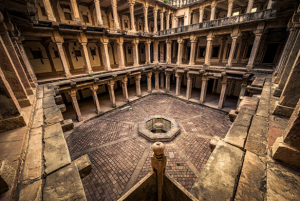
(The Raja Rani Mahal – Chanderi)
Unlike industrial textile centers, weaving in Chanderi is deeply embedded within domestic spaces. Homes are designed around open courtyards to accommodate looms, and architectural motifs often inspire textile patterns, creating a seamless dialogue between built heritage and living craft traditions.
Chanderi is accessible by road from Gwalior, approximately 240 km away, and Jhansi, about 127 km away and the nearest major railhead. Visitors can explore the hilltop Chanderi Fort with its sweeping views, the Bundela-era Raja Rani Mahal, and a network of Jain temples and baolis that reflect the town’s architectural richness. Immersive weaver neighborhood walks offer an opportunity to observe active looms and engage directly with artisans, while local cooperatives and outlets provide access to authentic Chanderi sarees and fabrics.
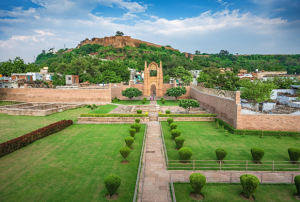
(Badal Mahal Gate – The 15th-century ceremonial gateway)
The best time to visit is between October and March, when the weather is most conducive to exploration.
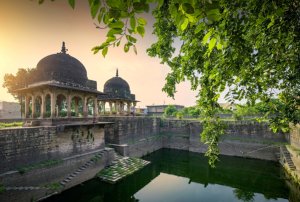
(Chakla Baoli – an architecturally significant stepwell)
For the Madhya Pradesh Tourism Board, Chanderi represents a compelling model of experiential and sustainable tourism, where heritage conservation and community livelihoods reinforce each other. As travelers increasingly seek authentic, community-driven experiences, Chanderi offers a journey that is both culturally enriching and economically meaningful for local artisan communities. The town also forms part of Madhya Pradesh’s broader cultural circuit, alongside Orchha, Khajuraho, and Gwalior, each contributing to the state’s rich and layered heritage narrative.

Advertisement:















Add Comment