





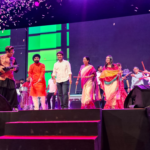


BY DEBAJYOTI CHAKRABORTY
NEW DELHI | 18 APRIL 2026
As the global travel landscape undergoes a seismic shift, the traditional pillars of transit and tourism are being redefined by an era of unprecedented geopolitical volatility. With the “big three” Middle Eastern hubs facing disruptions and the WEF Global Risks Report 2026 identifying geoeconomic confrontation as a primary threat, the hospitality industry finds itself at a critical crossroads.
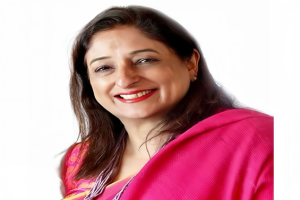
In this exclusive interview with Travel & Tourism Times, Ms. Prathima Manohar, a distinguished urbanist, hospitality leader and founder of The Urban Vision, shares her insights on how India is emerging as a primary destination in response to shifting global transit risks. From the “Made in Local” movement as a buffer against inflation to the evolution of digital infrastructure into a “trust layer” for travelers, Prathima discusses the strategic decentralization required to thrive when safety is no longer a static guarantee. Join us as we explore her vision for a resilient, inclusive, and culturally grounded future for Indian hospitality amidst a world in flux.
The Travel and Tourism Times: The conflict in the Middle East has disrupted the “big three” hubs—Dubai, Abu Dhabi, and Doha—which handle 14% of global transit. As a leader in the Indian hospitality space, how is this shifting the “transit-to-destination” ratio for India? Are we seeing more travelers choosing India as a primary destination to avoid transit risks?
Prathima Manohar: Dubai, Abu Dhabi, and Doha are not just main hubs in the Middle East but the beating heart of global transit network. Dubai alone sees almost 20 million international visitors each year, and Indians are one of the major groups of travelers. This major tourism and transit hub is currently effectively shut due to the geopolitical conflicts. The World Travel & Tourism Council says that the ongoing crisis is hurting global tourism spending by around $600 million per day.
But when disruption hits at that scale, the immediate impact is psychological as much as logistical. At a time when people are exposed to images of conflict and uncertainty, travelers naturally become more risk-averse. We are already seeing reduced willingness to take journeys that involve transit through volatile regions, along with flight disruptions, rerouted air travel corridors, and rising fuel surcharges making long-haul travel more expensive.
You can see the early shift in demand. Travel is moving towards domestic destinations and towards South East Asia, with a preference for places close to home. These areas are more certain and don’t depend on complicated travel routes as much.

The Travel and Tourism Times: The WEF Global Risks Report 2026 ranks “Geoeconomic Confrontation” as the top risk for the year. In your experience, how should a hospitality group’s 5-year strategy change when “safety” is no longer a static guarantee but a fluid, geopolitical variable?
Prathima Manohar: For those running small boutique hotels, the consequences are already apparent with the LPG crisis. As global systems become more fragile, building resilience requires a shift towards decentralization and off- grid solutions. That means reducing dependence on distant, complex supply chains and strengthening what is closer to home.
Hotels that work closely with Made-in-Local vendors i.e. local farmers, artisans, experience creators are not only supporting their communities, they are also insulating themselves from external shocks. What you source locally, you can sustain locally.
Energy is now a critical part of this equation. Investing in solar, decentralized renewable systems, and even biomass-based solutions for cooking can significantly reduce exposure to fuel price volatility and supply disruptions. In many ways, energy independence is becoming as important as supply chain independence.
Equally important is a renewed focus on the domestic traveller. In times of global uncertainty, it is the domestic and regional guest who provides stability.
The path forward is clear: decentralise, invest in green buildings and energy , root your business in local ecosystems, and design experiences for those closest to you.
The Travel and Tourism Times: You have long championed the “Made in Local” movement. During times of war, global supply chains and international arrivals falter. Does the current conflict reinforce the need for a “Domestic-First” model of luxury, and how are your resorts in coastal Karnataka insulating themselves from global energy and food inflation?
Prathima Manohar: Absolutely. This moment reinforces the importance of a “Made in Local” approach but it is important to define what that truly means.
Domestic-first should not be dull or lower in aspiration. At its best, it is about building a higher form of luxury rooted in unique Made-in-Local principles: local identity, authentic food, indigenous culture, local sourcing, local talent, and local resilience.
This translates into rethinking the fundamentals. Strengthening local food networks. Shortening supply chains. Designing experiences that are deeply anchored in the region rather than dependent on imported systems. And investing in efficiency and resilience around utilities because energy shocks today translate directly into hospitality shocks.
We are also rediscovering the power of indigenous practices at this moment.
In moments of global disruption, what is local becomes reliable. Cooking on wood-fired systems, using locally available biomass, and preparing foods that are energy-efficient by design are not just traditions – they are resilient systems. Dishes from my native villages in Udupi like Manjal Addye ( Turmeric leaf wrapped sweet filled idly) , or idlis such as Khotte Kadubu and Moode, steamed in turmeric, jackfruit, or screw pine leaves, reflect a Made-in-Local approach that is sustainable, resource-efficient, and deeply connected to place.

This is the shift underway.
The future of Indian hospitality will not be built by replicating global templates. It will be built by elevating what is already local and by creating high-quality, culturally grounded, Made-in-Local experiences that are more distinctive, more sustainable, and ultimately more resilient because they are embedded in place.
The Travel and Tourism Times: India has remained a relatively stable neutral ground amidst the current Eurasia and Middle East conflicts. Do you believe the Ministry of Tourism should pivot its global marketing toward a “Safe Haven” narrative, or is that a double-edged sword in the current volatile climate?
Prathima Manohar: It is a double-edged sword, so I would advise caution.
Safety matters enormously, but I do not think tourism marketing should become fear-based. Positioning India as a “safe haven” can work in the short term, but it can also sound opportunistic or reductive if not handled with care.
A better framing would be confidence, continuity, and trust. Our greatest super power is the diversity of our art, culture and traditions. India can project itself as a destination of civilizational depth, democratic scale, and rich diversity of experiences. The strongest destination brands do not sell fear but authentic experiences that is unavailable elsewhere. We should celebrate the local and diversity.
Safety should absolutely be part of the communication but it cannot be the whole message.
More importantly, this is not just about messaging. It is about substance. We need to invest far more deeply in safe destination design and management. It is important to design places that are people centric and think through how information flows, and how systems respond in moments of stress.
The Travel and Tourism Times: We see the rise of “Geopolitical Friendshoring”—people traveling only to countries with shared political values. How does this fragmentation affect the universalist ideal of tourism as a “bridge between cultures”? Are we entering an era of “bloc-based” tourism?
Prathima Manohar: There is a real risk of that. Travel has long been one of the most powerful expressions of people-to-people connection across borders. It allows us to encounter one another beyond headlines and ideology. If travel begins to fragment along geopolitical lines, we risk losing part of that shared human space.
At the same time, we have to acknowledge a shift in traveler behavior.
People don’t want to go to destinations that feel misaligned with their values. Travel decisions are no longer driven only by weather, scenery, or price: they are increasingly shaped by beliefs, by how nations position themselves, and by how communities are treated.
Travelers always pay attention. They are following political developments and thinking about the broader impact of where they spend their time and money. And they are making more intentional choices. In many ways, this feels like the next phase of sustainable travel.
For a long time, sustainability was framed primarily in environmental terms: reducing carbon, eliminating waste, supporting conservation. That remains essential. But today, the definition is expanding. It is becoming just as much about social responsibility, trust, and alignment.
And that has implications for the industry.
But yes, some degree of fragmentation may be inevitable. I believe we as a industry have to highlight that the role of tourism is not to mirror those divisions, but to rise above them. We need to design for openness creating platforms, routes, and experiences that continue to bring people together.
As Mahatma Gandhi reminded us, “No culture can live if it attempts to be exclusive.”
Because ultimately, the purpose of travel is not just to see the world. It is to understand it and develop compassion and empathy.

The Travel and Tourism Times: In your work with GoodPass and digital infrastructure, how can these tools be used during crises to help stranded travelers or provide real-time, verified safety data that bypasses the “misinformation” cited by the WEF as a major 2026 risk?
Prathima Manohar: In a crisis, travelers do not just need inventory. They need trusted, verified, real-time guidance.
In moments of panic, misinformation spreads faster than logistics. So the future lies in trusted digital rails that connect verified operators, hospitality providers, mobility networks, and local authorities. That creates a much more dependable information environment for travelers than fragmented social media signals. In my view, digital infrastructure in tourism must evolve from a booking layer into a trust layer.
The Travel and Tourism Times: With countries like Russia proposing “Exit Taxes” to keep capital domestic and the Iran conflict adding 0.8% to global inflation, travel is becoming more expensive. How can the hospitality industry avoid becoming an “elite-only” service in 2026?
Prathima Manohar: The answer is not to narrow the market but to widen it.
If travel becomes a privilege reserved for the few, the industry risks losing not just demand, but its broader purpose and legitimacy. Travel has always been an aspirational, but accessible, human experience. Preserving that balance is critical.
The way forward is to design for inclusion. That means creating flexible price points, shorter and more accessible formats of travel, stronger local and regional circuits, and off-season offerings that expand access. It also means leveraging digital platforms to reduce discovery and distribution costs, making it easier for more people to participate in travel.

Advertisement:













Add Comment