







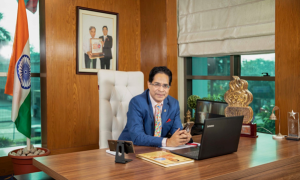
BY DR. SUBORNO BOSE,
Founder, Chairman and Chief Mentor,
International Institute of Hotel Management (IIHM)
KOLKATA | 17 JUNE 2026
Every generation in hospitality has encountered its own moment of technological transformation.
The telephone altered the way front offices worked. Reservation software replaced manual ledgers. The internet changed distribution forever. Yet through every wave of disruption, hospitality did not become smaller. It became larger, richer and more diverse, creating opportunities that previous generations could scarcely have imagined.
Artificial Intelligence is the latest force reshaping our industry. And if history teaches us anything, it is that the answer to whether AI will replace jobs or create them is neither simple nor alarming.
It is, in fact, full of possibility.
Certainly, AI will automate some tasks. It already has. Chatbots are responding to guest enquiries before arrival. Revenue management systems can optimise prices with remarkable precision. Facial-recognition check-in systems are gradually reducing repetitive administrative work in some parts of the world.
To deny this reality would be irresponsible. But the more important story is not about the jobs that disappear. It is about the jobs that evolve.
The New Hospitality Workforce:
Across IIHM campuses, we have embraced AI literacy not as a novelty but as an essential part of hospitality education. Our students are learning how to work alongside intelligent systems — using data to personalise experiences, interpreting guest sentiment, and leveraging AI-powered recommendations to create greater value for guests.
The professional of the next decade will require a different blend of skills.
Not merely technical competence.
Not merely emotional intelligence.
But the ability to stand confidently at the intersection of both.
The future belongs to those who understand what the algorithm suggests, but also possess the wisdom to know when human instinct must prevail.
This is not a smaller workforce. It is a more sophisticated one.
Already, entirely new roles are emerging. Hotels investing heavily in AI infrastructure require data specialists and AI operations managers. Luxury properties deploying intelligent concierge systems still depend upon experienced guest relations professionals whose empathy gives meaning to what technology reveals. Wellness resorts using biometric information need human practitioners capable of transforming numbers into conversations that heal and reassure.
These positions scarcely existed a decade ago.
Today they are real.
Tomorrow they will multiply.
India’s Particular Opportunity:
For India, the conversation around AI carries a special significance.
Our country possesses one of the world’s largest and fastest-growing hospitality workforces. The challenge before us is not whether jobs will exist. The challenge is whether our people will possess the skills needed to thrive in a transformed industry.
Indian hospitality has always competed on something machines cannot replicate — warmth.
‘Atithi Devo Bhava’ is not merely a slogan. It is a philosophy. It reflects the generosity, empathy and respect that have defined Indian hospitality for centuries.
Artificial Intelligence cannot manufacture that spirit.
What it can do is liberate professionals from repetitive administrative burdens and allow them to devote more time to genuine human engagement.
If an AI system resolves a billing discrepancy in seconds, a guest associate gains precious minutes to listen to an anxious traveller, comfort a weary parent, or surprise a returning guest with a thoughtful gesture.
That is not job displacement. That is job elevation.
The Responsibility of Educators
As educators, we carry a profound responsibility. Much of the anxiety surrounding AI is ultimately an anxiety about relevance.
Will I still matter? Will my skills continue to have value?
These are legitimate questions and they deserve thoughtful answers, not fashionable clichés.
At IIHM, our response is built around what I call High Tech Higher Touch.
We teach students how AI systems work, how machine learning generates recommendations, how dynamic pricing models function, and how natural language processing interprets guest feedback.
But at the same time, we place even greater emphasis on those uniquely human capabilities that no machine can teach — empathy, cultural sensitivity, conflict resolution, creativity and the subtle art of anticipating needs before they are spoken.
Technology can analyse. Technology can predict. Technology can optimise.
But kindness still belongs to people. And hospitality, ultimately, is an expression of kindness.
The institutions preparing the next generation of hospitality leaders cannot afford to treat AI as an optional module added at the margins. It must become part of the fabric of hospitality education itself — from kitchens and housekeeping to revenue management and general management.
The future will judge hospitality schools not by whether they acknowledged AI, but by whether they prepared graduates to harness it responsibly.
A Profession Transformed, Not Diminished
Reports from global organisations such as the World Economic Forum consistently suggest that AI and automation will create as many opportunities as they eliminate, provided industries invest seriously in reskilling and education.
That observation mirrors what we are witnessing on the ground. Hotels embracing AI most enthusiastically are not removing people from hospitality. They are empowering people to perform more meaningful work.
I have spent decades in hospitality education, and one lesson has remained constant.
Those who flourish are rarely those who resist change. They are those who understand change, adapt to it thoughtfully, and use the tools of their time to strengthen what matters most. Because no matter how advanced technology becomes, no machine can replace the memory of genuine care.
No algorithm can replicate compassion. No software can substitute the feeling a guest carries home after experiencing authentic human warmth.
AI will not replace that.
If we use it wisely, it will give us something even more precious.
More time. More understanding.
And more opportunities to do what hospitality has always done best — create meaningful human connections.
The future of hospitality is not human or technological.
It is, emphatically, High Tech and Higher Touch.

Advertisement:















Add Comment