




(As travellers look for ways to experience forests beyond the conventional jeep safari, multi-day walking experiences are beginning to create a new kind of nature tourism across Madhya Pradesh and neighbouring Chhattisgarh)
TTT NEWS NETWORK
BENGALURU | 30 SEPTEMBER 2026
For years, a wildlife holiday in Central India has largely meant getting into a jeep and looking for a tiger. But a different kind of forest traveller is emerging: one who wants to slow down, walk through the landscape and spend more time experiencing the forest itself.
Across Madhya Pradesh, this shift is beginning to show up in the growing interest in multi-day walking experiences.
One of the clearest examples is the Pench Tiger Trail. When Indiahikes first opened the trail, it saw just over 400 trekkers in its first year. By its third year, the number had grown to around 2,400 trekkers, a six-fold increase over three years.
The growth is significant because it points to a form of nature travel that is still relatively new in a state better known for its tiger reserves, wildlife safaris and heritage tourism.
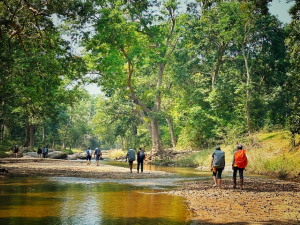
The idea is simple but changes the experience considerably. Instead of spending a few hours driving through a forest in search of wildlife, a multi-day walking trail allows travellers to spend several days moving through the landscape. The forest is no longer simply the place where an animal might be spotted. It becomes the experience.
This is the thinking behind two new experiences Indiahikes is bringing to the region. The Patalkot Gorge Trek, developed through Indiahikes’ ongoing work with Madhya Pradesh Tourism, is set to open shortly. The organisation has also just launched a five-day Unexplored Satpura Tiger Reserve experience, with support and coordination from the Madhya Pradesh government.
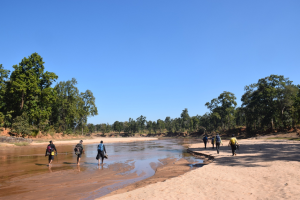
Both are part of a broader movement towards exploring Central India’s forests on foot.
Building trails, not just selling trips:
Madhya Pradesh Tourism and Indiahikes had signed an MoU earlier to explore and develop five multi-day trekking trails across the state. The partnership goes beyond identifying routes. It includes route design, mapping, identifying rest points and camping areas, documenting the trails, conducting pilot groups and creating guidebooks.
It also includes training local entrepreneurs in areas such as guiding, medical and technical safety, sustainable trekking and campsite management.
The Patalkot Gorge Trek is one outcome of this work. Pilot groups have also been conducted on the Sanjay Dubri Lakes Trek and the Amarkantak River Trail.
For Madhya Pradesh, this opens up a different way of thinking about its forests as tourism destinations. Instead of concentrating the visitor experience around a handful of well-known wildlife sightings, multi-day trails can distribute travel across a larger landscape and create opportunities for local services around accommodation, food, transport, guiding and other needs.
The model is beginning to find an audience.
In neighbouring Chhattisgarh, the Chhattisgarh Jungle Trek has also been seeing steady growth year after year. Together, these experiences point towards a broader interest in spending more time in Central India’s forests, rather than simply passing through them on a safari.
When the forest becomes the destination:
There is also a larger change in what travellers seem to be looking for.
For many people, especially those who have already experienced conventional wildlife tourism, seeing a tiger is no longer the only reason to enter a forest. They may want to understand the landscape, walk through it, camp in it, observe its smaller details and experience the rhythm of a place over several days.
This doesn’t replace the safari. It adds another layer to wildlife tourism.
It also creates an interesting opportunity for conservation. Well-managed, small-scale nature tourism can give local communities an economic role in the visitor experience, while creating value around keeping the landscape healthy. The question is not simply how many people can be brought into a forest, but how tourism can be designed so that the forest, its communities and the traveller all remain part of the equation.
“People are beginning to realise that you don’t always have to see a tiger for a forest to be meaningful,” says Arjun Majumdar, Founder, Indiahikes. “When you walk through a forest over several days, you start noticing things that you would never notice from a vehicle. The landscape begins to have its own identity. I think that is what travellers are increasingly looking for.”
The change underway in Central India may therefore be less about moving away from wildlife tourism and more about expanding what wildlife tourism can mean.
The tiger may still be the most famous resident of these forests. But increasingly, the forest itself is becoming the destination.

Advertisement:
















Add Comment