







TTT NEWS NETWORK
NEW DELHI | 5 JUNE 2026
On World Environment Day, Akasa Air, India’s fastest-growing airline, reaffirmsits commitment to building an environmentally responsible airline, backed by measurable actions across every facet of its operations. Through thoughtful initiatives, the airline has saved over 5,30,000 litres of water till date.
Since inception, sustainability has been deeply rooted in Akasa Air’s DNA, shaping decisions on the ground and in air. Guided by the belief that growth and responsibility mustgo hand in hand, Akasa Air continues to strengthen its resolve towards sustainability with initiatives that reduce its environmental footprint while offering passengers a world-class flying experience.
Saving water by rethinking traditional aviation practices :
Demonstrating its commitment to resource conservation, Akasa Air became the first Indian airline to forgo ceremonial water cannon salutes, a longstanding industry tradition,thereby preventing unnecessary water wastage and contributing to the saving of approximately 5, 30, 000 litres of water till date. This decision reflects the airline’s approach to challenging legacy practices in favour of more sustainable alternatives.
Advancing sustainable aviation fuel adoption :
In line with its long-term sustainability roadmap, Akasa Air has signed a Memorandum of Understanding (MoU) with HPCL and a Letter of Intent (LoI) withIndian Oil to collaborate on the development and adoption of Sustainable Aviation Fuel (SAF). These partnerships mark an important step towards enabling low-carbon aviation in India.
Reducing ground emissions through EV adoption :
On the ground, Akasa Air has been systematically replacing fossil-fuel-powered vehicles with electric vehicles (EVs) for passenger and baggage transportation across airports,enabling the airline to reduce its carbon footprint.
Optimizing fuel efficiency through data-driven innovation by partnering with OpenAirlines :
Akasa Air partnered with OpenAirlines to implement the SkyBreathe® 360° eco-flying platform, an advanced analytics solution powered by artificial intelligence andbig data. Leveraging insights from a database of over 21 million flights, the platform enables the airline to identify fuel-optimising opportunities, enhance operational efficiency, and drive more sustainable flight practices. This initiative has the potentialto reduce fuel consumption by up to 5 percent without aircraft modifications, contributing meaningfully to lowering carbon emissions and strengthening Akasa Air’s commitment to environmentally responsible operations.
Prioritising comfort, inclusivity and sustainability in uniform design :
Akasa Air introduced revamped, gender-neutral uniforms that reflect its continued commitment to sustainability. Designed with a focus on environmentally responsible choices,key elements such as trousers are crafted using recycled materials. The uniforms combine functionality with conscious design, ensuring ease of movement for employees while embedding sustainability into everyday operations, without compromising on comfort orstyle.
A modern, fuel-efficient fleet supporting sustainability goals :
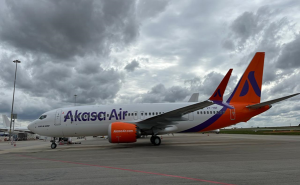
Akasa Air operates one of the youngest fleets in the Indian skies, with Boeing 737 MAX aircraft that deliver 20 per cent lower fuel consumption and emissions comparedto earlier generation aircraft. This fleet strategy plays a critical role in reducing the airline’s overall carbon footprint while ensuring operational efficiency.
Driving circularity through responsible waste management :
As part of its focus on responsible disposal and recycling, Akasa Air has partnered with eNamo for efficient e-waste management. The initiative enables structuredcollection and recycling of electronic waste across operations, contributing to reduced environmental harm and improved resource recovery.
Embedding responsible practices across operations
With a strong focus on sustainable waste disposal, Akasa Air has been industry-leading in implementing best practices across its operations since inception. The airline has adoptedbiodegradable bags and environmentally responsible waste management products, while also eliminating the use of plastic zip lock bags previously used for the Café Akasa menu. Across its offices, stations, and training centres, administrative guidelines promotereduced paper usage, minimisation of single-use plastics, adoption of LED lighting, and the use of reusable products in common areas such as pantries. Additionally, the Akasa Air Learning Academy in Gurugram is equipped with a sewage treatment plant (STP),where treated water is repurposed for horticulture, further strengthening the airline’s commitment to circular and sustainable practices.
As Akasa Air continues its growth journey, it remains focused on driving meaningful change through sustainable innovation. With a strong foundation and forward-lookingpartnerships, the airline is committed to contributing to a cleaner, greener future for aviation.

Advertisement:

















Add Comment