







(Khajuraho Group of Monuments – A UNESCO World Heritage Site)
*Classical traditions take centre stage at UNESCO-listed temples of Khajuraho, with the 2026 edition introducing a Carnival format to broaden cultural engagement
TTT NEWS NETWORK
BHOPAL | 7 FEBRUARY 2026
Set against the timeless backdrop of the UNESCO World Heritage–listed Khajuraho Group of Monuments, the Khajuraho Dance Festival 2026 reaffirms its position as one of India’s most distinguished celebrations of classical dance. Scheduled from 20–26 February 2026, the festival brings together eminent artistes, scholars, and audiences to experience India’s living performing arts traditions in dialogue with one of its most extraordinary temple complexes.

(Khajuraho Dance Festival)
Building on its rich legacy, the 2026 edition introduces a refreshed dimension through a newly curated Carnival format, designed to expand public engagement and enhance the overall cultural experience. While the festival retains its classical core, the Carnival extends the celebration beyond evening performances to include daytime cultural activities, interactive spaces, and community-oriented experiences.
Traditionally spread over several days, the Khajuraho Dance Festival showcases India’s major classical dance forms—Bharatanatyam, Kathak, Odissi, Kuchipudi, Manipuri, and Mohiniyattam—presented by leading dancers and renowned institutions from across the country. These performances unfold in open-air settings, with the illuminated temples of Khajuraho forming a striking visual and symbolic backdrop, seamlessly linking sculptural heritage with rhythm, movement, and expression.
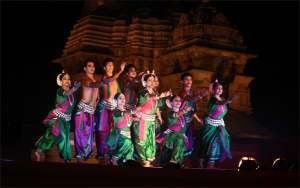
(Classical Indian dance amidst the timeless splendor of Khajuraho)
The introduction of the Carnival format adds a layered cultural dimension to the festival. Alongside curated dance performances, visitors can engage with craft displays, folk and tribal art demonstrations, culinary showcases, cultural exhibitions, and interactive workshops. This expanded format offers a more immersive and accessible window into the wider cultural landscape of Madhya Pradesh, highlighting regional traditions, local artisanship, and diverse performing arts practices.

The festival also serves as a vital platform for cultural dialogue. Lectures, demonstrations, and informal interactions encourage meaningful exchanges between classical artistes, young practitioners, scholars, and audiences, deepening understanding of India’s intangible cultural heritage while nurturing future generations of performers and cultural custodians.
Khajuraho itself remains central to the festival’s identity. Celebrated for its intricate temple architecture and sculptural brilliance dating back over a millennium, the site embodies the intersection of art, spirituality, and aesthetics. The dance festival draws inspiration from this legacy, reinforcing the idea of classical dance as a living, evolving tradition rooted in history.

Beyond its artistic significance, the Khajuraho Dance Festival plays an important role in cultural tourism, inviting visitors to explore the region’s broader heritage offerings, from nearby historical towns to natural landscapes and cultural circuits. The addition of the Carnival format further strengthens this appeal, creating a more inclusive and dynamic festival environment for both cultural connoisseurs and first-time visitors.
With its 2026 edition, the Khajuraho Dance Festival continues to honor tradition while embracing innovation, presenting culture as a shared, evolving experience that resonates across generations and geographies, and reaffirming Madhya Pradesh’s commitment to preserving heritage and celebrating the arts.

Advertisement:














Add Comment