






BY INDER RAJ AHLUWALIA
NEW DELHI | 3 MARCH 2026
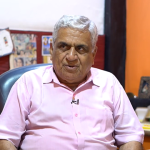
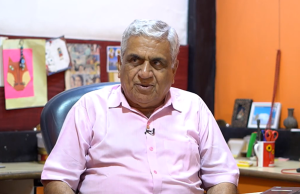
A multi-faceted personality-pilot, mountaineer, entrepreneur, and environmentalist-he is widely regarded as a pioneer of adventure tourism in India.
He developed an early passion for mountaineering when he joined the Delhi Mountaineering Association (DMA) in 1969 and was elected a Life Member in 1971. He obtained his commercial pilot flying license in 1971, joined the Rajasthan Flying Club as a Flight Instructor, and worked as a Freelance Pilot for a few years. Meet Captain Swadesh Kumar…!
1.How and when did your mountain honeymoon start?
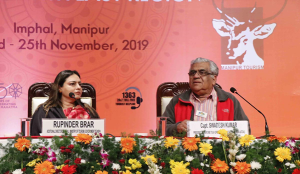
A)My first encounter with the Indian Himalayas came in 1970, when I joined an expedition organized by the DMA. In 1974, I completed a course in basic mountaineering at the Himalayan Mountaineering Institute under the guidance of the late Tenzing Norgay. Over the years, I organized and guided over 250 climbing expeditions in the Indian Himalayas and was associated with world-renowned mountaineers such as Sir Edmund Hillary, Reinhold Messner, and Junko Tabei.
2.What was your tourism industry start?
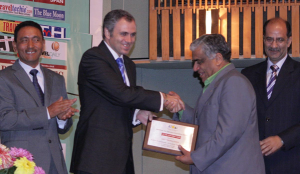
A)I started off in tourism in 1979, when, with a vision to fill a gap, I founded Shikhar Travels (I) Pvt. Ltd., which became a leading Indian Destination Management Company and a pioneer in Adventure Tourism. The idea was to promote adventure tourism, especially mountaineering and trekking.
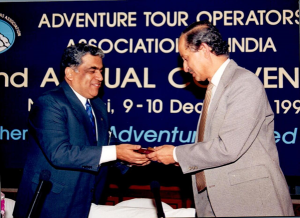
Over the years, I became the Founder President of the Adventure Tour Operators Association of India (ATOAI), serving as its president for six Years, and currently serving as its Lifetime Patron.
I joined the Himalayan Environment Trust (HET) as a member and was one of its trustees. I was also a director of the Gangotri Cleaning Project, which focuses on various environmental conservation projects in the Himalayas.
3.Why Adventure Tourism in particular?
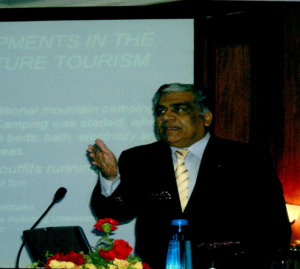
A)For me, adventure tourism was a natural convergence of my personal passion for the mountains, my professional exposure, and my mission to put India on the global adventure tourism map. I was driven by a combination of personal passion, early exposure, and a pioneering vision. My love for adventure started in 1969 when I joined the Delhi Mountaineering Association.
Thereafter, I promoted and pioneered many routes and trails. My efforts were always balanced with concern for the environment and a desire to create employment in areas of low opportunity and high exploitation.
4.What are your current main activities?
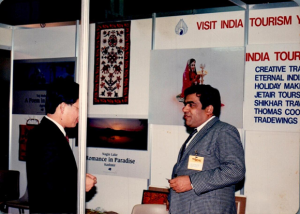
A)Shikhar has developed top-level expertise in providing logistic and organisational support to mountaineering expeditions in the Himalayan region. This includes peaks like Nun, Kun, Stok Kangri, Satopanth, and Kamet. We also guide trekking expeditions across the Indian Himalayas. We also undertake Camel Safaris, Jeep Safaris, Bicycle Tours, Wildlife Tours, River Cruises, We also organise Luxury Holidays, Cultural and Heritage tours, and leisure and incentive travel. The Conference division handles both national and international Conferences, Exhibitions, Events and Meetings. The Educational Tours division offers packages to Schools, Colleges and other educational institutions. I am also involved with Himalayan conservation through the Shikhar Eco Foundation and the Gangotri Cleaning Project.
5.How is the Adventure Tourism Business today?
A)It is booming and is one of the fastest-growing segments in the entire tourism industry. The India adventure tourism market reached USD 16,730 million in 2024 and is expected to grow to USD 86,090 million by 2033, at a CAGR of 17.80%.
India has climbed to become the fifth largest source market for adventure tourism globally.
Growth is driven by increased disposable incomes, a growing middle class, and a desire for authentic travel experiences. Government initiatives such as the Swadeshi Darshan scheme are also improving infrastructure and connectivity to off-the-beaten-path areas.
The Himalayas, Western Ghats, and coastal regions offer trekking, river rafting, paragliding, and scuba diving experiences, making India a diverse adventure destination.
6.Any challenges and problems confronting the industry?
A)Adventure tourism in India faces challenges including insufficient infrastructure, safety concerns, environmental degradation, a shortage of skilled manpower, and regulatory obstacles. There is a lack of regulation and mandatory licenses for adventure operators, and proper training for guides and instructors is often missing.
Inadequate infrastructure in remote and rural areas, where many adventure activities take place, makes it challenging for travellers to access and stay safe. Poor road networks, limited accommodation options, and lack of medical facilities pose significant hurdles.
The environmental impact of adventure tourism is a primary concern, as increased human activity can lead to habitat destruction, wildlife disturbance, pollution, and resource depletion.
There is a shortage of skilled manpower, need for standardised safety regulations, infrastructural gaps. There is overcrowding at popular spots, while lesser-known areas remain underdeveloped and under-marketed. The sector needs urgent reform.
7.Where does India Stand in Adventure?
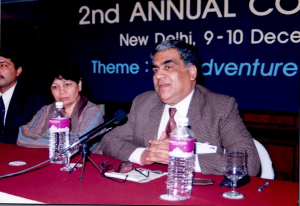
A)Global Rankings India has secured the 39th position in the Global Tourism Index 2024 by the World Economic Forum (WEF), with an overall score of 4.25 out of 7-the highest position among lower middle-income economies.
India topped the 2025 edition of Global Data’s Tourism Potential Index, owing to a blend of cultural richness, strong infrastructure development programs, and impressive growth in both visitation and tourism spending.
As per the WTTC Global Summit 2025, India occupies the 9th rank globally in tourism GDP contribution, with USD 249.5 billion contributed to the global GDP.
The Himalayas, Western Ghats, and coastal regions offer trekking, river-rafting, paragliding, and scuba diving experiences, making India a highly diverse adventure destination.

8)What is the future?
A)The future of adventure tourism in India looks extremely bright, with explosive market growth. The India adventure tourism market reached USD 16,730 million in 2024 and is expected to grow to USD 86,090 million by 2033, at a CAGR of 17.80%.
Travel operators have already seen high single-digit to double-digit growth in adventure tourism bookings in 2025, compared to 2024, driven by a growing YOLO (You Only Live Once) mindset and a desire for immersive outdoor experiences, primarily among travellers aged 20 to 45.

New Emerging Hotspots Emerging destinations like Arunachal Pradesh, Jammu, Ladakh, and Andhra Pradesh are diversifying adventure tourism with unique activities and sustainable initiatives, drawing global travellers.
The Indian government is actively promoting adventure tourism through policy incentives, infrastructure investments, and safety guidelines, including eco-parks, trekking routes, and camping grounds.
A notable trend is the rise of digital platforms and online booking services, making adventure travel more accessible. AI-driven itinerary planning tools are streamlining bookings and personalising experiences.
Driven by a young population, rising incomes, government backing, and a powerful shift in mindset towards experiential travel, the future in India is very bright. The foundation that I and other pioneers laid decades ago is now set to multiply many times over.
9)Your Hobbies?
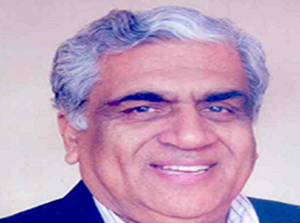
A)My hobbies and personal passions are deeply intertwined with my professional life, namely, mountaineering and trekking. This was never just a profession, but a lifelong passion.
Being a qualified commercial pilot and flight instructor, flying was clearly more than just a career for me. It was a personal calling that shaped my adventurous personality.
I have a passion for inspiring others, having travelled extensively across the world giving lectures at various Alpine clubs.

( THE WRITER, INDER RAJ AHLUWALIA IS AN INTERNATIONALLY RENOWNED , MULTIPLE AWARD – WINNING TRAVEL JOURNALIST AND AUTHOR)

Advertisement:
















Add Comment