





BY DEBAJYOTI CHAKRABORTY
KOLKATA | 28 OCTOBER 2026
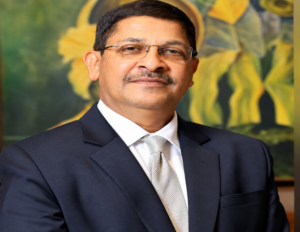
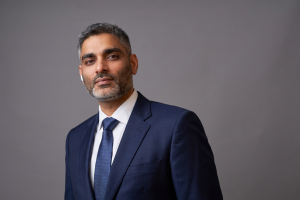
In this exclusive interview, The Travel And Tourism Times sits down with Shekhar Mukherjee, the visionary Executive Director of the NIPS Institute of Hotel Management.
Mukherjee bridges the gap between academic theory and the operational realities of the hospitality world, transforming how next-generation hoteliers are trained. Under his leadership, NIPS has emerged as a premier institution, known for integrating rigorous classroom education with real-world industry dynamics.
In this insightful conversation, Mukherjee shares his perspective on the rapidly evolving landscape of hospitality education, the strategic shifts required to meet modern global tourism demands, and how NIPS is equips students to excel in high-stakes environments. Here are the excerpts……
- What are the most critical gaps between traditional classroom learning and the operational realities of the hospitality sector today?
A)One important gap is between knowing what should be done and actually being able to do it under operating pressure. In a classroom, a student has time to think. During a busy dinner service, decisions often have to be taken immediately.
It is essential to understand service standards, cost control and guest relations in theory, but the real test comes when a guest has already waited 45 minutes for a meal because of an unexpected operational delay. How do you communicate, recover the situation and still protect the guest experience?
Commercial understanding is equally important. Students should know what a dinner plate costs and what wastage can do to a monthly P&L.
Education should therefore bring the classroom closer to the workplace and prepare students not merely to get a job, but to perform, adapt and grow once the job begins.
- How is NIPS actively collaborating with global travel brands to ensure students are learning from real-time market trends?
A)NIPS has been in hospitality education since 1993, and over the years we have developed connections with hospitality professionals, recruiters and our alumni working across India and internationally.
Hoteliers and recruiters from markets such as New Zealand interact with our students, while students returning from international internships share their experiences, observations and current workplace practices with their juniors. International chefs and hospitality professionals also visit the campus and conduct workshops, and we regularly use online sessions to connect students with professionals working globally.
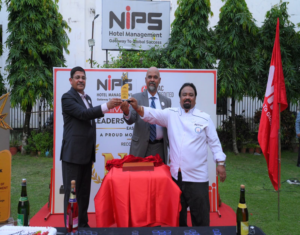
Students preparing for international internships or careers have specific requirements—from communication and cultural understanding to service standards and workplace expectations. Therefore, our interaction with global hospitality professionals and brands helps us continuously understand what international employers are looking for and prepare our students accordingly.
For us, international exposure should become part of the learning environment, rather than an occasional activity.
- Beyond technical knowledge, what specific soft skills or behavioural traits are now mandatory for a graduate to be considered highly employable?
A)Discipline sets the foundation, and reliability comes first. Turning up on time with proper grooming every day may sound basic, but it is often what gets noticed first.
The ability to stay calm while handling an unhappy guest, to listen before reacting and to own a problem instead of passing it on are extremely important.
Teamwork across departments also matters because the guest does not care whether a delay happened in the kitchen or at the front desk.
Attitude, emotional maturity and communication make a big difference. As the industry often says, “We hire for attitude and train for skills.”
Students who can accept feedback, learn from mentors and remain willing to improve generally progress much faster.
- How does the high-pressure environment of aviation hospitality and flight catering differ from luxury hotel operations?
A)In a luxury hotel, pressure comes largely from the guest in front of you, and there is often some room to recover a situation through personal attention.
In flight catering, pressure comes from the clock and from the system. Thousands of meals have to be produced, chilled, packed and loaded to exact airline specifications, and the aircraft door closes at a fixed time. There is very little room for error.
Food safety, temperature control, portion accuracy, production planning, hygiene, dispatch coordination and documentation are all critical.
Luxury hotels, on the other hand, require constant attention to last-minute changes, VIP requirements, personalisation and anticipating guest needs.
My years in flight catering taught me the importance of precision and consistency. Hotel operations taught me equally that excellent hospitality may not always be visible, but its absence is immediately felt.
- What core people-management philosophy must the next generation of hospitality leaders master to handle diverse teams effectively?
A)A leader must have a strong moral compass and be seen as fair and impartial.
People in hospitality come from different backgrounds, languages and levels of education, and they quickly notice whether the same rules apply to everyone. Authority alone cannot build a good team.
A leader who is present on the floor during busy hours, addresses people by name, corrects in private and praises in public can build loyalty that no incentive scheme alone can create.
Clear expectations are equally important. Many performance problems arise simply because people are not sure what is expected of them.
I have always believed that respect and accountability must go together. Being considerate does not mean compromising standards, and being firm does not mean being discourteous.
- How is NIPS structuring its practical exposure to ensure students achieve true professional readiness before entering the workforce?
A)Industrial Training is part of the academic structure, but at NIPS our preparation begins
before the student reaches the hotel.
We conduct a structured pre-Industrial Training workshop where students are guided on what to observe, what questions to ask, how to understand departmental processes and what they should try to learn beyond the duty assigned to them.
We have also developed a dedicated Industrial Training Manual and Log Book for NIPS students. During training, they are encouraged to Observe, Question, Understand, Connect, Participate, Reflect and Apply. The intention is that they should not merely perform a task, but understand why it is being done, how departments connect, what standards are followed, how guest expectations are managed and how operational decisions affect the business.
Their learning is documented through the log book, observations, case studies and a structured project report, followed by presentation and viva after training.
For us, Industrial Training should produce a thinking professional, not simply a student who has completed the required months.
- What role does formal mentorship play in shaping the mindset and career longevity of aspiring hospitality professionals?
A)Mentorship becomes particularly important when young students move from school or college into a professional environment. It is a new stage of life, and naturally they may come with certain expectations or preconceptions about careers, success and the workplace which may not always align immediately with professional realities.
A mentor helps them understand these experiences in the right perspective—what is expected from them, why professional standards matter, how to learn from mistakes and how to gradually develop judgement and confidence.
At NIPS, this guidance comes from different levels. Faculty members know the students closely, while senior chefs and industry professionals, including experts associated with bodies such as IFCA and EICA, interact with them through lectures, workshops and professional guidance.
Equally important is our alumni network built over more than three decades. Many NIPS alumni today work globally in senior culinary, management, training, learning and development, entrepreneurial and leadership roles. When they return to the institution or interact online with students, their guidance is particularly meaningful because they once began their journey from the same classrooms.
Mentorship, therefore, is not about making decisions for students. It is about helping them develop the confidence and judgement to make better decisions for themselves.
- How have global luxury service standards evolved over your 42-year career, and how do you teach students to balance modern efficiency with traditional warmth?
A)When I started, luxury was much more formal—silver service, strict protocol and a certain distance between staff and guest.
Today, luxury is increasingly about personalisation and ease. Guests want to be recognised, they want things done quickly, and they increasingly expect technology to simplify parts of their stay.
My message to students is that efficiency should free up time for warmth, not replace it.
Let technology handle the booking and billing, so that the professional has time to remember a guest’s name, how they like their tea or something important about their family.
A guest may eventually forget the reason for a complaint, but will often remember how he or she was treated.
My understanding of Taj hospitality has always been that standards matter, but the spirit in which they are delivered matters just as much.
- How do you view the growth and evolution of the Eastern Indian hospitality market, and what specific role will NIPS play in supplying its talent?
A)The opportunity in Eastern India is significant. Kolkata, Bhubaneswar, Siliguri, the Northeast and our pilgrimage and leisure circuits are seeing increasing hospitality activity, while nationally the hotel sector continues to expand.
Eastern India has always produced good hospitality professionals, many of whom have built successful careers across India and overseas. As the hospitality market within the region grows, there is now an opportunity to create equally strong career pathways closer to home.
NIPS can contribute through its experience and presence in Eastern India by preparing students who understand both professional standards and the realities of the region.
Our role should not simply be to produce graduates. It should be to develop professionals who are ready for hotels, restaurants, aviation, cruise lines and other emerging hospitality sectors, while keeping national and international career opportunities open to them.
- What is the single most valuable piece of advice you can give to young aspirants looking to build a successful career in today’s travel and tourism sector?
A)Young people entering hospitality today are entering a profession that is far broader and more global than when I began my career.
Hospitality professionals today build careers across hotels, aviation, cruise lines, restaurants, tourism, events, luxury services and many other sectors, with opportunities across countries and cultures. It is also a profession that builds confidence, communication, discipline, adaptability, teamwork and the ability to understand people—qualities that remain valuable wherever your career eventually takes you.
The world is becoming increasingly connected, and a good hospitality professional can carry his or her skills across markets and industries.
My advice, however, would remain simple: do not be in a hurry to become a manager; first become a professional whom people can trust.
Learn, observe, take responsibility and build your reputation.
Having spent 42 years in hospitality with Taj Hotels and TajSATS Air Catering, I have learnt that careers are rarely built overnight. They are built through small, consistent actions.
Your designation tells people what position you hold. Your conduct determines the professional you become.

Advertisement:













Add Comment