



BY DEBAJYOTI CHAKRABORT
KOLKATA | 20 APRIL 2026
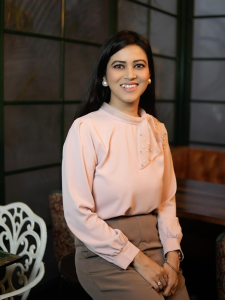
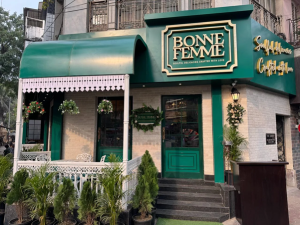
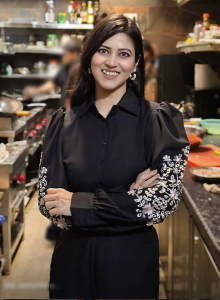
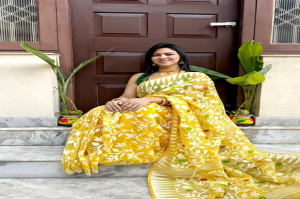
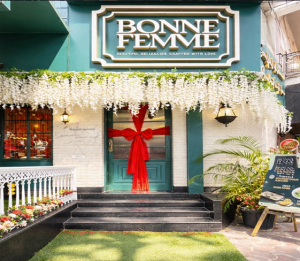
Bonne Femme is where the soul of Calcutta’s culinary legacy meets the spirit of global gastronomy. From heirloom recipes to internationally inspired plates, every dish tells a delicious story. In an exclusive interview of Smt. Moushumi Sircar, Restauranteur and Partner of Bonne Femme with The Travel and Tourism Times shares her thoughts. Here are the excerpts:
1. Was there a defining moment when you decided to pursue your passion for food professionally?
Ans ) I have always wanted to build something of my own. Coming from a business family, I grew up watching entrepreneurship closely, which naturally shaped my aspirations. I wanted to pursue something I am skilled at and genuinely passionate about. During my corporate career, I began to feel a sense of limitation—both in creativity and growth. I often felt that if I had something of my own, I could perform without boundaries and truly excel. After becoming a mother, this feeling intensified. The rigid work hours, typically from 9 am to 7:30 pm, became increasingly difficult to manage. By the time I returned home, my child would either be too tired or not in a receptive state, which made it challenging to be present as a parent. One particular incident stayed with me. My child had a game at the Bengal Tennis Association, followed by a prize distribution ceremony. While it may not have been a major milestone, I deeply wanted to be there as a mother. However, work commitments prevented me, and I had to send a family member instead. That moment made me realize that if I had my own business, I would have had the flexibility to attend. This combination of wanting independence, better utilizing my strengths, and having the flexibility to balance work and motherhood led me to pursue my passion for the food industry. Having travelled extensively and experienced diverse global cuisines and wines, I developed a strong understanding and appreciation of food—ultimately inspiring me to begin my journey as a food entrepreneur.
2. What were some of the biggest challenges you faced while transitioning industries?
Ans ) There were several challenges, especially transitioning from an IT MNC to the food industry. In my previous role, I managed a team of highly educated professionals, most of them engineers. In contrast, my current team comprises chefs, servers, and housekeeping staff, many of whom come from different educational and professional backgrounds. This required me to completely adapt my leadership style—whether in terms of communication, language, or approach. What worked effectively with my earlier team did not necessarily resonate here, so I had to rethink and tailor my methods to ensure clarity and impact. Another significant challenge was navigating the initial lack of acceptance as a female leader in this industry. Unlike my corporate experience, where women leaders were naturally respected, here I found that I had to assert myself more strongly and consistently prove my authority. It required firmness and persistence to establish that my decisions carried weight. Over time, by demonstrating consistency and leadership, I was able to earn that respect. Today, I share a strong and positive bond with my team, and that mutual respect is firmly in place.
3. What was the vision behind Bonne Femme when you first started?
Ans ) The vision behind Bonne Femme was simple yet clear. From the very beginning, our aim was to offer a distinctive dining experience—food that goes beyond the ordinary and truly delivers a memorable gastronomic journey. We focused on using the finest ingredients, offering generous portions, and keeping the pricing accessible so that we could genuinely “feed people” in both quality and quantity. Beyond that, we wanted to redefine the culinary landscape of the city. I believe, and proudly say, that we have played a role in influencing how new restaurants approach their menus today—bringing in creativity, twists, and a certain charm, moving away from purely conventional offerings. Our core vision was to introduce global cuisine with a unique twist, while seamlessly blending in the old-world Calcutta charm and a subtle Bengali touch. That balance between innovation and familiarity has always been at the heart of Bonne Femme.
4. How would you describe the dining experience you aim to create for your guests?
Ans ) The dining experience at Bonne Femme is truly distinctive. Our guests leave happy and satisfied, which is reflected in our high repeat clientele. The menu is thoughtfully curated, moving away from conventional offerings—each dish goes through careful iterations, and when you dine with us, you can genuinely sense the effort, warmth, and care behind every plate.
Equally important is the service. I consistently train my team to be courteous, attentive, and welcoming, ensuring that every guest feels comfortable and at home. This is something we are often appreciated for—guests frequently tell us that beyond the food and décor, it is the warmth and politeness of our staff that stands out. In the hospitality industry, these details make all the difference, and we place great emphasis on getting them right.
5. What sets Bonne Femme apart in Kolkata’s evolving culinary landscape?
Ans ) Kolkata’s culinary landscape has been evolving rapidly, and I would confidently say that Bonne Femme has played a significant role in that shift. If you look back a couple of years, there were very few restaurants experimenting with inventive twists on food. Today, almost every new place is trying to offer something different—and I believe we’ve helped drive that change.
From the outset, we introduced a menu that was truly unique, with dishes that weren’t available elsewhere in the city. Over time, we’ve seen elements of our offerings being emulated, even by larger, established restaurants. It’s something I take great pride in—being able to contribute to and influence how the city dines today. We also keep our menu dynamic, updating it frequently because our guests come to us for novelty and variety. Many of them return within the same week to try new dishes, which speaks to the strong loyalty we’ve built. Alongside this, we’ve introduced a range of innovative cocktails—flavours and concepts that are entirely new to the city—further enhancing the overall experience we offer.
6. How has your corporate experience influenced your leadership style today?
Ans) A lot of what I learned over my 17 years in the corporate world has been instrumental in shaping how I run the business today. Strategic thinking and structured planning are key—everything is quantified and tracked through well-maintained systems and sheets, which makes monitoring progress and performance much more efficient. Operationally, I’ve introduced processes for staff rosters, leave management, attendance, salaries, vendor payments, and more—all documented and streamlined. This has brought clarity and accountability, making it easier for both the team and me to manage day-to-day operations without gaps. Discipline is another core value I’ve carried forward. When I entered this industry, I noticed a certain lack of structure, with a more casual approach to work. I was very clear and firm about the standards I expected. Over time, the team has aligned with this approach and understands the importance of consistency and professionalism. I strongly believe that no business can truly grow or sustain success without discipline—it forms the foundation for excellence.
7. How do you handle the operational pressures of running a restaurant?
Ans)- Running a restaurant comes with immense operational pressure, and in my case, it is even more demanding as we are a global cuisine establishment. We have dedicated chefs for different cuisines—Continental, Chinese, Indian, Mughlai, along with a separate tandoor section—each supported by their teams. Given the vast menu, the variety of raw materials required is extensive, which also means managing a large network of vendors.
All of this adds significantly to the day-to-day operational complexity. Alongside this, there are constant responsibilities such as addressing staff concerns, managing unexpected challenges like electricity or water issues, and navigating local operational demands. Since I oversee operations independently, it often means being actively involved at all times. The only real way to handle this level of pressure is to stay consistently engaged and proactive. In this business, something or the other is always happening, so it requires constant attention, adaptability, and a hands-on approach to keep everything running smoothly.
8. What are some key lessons entrepreneurship has taught you so far?
Ans) One of the most important lessons I’ve learned is the value of consistency—showing up with the same perseverance, determination, and commitment every single day. Whether business is doing well or going through a slow phase, your passion and effort cannot fluctuate.
You cannot allow setbacks to discourage you or success to make you complacent. Over time, results do come, but only if you remain steady and dedicated. Equally important is staying true to your standards. Never compromise on quality—whether it’s ingredients or overall experience—even during challenging periods. Integrity in your work and an unwavering focus on quality are what ultimately build long-term success. This journey has also taught me patience and emotional control. Earlier, I was more vocal and reactive, but now I’ve learned how to communicate more thoughtfully and professionally—with both my team and guests. In the hospitality industry, guest satisfaction is paramount. There are times when you may not fully agree, but it’s important to listen, remain calm, and handle situations gracefully rather than react impulsively. Overall, this entrepreneurial journey has strengthened my resilience, patience, and ability to navigate challenges with composure—lessons that continue to shape me every day.
9. How do you maintain a balance between professional ambition and personal life?
Ans) “Balance” is a very tricky word. It sounds ideal in theory, but when you are truly building something meaningful, especially in the early years, it’s not always realistic. I don’t believe significant success comes from strictly working 8–9 hours a day, sleeping well, and neatly dividing time between personal and professional life. It demands far more—an all- consuming level of commitment where you are constantly thinking, living, and breathing your work.
In the initial years, that intensity is almost unavoidable. I’m two years into my entrepreneurial journey, and this is not a phase where I can afford to slow down. Naturally, the balance has been skewed towards my professional life. In my first year, I didn’t take a single day off except when my son was unwell. I skipped vacations, social events, and even personal engagements, so much so that people stopped reaching out, and I was completely fine with it. My focus was singular: building something from the ground up. After spending 17 successful years in the corporate world, stepping into something entirely new meant I had a lot to prove to myself more than anyone else. I gave it everything I had. While “sacrifice”
may not be the most pleasant word, the reality is that I did whatever it took to make this work. My routine reflects that commitment. I don’t sleep 8 hours, on average 5 to 6. I don’t limit myself to fixed working hours; I’m engaged with work from the moment I wake up until I go to bed. Whether it’s coordinating operations, reviewing reports, planning finances, or studying global restaurant trends and social media strategies, my mind is constantly at work.
Even when I’m away, I remain connected—handling issues, coordinating supplies, or planning ahead.
For me, at this stage, there is no real “switch off.” That’s the nature of building and running a business. Perhaps balance comes later, once a certain level of stability is achieved. But for now, my life is heavily inclined towards work—and I’m fortunate to have a supportive family that understands this and stands by me through the journey.
10. In your view, how does a restaurant contribute to a city’s identity and tourism appeal?
Ans)- Restaurants play a vital role in shaping a city’s identity, especially when it comes to travel and tourism. When people choose a destination, they don’t just think about the places they’ll visit—they also think about the food they’ll experience. What’s unique to that city?
What cuisines can they try? Even someone who isn’t particularly a foodie considers what’s special to eat in a new place. Kolkata, in particular, is incredibly rich in its food culture, offering a diverse range of culinary experiences. This is why the restaurant industry, along with local cuisine, becomes a key driver in attracting tourists. It not only enhances the overall travel experience but also contributes significantly to the city’s economy and revenue.
11. Bonne Femme’s Pumpkin Roast Biryani created quite a buzz as a winter special—what inspired this unique fusion dish, and how did guests respond to it?
Ans ) The Pumpkin Biryani was conceptualised by Mr. Sudip Mullik, and it received an exceptional response. While there were mixed reactions initially on social media, once guests actually experienced the dish, the feedback was overwhelmingly positive—it truly exceeded expectations. What made it unique was the preparation: the biryani was roasted inside a tandoor and served with a selection of distinctive dips, creating a flavour profile that was both innovative and memorable. What has been especially rewarding is the recognition it received beyond our immediate audience. A few international chefs who follow our work have introduced similar versions of the dish in Michelin-starred restaurants in the United States, inspired by the original creation of Mr. Sudip Mullik. Seeing our creation being acknowledged and emulated at that level is incredibly gratifying. The fact that it continues to feature on their menus is a testament to its impact. The Pumpkin Biryani was not just delicious—it represented something new and bold. And this isn’t an isolated case; many of our dishes are created with the same philosophy, and it’s encouraging to see them inspire others across the industry.

Advertisement:











Add Comment