

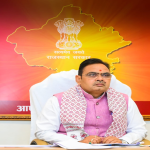

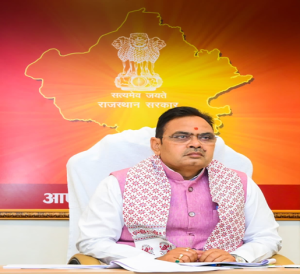
(In line with the vision of Chief Minister Shri Bhajanlal Sharma and Deputy Chief Minister Diya Kumari, the Rajasthan Government’s Homestay Scheme 2026 is an important and revolutionary initiative launched to promote tourism development, increase rural income, and encourage self-employment, said the Additional Chief Secretary, Tourism.)
*Rural and family tourism will receive a new boost, giving wings to tourism and employment in the state.
TTT NEWS NETWORK
JAIPUR| 21 FEBRUARY 2026
Under the leadership of Chief Minister Bhajanlal Sharma, the state government has taken a major step in the tourism sector by implementing the concept of ‘Ease of Doing Business’ and ‘Ease of Living’ at the grassroots level through the introduction of the Rajasthan Homestay (Paying Guest House) Scheme–2026.
Providing this information, Additional Chief Secretary (Tourism) Mr. Praveen Gupta stated that, in line with the vision of Chief Minister Shri Bhajanlal Sharma and Deputy Chief Minister Diya Kumari, the Homestay Scheme 2026 is a significant and transformative initiative aimed at promoting tourism development, increasing rural income, and encouraging self-employment.
He further informed that the scheme has been simplified in accordance with the Government of India’s Deregulation 2.0 measures and the spirit of Ease of Doing Business. The scheme aims to decentralize tourism activities across the state, strengthen the rural economy, and promote small-scale enterprises. The licensing process has been minimized, and approvals have been made digital and faster. Earlier, starting a homestay required permissions from multiple departments and extensive paperwork. Now, facilities such as a single-window system, reduced documentation, and easy registration have been introduced.
Opening a homestay in the state will now be easier, faster, and more affordable than before. Under this scheme, residents of the state can offer rooms in their homes or properties for tourist accommodation. Homeowners will now be able to open and operate homestay units more conveniently, enabling small investors, rural families, and women entrepreneurs to directly benefit from tourism. This will provide a source of income to local residents while offering tourists an opportunity to experience local culture. Rural and family tourism will gain momentum, and tourism and employment in the state will grow significantly.
Under the Rajasthan Homestay (Paying Guest House) Scheme–2026, the maximum number of permitted rooms per residential unit has been increased from 5 to 8, while the maximum bed capacity has been set at 24. This will enhance accommodation capacity while preserving the family-oriented nature of homestays and providing small entrepreneurs an opportunity to participate in the tourism business. The scheme has been implemented across the state with immediate effect.
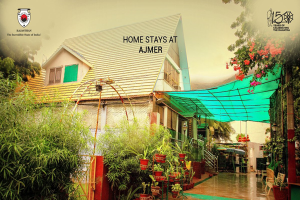
The earlier condition requiring the property owner or a family member to reside on the same premises has been removed. Now, homestay units can be operated by the property owner, leaseholder, or a caretaker appointed as per prescribed standards. If the owner or lessee does not reside on the premises, a designated caretaker may be appointed in accordance with the guidelines. This will ensure both operational flexibility and professional efficiency.
The registration process under the scheme will soon be made fully online, enabling simple and transparent applications from home. Temporary registration will be issued within seven working days of receiving the application, allowing operations to begin. Permanent registration will be granted after inspection within three months and will remain valid for two years. If the certificate is not issued within the stipulated time, the application will be deemed automatically registered, ensuring administrative accountability.
Registration will be conducted through local offices of the Tourism Department, promoting decentralized implementation. Homeowners in rural areas will also be able to register through their nearest Tourist Reception Centres (TRC). This arrangement will boost rural tourism and generate employment opportunities at the local level.
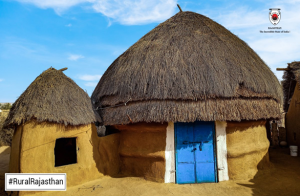
As per the notification, each homestay must be operated in a fully residential premises. Each rented room must have an attached bathroom and toilet, adequate water and electricity supply, ventilation, cleanliness, and compliance with fire safety standards. Parking arrangements and waste disposal systems in accordance with local body regulations will also be mandatory. It will be compulsory to report details of every foreign tourist to the concerned authority and maintain a guest register for at least seven years.
Under the scheme, homestays have been classified into Silver and Gold categories. The registration fee for the Silver category is ₹1,000 and for the Gold category ₹2,000. In the Gold category, priority will be given to facilities such as AC/heating, internet connectivity, enhanced furnishing, smoke detectors, and security arrangements. No separate charges can be levied for breakfast included in the tariff, and this must be clearly displayed.
Key Features of the Scheme:
- Simplified system in line with Ease of Doing Business
- Permission for up to 8 rooms and 24 beds
- Mandatory residence of owner/family removed
- Operation possible by owner, leaseholder, or appointed caretaker
- Fully online, time-bound, and transparent registration process (to be implemented soon)
Registration:
- Temporary registration within 7 days; permanent certificate within 3 months
- Decentralized registration through local Tourist Reception Centres
- Promotion of rural tourism, employment, and the local economy

Advertisement:









Add Comment