





BY INDER RAJ AHLUWALIA
( THE WRITER IS AN INTERNATIONALLY RENOWNED , MULTIPLE AWARD – WINNING TRAVEL JOURNALIST AND AUTHOR)
NEW DELHI | 18 MARCH 2026
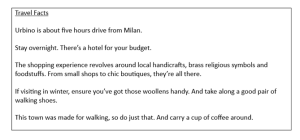
You know how it is with some places. It takes just one short visit to uncover myriad attractions one didn’t know about.
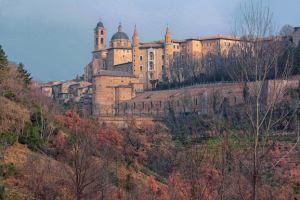
This was a case in point. Offering a sizeable swathe of Italian civilisation, the little town turns out to be not so little after all, watching over the surrounding countryside from its hill-perched vantage point. Teeming with cafes, shops and tourists, it appears busy enough.
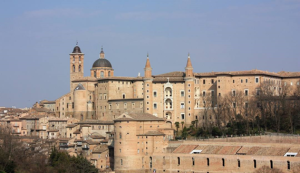
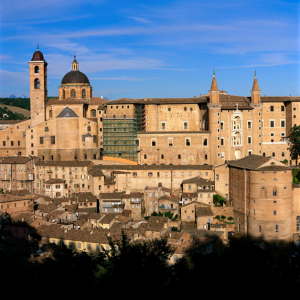
It was all fairly easy. The drive here from La Foresteria was a rather pleasant ninety-minute affair that took me past fields, the seaside, and then green hills,util finally, Urbino loomed up above. It was a mass of golden concrete, its intact, stately palace etched against the sky. Greenery edged it in.
A quick entry through the gate, then a short walk straight in and up, and I found myself smack in the middle of town, and as I soon found out, in the middle of Italian heritage. From here narrow, cobbled streets flanked by brick buildings funnelled off to all corners of the town.
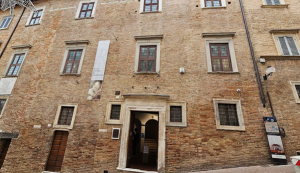
Shaping Urbino’s history were numerous organised and sustained efforts towards artistic and architectural grandeur. Desiring to make his home the dwelling place of the Muses, Federico da Montefeltro called to his court the greatest personalities and artists of his time: Piero dell Francesca, Luciano Laurana; Francesco di Giorgio Martini; Bramante, and Raphael, all left their mark and became noteworthy visitors to the town.
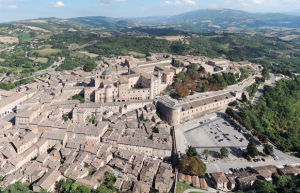
Many developments took place post-renaissance. The town saw a period of new splendour in the beginning of the 18th Century when Clement X1, son of the aristocratic Albani family, ascended to the Papal throne. The family constructed civil and religious buildings of note, and also unfolded and exposed the urban fabric to modern architectural renovations. It is all on show today.
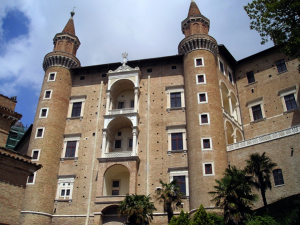
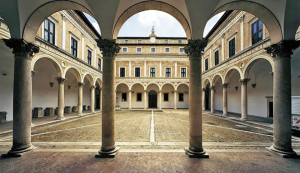
All roads lead to the Montefeltro’s Ducal Palace, a stupefying testimony of Renaissance grandeur. It is one big labyrinth of rooms, halls, chambers, pantries, kitchens, corridors and cellars. I don’t know if the couple of hours I spent exploring this grand, self-contained complex, admiring the numerous paintings, frescoes and statues that reflect the region’s rich history, did full justice to the place. But it was edifying enough.
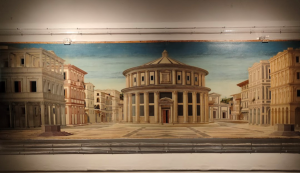
Also housed in the palace is the ‘Galleria Nazionale delle Marche’, the city’s foremost museum, preserving works of art ranging from the 14th to the 17th Century, including masterpieces of the Italian Renaissance, notably the ‘Muta’ (Portrait of a Gentle woman) by Raphael; ‘Citta ideale’ (the ideal city); the ‘Flagellazione’ (the Flagellation) by Piero della Francesca; and the ‘Profanazione dell’Ostia (Profanation of the Host) by Paolo Uccello. Also displayed are exquisite works of Titian; Luca Signoreli, and Frederico Barocci.
Priceless decorations and ornaments embellish all corners of the palace, and particularly valuable are the portals, fireplaces and inlaid decorations of the doors that reach their climax in the ‘Study’, the ideal synthesis of art and culture. The next floor houses a large ceramics collection. The palace also houses the ‘Museo Archeologico’, a collection of Roman era inscriptions, memorial stones, and urns.
The palace tour over, it seemed I was back in the real world. Life ebbed and flowed. The Duomo’s steps were the right place to sit, take stock, and reflect, and I did just that, watching the students, locals and tourists who milled about.
But things don’t end here. Urbino’s historical and artistic heritage stretches on and beyond. Religious works of art abound in the ‘Museo Diocesano Albani’, while the ‘House of Raphael’ reveals the fascinating structure of a Renaissance private home. The ’Gallery of Plaster Casts’; the ‘Physics Cabinet’, and ‘Leonardo Castellani Hall of Engravings’; are all local gems.
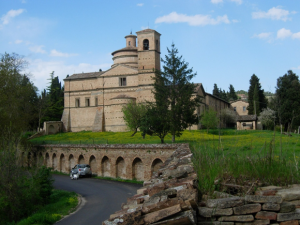
Typical of Italy, Churches are omnipresent. The Church of San Bernardino just outside the city; the 17th Century Church of the Santo Spirito; and the churches of San Francesco and San Domenico are all architecturally beautiful shrines of stature.
Among the plethora of historical and religious attractions, perhaps Urbino’s most secret heritage are the treasures of the Fraternitie. These small churches, called oratories, have reopened to the public after years, showing the world of the fraternities, which intensely characterised the Italians’ life over the centuries, from a religious, social and artistic point of view. While a flair for art is a common thread among them all, the Oratories of San Giuseppe and of San Giovanni, excel with their artistic richness and grandeur.
If Italian food is an international rage today, Urbino deserves at least part of the blame. Local cuisine tends to be traditional and uncomplicated, drawing on fresh local produce. Don’t miss the soups, especially ‘cappelletti’ in capon soup or ‘passatelli’. Meat eater can rejoice. The menu goes beyond the lamb and beef drill to include an assortment of game meats. After tasting the roasts, it’s time to savour the famous ‘caciotta’ – a fresh cheese with a delicate flavour. Also famous is the ‘crescia sfogliata’, a bread-like specialty usually filled with local ham and home-grown vegetables.
Wash all this down with a glass of light and sparkling Bianchello del Maeauro wine. Then settle for a good old espresso. It is the classic ‘good life’.
What can I say about my Urbino visit? Well, quite a bit, really.

Advertisement:













Add Comment