





TTT NEWS NETWORK
NEW DELHI | 25 JULY 2026
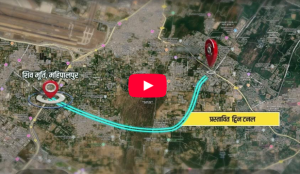
For millions arriving in India’s capital each year, the first impression of Delhi is often shaped by congested airport approaches, traffic bottlenecks and lengthy journeys between key business, diplomatic and cultural districts. The 6 Lane Dwarka Road Tunnel on NH- 148AE, approved earlier this month by the Cabinet Committee on Economic Affairs (CCEA) is set to redefine urban mobility in the National Capital Region. To be implemented by the National Highways Authority of India (NHAI) under the Ministry of Road Transport and Highways (MoRTH), the 8.1-km, six-lane project, to be developed at an estimated cost of ₹6,969.67 crore on Hybrid Annuity Mode (HAM) under the NH(O) Scheme, will connect the Shiv Murti Interchange on the Dwarka Expressway (NH-248BB) with Nelson Mandela Marg in Vasant Kunj. The corridor will provide a high-speed, access-controlled link between West and South Delhi, particularly benefiting traffic from Gurugram, Dwarka, IGI Airport and West Delhi. Its defining feature is a 3.14-km twin-tube tunnel, including a 1.98-km stretch beneath the Southern Ridge, ensuring seamless mobility while preserving one of Delhi’s most ecologically sensitive landscapes.
Reimagining Urban Mobility
The Dwarka Tunnel Corridor will provide a direct, uninterrupted connection between the Dwarka Expressway and South Delhi, reducing dependence on heavily congested routes such as Dhaula Kuan–IGI Airport–Mahipalpur, Chhatarpur–Mahipalpur and Rangpuri. By improving traffic flow and reducing travel delays, the project will make daily commuting faster, safer and more reliable for residents, airport users and commercial traffic alike.
The corridor will also strengthen integration between Delhi and Gurugram, improving access to key residential areas, commercial centres, institutional hubs and the Indira Gandhi International Airport. Together with NHAI’s proposed AIIMS–Mahipalpur Elevated Corridor, which will connect the tunnel to the Barapullah Elevated Road, the project will establish seamless east-west connectivity across the city, benefiting travel to East Delhi, Ghaziabad and Noida while creating a more efficient urban transport network.
Enhancing Tourism and Visitor Experience
Delhi welcomes millions of domestic and international visitors every year, and efficient connectivity is central to their travel experience. The Dwarka Tunnel Corridor will improve access from the airport and the Dwarka Expressway to several of the capital’s iconic destinations, including Qutub Minar, Mehrauli Archaeological Park, Hauz Khas Heritage Complex, Humayun’s Tomb, Lodhi Garden and Chhatarpur Temple. It will also facilitate smoother travel to Bharat Mandapam, India Gate and other major venues that host international conferences, exhibitions and cultural events.
By reducing congestion around the airport corridor and major traffic bottlenecks, the project will offer visitors a faster, more comfortable journey while supporting Delhi’s hospitality, tourism and meetings, incentives, conferences and exhibitions (MICE) ecosystem.
Strengthening Delhi’s Global Gateway
As the primary gateway to the National Capital, the Indira Gandhi International Airport serves millions of passengers each year. The new corridor will improve connectivity between the airport and Delhi’s diplomatic enclave, business districts, convention centres and institutional hubs, enabling quicker and more predictable travel for international delegates, business travellers and investors. By strengthening links between the airport, Dwarka, Gurugram and South Delhi, the project will reinforce Delhi’s position as a leading centre for commerce, diplomacy and global engagement.
Building Sustainable Infrastructure
A distinguishing feature of the project is its environmentally sensitive design. The 3.14-km twin-tube tunnel, including a 1.98-km section beneath the Southern Ridge, enables critical transport infrastructure to be developed while preserving Delhi’s valuable green cover and minimising surface disruption. This approach reflects MoRTH’s commitment to balancing infrastructure development with environmental stewardship.
More than an urban road project, the Dwarka Tunnel Corridor represents a strategic investment in future-ready mobility. By improving connectivity, reducing congestion and integrating key transport corridors, it will enhance the quality of urban life, strengthen economic activity and support the continued growth of the National Capital Region.

Advertisement:












Add Comment