



BY DEBAJYOTI CHAKRABORTY
KOLKATA | 10 NOVEMBER 2026
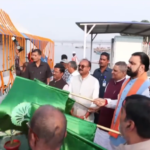
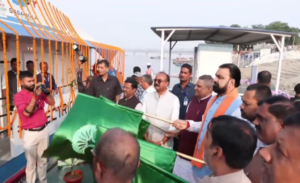
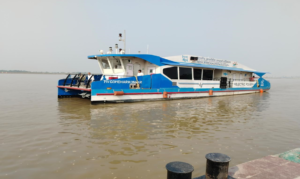
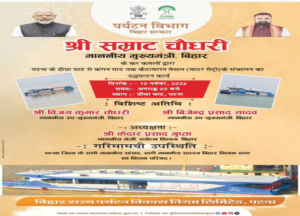
In a major boost to urban mobility and eco-tourism ahead of the auspicious Chhath festival, Bihar Chief Minister Samrat Chowdhury officially inaugurated the state’s first Catamaran Vessel Water Metro service on the Ganga River. The highly anticipated launch took place at Patna’s Digha Ghat (Minar Ghat) at 3:00 PM on Tuesday, November 10, 2026, marking a historic shift toward sustainable public transport in the region.
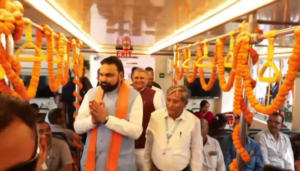
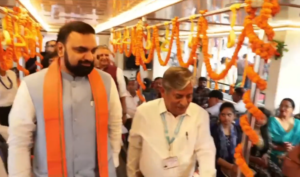
The inaugural ceremony was attended by high-ranking dignitaries, including Deputy Chief Ministers Bijendra Prasad Yadav and Vijay Kumar Choudhary, alongside state Tourism Minister Kedar Prasad Gupta. With this landmark initiative, Patna has carved a unique niche for itself on the national infrastructure map, becoming only the second city in India—after Kochi in Kerala—to successfully roll out a sophisticated water metro network.
A Smooth, Rapid Route Across the Ganga:
The newly introduced catamaran service dramatically slashes travel times along the river corridor, providing a scenic and congestion-free alternative to the city’s crowded roadways. On its debut run, the vessel departed from Digha Ghat right after the ribbon-cutting at 3:00 PM and successfully docked at Gandhi Ghat at 3:40 PM, completing the single-way transit in exactly 40 minutes. Following a brief layout, the return journey commenced from Gandhi Ghat at 4:10 PM, navigating upstream to arrive back at Digha Ghat by 5:30 PM.
The state’s Department of Tourism, which oversees the project under the Bihar State Tourism Development Corporation (BSTDC), announced that the primary goal is to seamlessly bridge popular riverfront locations. While the initial phase strictly connects Digha Ghat to Gandhi Ghat, the government has confirmed blueprints to scale up operations. In the coming phases, the route will expand deeper into the city’s eastern banks, ultimately stretching all the way to Kangan Ghat to establish a comprehensive 12-kilometre water pathway.
State-of-the-Art Modern Comforts:
Built with cutting-edge engineering, the premium catamaran vessel boasts a comfortable seating capacity tailored to accommodate 50 passengers per voyage. The fully air-conditioned (AC) indoor cabin is designed to give commuters a pleasant escape from the city heat while they enjoy panoramic views of the river.
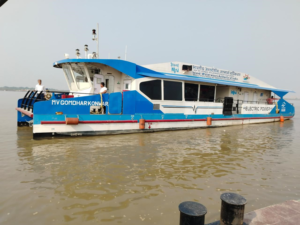
Prioritising inclusivity and passenger safety, the vessel comes heavily integrated with modern utilities. The internal layout includes onboard toilet facilities, wheelchair accessibility for elderly and differently-abled passengers, and a high-fidelity public address system for real-time announcements. For safety, the route is continuously monitored via centralized remote tracking, automated location systems, and onboard CCTV networks, backed by dedicated rescue boats stationed at key intervals along the riverbed.
Green Tech: Zero Emissions on the Holy River
At the core of this ₹908-crore urban mobility project is a profound commitment to environmental preservation. Powered primarily by clean electrical energy, the water metro features an advanced hybrid engine setup. This hybrid-electric design guarantees that regular operations generate absolutely zero water pollution, noise pollution, or tailpipe air emissions, safeguarding the delicate ecosystem of the holy Ganges.
To sustain the battery cycles required for continuous loops, the Department of Tourism has deployed high-capacity infrastructure on the shores. Heavy-duty fast chargers and shore-charging terminals have been constructed at both the Digha and Gandhi Ghat stations. These specialized superchargers are capable of juicing up the vessel’s battery banks in just 10 to 15 minutes, allowing for minimal turnaround delays between trips.
Pocket-Friendly Fares for Common Commuters:
The government has deliberately kept the tariff structure highly affordable to ensure the water metro remains accessible to daily commuters and budget-conscious tourists alike. A flat rate of ₹50 per adult has been fixed for a one-way trip.
Families travelling with children will benefit from steep concessions: toddlers and young children below the age of five can ride entirely free of charge. Meanwhile, children aged between five and twelve qualify for half-fare tickets priced at just ₹25.
Currently, commuters can buy their physical tickets directly from the newly established ticketing counters at Digha Ghat. However, acknowledging the need for modern convenience, officials stated that a smart, digital online ticketing portal is undergoing final testing and will be launched very soon to allow advance reservations.
A Vision for Bihar’s Waterways:
Speaking at the launch, Chief Minister Samrat Chowdhury hailed the project as a monumental step toward sustainable urban development and clean fuel adoption in Bihar. The government also revealed grander plans to replicate this success across other major water bodies in the state. A specialized joint task force comprising officials from the Union Ministry of Ports, Shipping and Waterways, the Inland Waterways Authority of India (IWAI), and the Bihar government is being assembled to evaluate identical passenger and tourism corridors across the Son, Gandak, and Kosi rivers.
For now, Patnaites can skip the heavy street traffic and take to the gentle waves of the Ganga, experiencing a world-class, eco-friendly commute that beautifully marries technological modernization with environmental responsibility.

Advertisement:








Add Comment