






BY DEBASHREE CHAKRABORTY
NEW DELHI | 20 NOVEMBER 2026
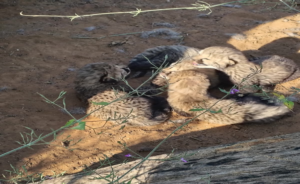
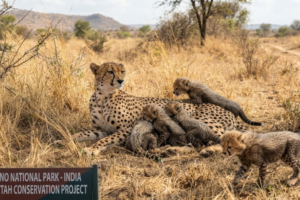
India’s flagship wildlife conservation initiative, Project Cheetah, achieved a historic milestone today as a two-and-a-half-year-old female cheetah brought from Botswana gave birth to four healthy cubs in the wild at Madhya Pradesh’s Kuno National Park. The arrival of the new litter has pushed India’s total cheetah population to 62, further solidifying the country’s emergence as a premier global destination for big-cat safaris and eco-tourism.
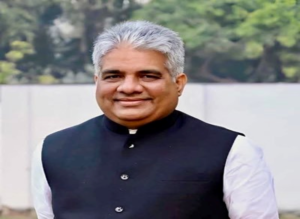
Union Minister for Environment, Forest and Climate Change, Shri Bhupender Yadav, shared the news on social media, identifying the mother as KOMG 3. Notably, KOMG 3 is the first female cheetah translocated from Botswana to reproduce in India. Prior to giving birth under completely natural conditions, she had spent over four months roaming free in the wild, demonstrating remarkable adaptation to the Indian grassland and dry deciduous forest landscape.
This marks only the second recorded birth in the open wild—outside of protected acclimatisation bomas—since the ambitious reintroduction programme was launched in September 2022. With these four new additions, the number of Indian-born cheetahs has risen to 43 out of the total 62, signalling a critical shift toward a self-sustaining, multi-generational population.
https://x.com/byadavbjp/status/2123636905564635245?a=Nzmxb1GK3HXJbDyaA8Q&s=20
A Milestone for Conservation and Eco-Tourism:
Declared extinct in India in 1952, the cheetah’s return has transformed the wildlife tourism circuit in central India. Since the initial translocation of cheetahs from Namibia in 2022, followed by subsequent batches from South Africa and Botswana, Kuno National Park in Madhya Pradesh has seen a steady surge in domestic and international travellers eager to witness the world’s fastest land animal in an Indian habitat.
For the travel and hospitality sector, natural births in the wild are particularly significant. Unlike animals raised in captivity or large enclosures, free-ranging cheetahs and their offspring exhibit natural hunting, territorial, and maternal behaviours, offering wildlife enthusiasts and photographers an authentic safari experience. Furthermore, expanding the genetic pool through the Botswana lineage ensures the long-term ecological health of the population, guaranteeing sustainable wildlife tourism prospects for decades to come.
Perseverance Behind the Scenes:
In his statement, Minister Bhupender Yadav described the birth as a “landmark moment” and a “proud milestone” in India’s journey to restore a viable cheetah population. He emphasised that every successful litter reinforces global confidence in India’s conservation model while serving as a reminder that ecological restoration demands patience, perseverance, and collective effort.
The Minister also extended his appreciation to the ground teams whose round-the-clock efforts made the milestone possible. “Behind this milestone lie countless hours of dedication, commitment and hard work by the managers, veterinarians, frontline forest staff and everyone working tirelessly for the success of Project Cheetah,” Yadav noted. Managing free-ranging cheetahs requires sophisticated satellite-collar tracking, constant prey-base management, and non-intrusive veterinary monitoring to ensure both the mother and her vulnerable newborn cubs thrive in the wild.
Planning a Visit to Kuno National Park:
As Kuno National Park continues to make international headlines, travel operators anticipate heightened demand for the ongoing winter safari season. Located in the Sheopur district of Madhya Pradesh, Kuno is easily accessible via Gwalior (approximately 165 km away) and Jaipur (approximately 270 km away).
While the newborn cubs and KOMG 3 will remain under strict, non-intrusive surveillance by forest officials to ensure their safety during the crucial early weeks, tourists visiting Kuno can explore designated buffer and tourism zones—such as Tiktoli, Peepalbawdi, and Ahera—where other adult cheetahs, alongside leopards, sloth bears, and rich birdlife, are regularly spotted.
With 62 cheetahs now thriving across the landscape, India’s Project Cheetah stands not only as a triumph of modern wildlife science, but also as a powerful catalyst for responsible, conservation-led travel.

Advertisement:













Add Comment