





BY AMRAPALI CHAKRABORTY
BHOPAL | 7 OCTOBER 2026
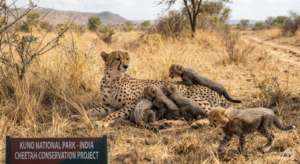
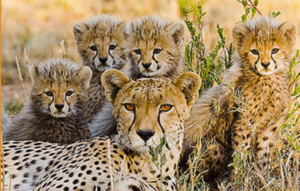
The total cheetah population in India has risen to 60 following the birth of five healthy cubs at Kuno National Park in Madhya Pradesh. This major milestone was achieved on October 5, 2026, when a 32-month-old, Indian-born female cheetah named KJP21 successfully delivered the litter. The event is a historic success for India’s ambitious ecological initiative, Project Cheetah, as it solidifies the foundation of a second-generation population completely native to Indian soil.
With this new addition, 41 out of the 60 cheetahs currently thriving in the country were born in India, showcasing a massive shift from the program’s early reliance on translocated adult cats from Africa.
A New Genetic Chapter: The Botswana Lineage
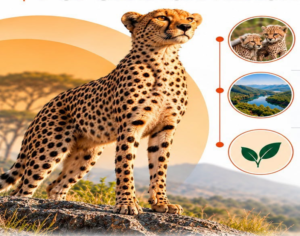
The birth of these five cubs does not just represent a rise in quantity; it marks a pivotal qualitative breakthrough for the project’s long-term sustainability. The cubs’ father is a male cheetah translocated from Botswana, making these newborns the first ever to introduce the Botswana genetic lineage to Indian turf.
Previously, the genetic pool within Kuno National Park was largely reliant on the founding groups brought over from Namibia and South Africa during the initial phases of the reintroduction program in 2022 and 2023. By successfully cross-breeding an Indian-born female with a Botswanan male, conservationists have successfully injected much-needed genetic diversity into the local population. High genetic diversity is widely considered by wildlife biologists to be the single most critical factor in protecting small, localized populations from inbreeding depression and ensuring resilience against localized disease outbreaks.
The Triumph of Second-Generation Mothers:
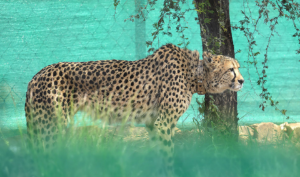
The mother of the cubs, KJP21, has carved her name into conservation history. At just 32 months old, she is the third Indian-born female cheetah to successfully reproduce in the wild, following in the footsteps of preceding mothers Mukhi and KGP12.
When Project Cheetah was initially conceptualised, critics voiced deep concerns regarding whether cubs born in semi-captive or heavily monitored conditions would possess the maternal instincts necessary to rear their own litters in the wild. The successful rearing behavior displayed by KJP21, alongside her predecessors, comprehensively refutes those early anxieties. It proves that the captive-born generation can adapt flawlessly to the cyclical pressures of wild survival, hunting, and parenting in the Indian landscape.
Union Minister for Environment, Forest and Climate Change, Shri Bhupender Yadav, celebrated the event on social media platforms, emphasizing that this development signals the solid emergence of the next generation of India’s apex grassland predators. Madhya Pradesh Chief Minister Mohan Yadav also extended warm congratulations to the field staff, veterinarians, and wildlife management teams whose round-the-clock monitoring and habitat security measures made this milestone possible.
Overcoming Early Setbacks:
The road to hitting a population of 60 has been anything but smooth. When the world’s first intercontinental large carnivore translocation project began in late 2022, it was met with immense global scrutiny. The project faced severe challenges during its first two years, enduring the tragic losses of several adult African cheetahs and newborn cubs due to factors ranging from harsh weather adaptations, spatial conflicts, and localized infections to unexpected skin lacerations beneath monitoring collars.
However, the team at Kuno National Park shifted strategies dynamically, altering monitoring frequencies, augmenting veterinary interventions, and improving prey-base management within the park enclosures. The current exponential rise in Indian-born cubs validates these adapted protocols, demonstrating that the initial mortality rate was part of an expected, albeit painful, stabilization phase for a newly introduced species.
The Path Forward for Project Cheetah:
With 60 cheetahs now residing within the country, Kuno National Park is rapidly approaching its optimal carrying capacity for a single enclosed ecosystem. To sustain this momentum, wildlife authorities are already planning the next phase of the restoration journey, which includes establishing secondary habitats to prevent overpopulation and territorial fights within Kuno.
Regions like the Gandhi Sagar Sanctuary in Madhya Pradesh are being heavily prepared with fencing, security upgrades, and prey-stocking programs to receive cheetah groups in the near future. This geographical decentralization will be vital to safeguard the species against potential localized natural disasters or epidemics.

Advertisement:













Add Comment