







TTT NEWS NETWORK
BHOPAL| 28 AUGUST 2026
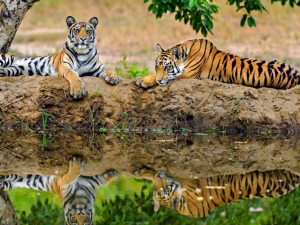
Veerangana Durgavati: The Rising Heart of the Vindhyan Wilds Deep within the ancient folds of the Vindhya Range, a new wilderness narrative is unfolding—one that slips quietly past the famous, well-trodden tracks of Panna and Bandhavgarh. Established as a sanctuary of scale in 2023, the Veerangana Durgavati Tiger Reserve has quietly claimed its title as the largest tiger reserve in Madhya Pradesh.
Yet, it isn’t merely the vastness that leaves you breathless; it is the sheer character of the landscape. This is the “Savannah of Central India.” Here, the dense, suffocating canopy of traditional jungles gives way to sun-bleached, rocky terrains and sweeping, golden meadows. Sparse teak forests mingle with dry, twisted deciduous trees, opening up the horizon and offering an intimate clarity for wildlife tracking. It is a dynamic, raw ecosystem that invites travelers to step off the map and explore a forgotten side of the wild. Spanning 2,339 square kilometers across the rugged districts of Sagar, Damoh, and Narsinghpur, this forest is named after Rani Durgavati—the legendary warrior queen whose fierce spirit seems to echo through the gorges. For the soul weary of urban concrete, this hidden gem replaces the grating roar of city traffic with the deep, rhythmic sigh of the wind through the tall grass.
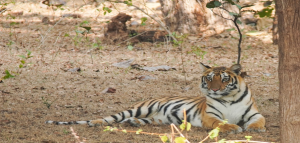
The Pulse of Conservation: A Crucial Corridor: Veerangana Durgavati is far more than a sanctuary; it is a vital ecological bridge. Perched high on the upper Vindhyan plateau, it breathes life into the space between the Ganga and Narmada river basins. It serves as an essential wildlife corridor, allowing tigers and long-ranging mammals to roam freely between Panna, Ratapani, and the Satpura Tiger Reserves.
The reserve’s modern renaissance is anchored in a poignant success story. In 2018, a bold reintroduction program began with the release of an orphaned tigress, N1, and her mate, N2. Today, the forest has truly claimed them as its own. In less than a decade, that solitary pair has blossomed into a thriving population of over 25 tigers, proving that this rugged plateau is a place where the kings of the jungle can truly heal, multiply, and rule.
A New Horizon: Whispers of the Cheetah : In a historic move that places this reserve at the vanguard of global conservation, the golden plains are preparing for a new royalty. Officially notified under the national Cheetah Project alongside Kuno and Gandhi Sagar, Veerangana Durgavati is slated to become India’s next grand habitat for the world’s fastest land mammal, with the first cheetah clans expected to claim these sweeping savannahs as their home.
A Symphony of the Wild: Beyond the Stripes : While the tiger commands the headlines, the true magic of this ancient plateau lies in the intricate, co-existing tapestry of life that thrives in its shadows:
• The Ghostly Packs: Unlike the dense forests of the east, these rocky scrublands are the domain of the Indian Grey Wolf. Watching a pack move effortlessly across the open plateau is a rare, thrilling spectacle, making this one of the premier destinations in India for wildlife photography.
• Shadows on the Cliff: The jagged, vertical rock faces provide a perfect, layered fortress for leopards, who claim the high ground in the park’s predatory hierarchy.
• The Lesser Hunters: The grass hides a stunning diversity of smaller carnivores—from jackals and foxes to jungle cats and the elusive, beautifully spotted rusty-spotted cat.
• The Silent Keepers: While scavenger populations dwindle across modern India, this reserve protects a robust, healthy community of striped hyenas, wild pigs, and vultures, working quietly to maintain the pristine balance of the forest.
• Winged Wonders: For birdwatchers, the reserve is a theater of motion and melody. The branch-lines sparkle with the ribbon-like tail of the Indian Paradise Flycatcher—Madhya Pradesh’s state bird—while Crested Serpent Eagles scan the earth from high above. The banks of the Bamner River are alive with storks and kingfishers, and the skies hold seven distinct species of vultures, ranking the park among the top three vulture havens in the state.
• The Living Mosaic: As the monsoon retreats, the forest trails dissolve into a breathtaking kaleidoscope. Thousands of brilliant butterflies hatch simultaneously, creating a fluttering, colorful mosaic that serves as a living thermometer of the ecosystem’s superb health.
Hidden Marvels of the Plateau:
Beena Barha: Tucked near Deori in the Sagar district, this serene Jain pilgrimage site (Atishaya Kshetra) offers a profound spiritual pause, home to a magnificent, historic 18-foot idol of Bhagwan Shantinath. Chakai Nala: A gentle, interior forest stream where you can cut the engine, sit in silence, and listen to the raw, untouched heartbeat of the reserve.
Wayfinding
• By Road: A scenic drive connects the gates to Sagar (70 km), Damoh (70 km), Jabalpur (95 km), and Narsinghpur (110 km).
• By Rail: Well-connected railway junctions operate out of Sagar, Damoh, and Jabalpur, linking the wilderness to major Indian cities.
• By Air: Jabalpur Airport (JLR) sits roughly 95 kilometers away, serving as the primary commercial flight gateway. Where to Rest
• Mohli Forest Rest House: To truly hear the rhythm of the jungle, leave the luxury resorts behind. Nestled in Mohli village, this historic rest house is the literal heart of the reserve, offering an authentic, immersive stay where the wild comes right to your doorstep.
A Note for the Purist – Veerangana Durgavati is a breath of fresh air. Free from the aggressive commercialization and jeep-crowded trails of older parks, it remains a quiet, unhurried sanctuary for those who wish to experience the Indian wilderness exactly as nature intended: raw, real, and beautifully untamed.

Advertisement:















Add Comment