




TTT NEWS NETWORK
BHOPAL | 19 MAY 2026
Embark on a journey through the cultural landmarks of Madhya Pradesh, where every artefact reverberates with the echoes of history. These esteemed repositories provide a profound exploration of the region’s rich legacy, each revealing distinct aspects of its heritage. Through this voyage, one gains a deeper understanding of Madhya Pradesh’s vibrant past and enduring cultural significance.
To highlight the rich history of Madhya Pradesh, including its emperors, great personalities, freedom fighters, and art traditions, museums are being established across various districts of the state. These museums will feature a beautiful collection of ancient artifacts, historic weapons, manuscripts, and rare paintings. Dedicated galleries will also depict the diverse cultural traditions of Madhya Pradesh. These museums are expected to emerge as vibrant cultural centers for researchers, students, and tourists alike.
City Museum, Moti Mahal (Bhopal):
The Madhya Pradesh Tourism Board is establishing a modern City Museum (Tourist Interpretation Center / Citizen Engagement Center) at the historic Moti Mahal in Bhopal.
Located directly opposite Sadar Manzil, this heritage building will become a center for presenting the state's cultural identity in a dynamic and interactive manner. Unlike traditional museums, this center aims not only to preserve and display historical artifacts but also to foster deeper connections to history, culture, and identity through citizen and tourist engagement.
The museum will feature both tangible and intangible experiences that reflect Bhopal’s historical and cultural dimensions—folk tales, natural diversity, spiritual heritage, and social life.
It will present Madhya Pradesh’s biodiversity, cultural legacy, historical narratives, and natural beauty in an integrated manner, further strengthening the state’s identity as the “Heart of India”.
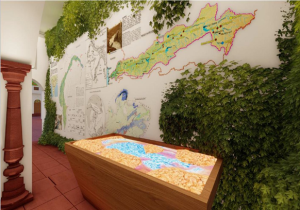
Eleven Galleries in City Museum: The museum will house 11 thematic galleries. One of them, titled Mahakautar and Taal (City of Lakes), will showcase the geographical and historical evolution of Madhya Pradesh, including a tactile map of the state and Bhopal district highlighting biodiversity.
Another gallery will be dedicated to Raja Bhoj and his kingdom. The Lifestyle Gallery will recreate scenes of royal courts through historical paintings, featuring Nawabs, Begums, and Bhopali women. Hyper-realistic mannequins will depict court and public gathering scenes.
The Royal Lineage Gallery will chronologically present the genealogy of rulers from the 17th century. A separate gallery will cover the formation of Bhopal as a capital city, narrating the journey from ancient settlements to independence.
A gallery titled Creativity through the Ages will feature maps highlighting craftsmanship, cuisine, and festive traditions. Another will depict the freedom struggle and post-independence events through speeches, photographs, and audio-visuals.
The Smart City Bhopal Gallery will portray the state’s ongoing rapid development. A gallery focused on Bhopal’s diverse communities will display oral records and census data. Women’s contributions will also be highlighted through rare photographs and information panels. The museum will utilize advanced technology, including projection mapping, audio-visual screens, interactive displays, graphic panels, community-created artworks, interactive gaming consoles to understand the Smart City concept, 3D models of Bhopal and surrounding areas, kinetic projection walls, and hyper-realistic mannequins for court scenes.
State Museum, Bhopal established in 1909 AD as the Edward Museum by the rulers of Bhopal state, the museum has undergone several transformations over the years. In 2005, it was inaugurated in its current form in a newly constructed building, now considered one of the prominent tourist attractions in the region.
The State Museum houses an impressive collection of outstanding art pieces and rare antiquities, showcasing the rich cultural heritage of Madhya Pradesh. Spread across 17 galleries, the museum covers a wide range of subjects, including thematic galleries, prehistory & fossils, excavated materials, metal images, inscriptions, sculptures, royal collections, textiles, freedom movement, postal stamps, autographs, manuscripts, paintings, coins, weapons, documents from the mediaeval age, rare musical instruments, and other objects of archaeological and historical significance.
Visitors to the museum will be mesmerized by the precious artefacts on display, including statues of Goddess Lakshmi and Lord Buddha, as well as images of Lord Brahma, Lord Vishnu, Lord Shiva, and Goddess Parvathi. The museum also boasts an impressive collection of paintings from different schools, as well as copies of paintings from the Bagh caves.
Timings: 10:00 AM – 5:00 PM, Closed on Mondays & Government holidays
Raja Bhoj Dedicated Museum
The Department of Culture and Tourism, Government of Madhya Pradesh, has proposed a dedicated and comprehensive museum in the right wing of Moti Mahal to honor the life and contributions of the great Paramara ruler, Raja Bhoj. This museum will bring his historical legacy to life for future generations.
Geological Park, Lametaghats – Bhedaghat (Jabalpur)
The proposed Geological Park in Madhya Pradesh will display the state’s rich geological heritage in a well-organized and scientifically curated environment. The park will showcase permanent exhibits of rocks, fossils, and minerals, along with life-sized replicas depicting the state’s diverse geological formations. Fossil-rich areas like the banks of the Narmada River will receive special focus.
The park aims not only to educate visitors about geological history but also to raise awareness about past, present, and future geological activities. Through folklore and cultural contexts, it will also highlight the deep connections between geology and human civilization. This park will be an educational and inspirational center for future generations by preserving and showcasing Madhya Pradesh’s rare fossil wealth. It will offer an awe-inspiring experience of nature’s scientific journey to students, researchers, and the general public.
Central Museum:
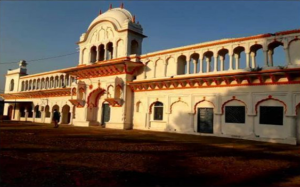
The Central Museum boasts two galleries. Gallery I showcases artefacts from the prehistoric period, including stone tools, quartz sickles, ornaments, and items of domestic use dating back to 5,000 – 4,000 BC. Gallery II is a treasure trove of Hindu mythological carvings, featuring the finest collection of Parmar sculptures from Hinglajgarh. These sculptures, known for their proportioned figures and intricate ornamentation, depict Harihara, Lord Shiva, Goddess Parvati, and other Hindu deities.
Among the architectural remains preserved in the museum, the most remarkable is a door frame adorned with richly carved figures and ornamentation. Visitors can also marvel at a red- brick model of a Vishnu temple from Sirpur, Chhattisgarh and a beautiful sculpture of the Jain Tirthankara Adinatha from the 13th century, situated at the entrance of the museum. Indore Established in the year 1929, the Central Museum was created to preserve the antiquities found in the region of the former Holkar State. As you step into the museum, you will be greeted by a treasure trove of artefacts ranging from prehistoric to the modern era. The museum houses a remarkable collection of armour, arms, and ammunition of the Holkars, providing insight into the region’s martial history.
One of the main highlights of the Central Museum is an 8 m-high statue of Lord Ganesh, a magnificent sight that leaves visitors in awe.
Timings: 10:00 AM – 5:00 PM, Closed on Mondays & Public Holidays
Maharaja Chhatrasal Museum, Dhubela Nestled on the banks of Dhubela Lake, the Maharaja Chhatrasal Museum, popularly known as Dhubela Museum, is a captivating testament to the rich history and cultural heritage of the Bundela dynasty of Khajuraho. Housed in a palace built by Maharaja Chhatrasal himself, this museum offers visitors a fascinating journey through time.
Established in 1955, the museum boasts a rich collection of artefacts, providing invaluable insights into the history, development, and decline of the famous Bundela dynasty. The museum houses eight galleries, with a variety of treasures, from inscriptions and coins to sculptures.
The first two galleries exhibit artefacts from the Gupta and Kalchuri dynasties, showcasing sculptures, paintings, inscriptions, and plates that provide a glimpse into the region’s glorious past. The Jain Gallery features exquisite artwork, including images of Rishabhnath, Gomedh Ambika, Sarvatobhadrika, and Chakreshwari, while the Shaiva and Shakti galleries boast sculptures that reflect Chandela and Kalchuri arts.
One of the highlights of the museum is its collection of sculptures of the Shakti cult, offering a fascinating glimpse into the region's religious practices and beliefs. Visitors can also explore theme-based paintings, garments, weapons, and paintings of the Bundela kings.
Timing: 10:00 AM to 5:00 PM, Closed on Mondays
Gujari Mahal Museum, Gwalior:
Gwalior, renowned for its rich history and architectural marvels, is home to the Gujari Mahal Museum, a must-visit for history enthusiasts. Built in the 15th century by Raja Man Singh for his beloved queen, Mrignayani, the palace was transformed into a museum in 1922, and now houses a treasure trove of centuries-old artefacts.
Gujari Mahal boasts an extensive collection of sculptures, coins, pottery, terracotta figurines, paintings, inscriptions, and weapons. Highlights include sculptures like Yaksha Mani Bhadra and Mahisasuramardini, Gupta-period panels, and terracotta figurines from Pawaya. The museum also features rare inscriptions, a diverse coin collection, mural replicas from the Bagh caves, and miniature paintings from various styles. Explore weaponry, pottery, and other artefacts from ancient civilizations.
Timing: 10:00 AM to 5:00 PM (closed on Mondays and Government holidays).
Museum of Music (Gwalior)
In a landmark initiative to preserve and promote the legacy of Indian classical music, a state-of- the-art music museum is being set up in Gwalior—widely regarded as the cultural capital of India. Located in the historic Moti Mahal complex, the museum aims to connect future generations with Gwalior’s rich musical heritage.
Transforming Moti Mahal into a vibrant cultural hub, the museum will integrate storytelling, technology, and art. Key features will include stories related to Indian music and musicians, interactive displays, digital audio-visual galleries, murals depicting ragas and raginis, and vibrant mosaic artworks made of colored glass.
The design will provide an engaging and educational experience for children, students, researchers, and music enthusiasts. The museum will tell the story of the Gwalior gharana’s contributions and the evolution of Indian classical music in a captivating way. By blending traditional heritage with modern technology, it will not only preserve cultural assets but also introduce youth to the beauty of Indian music.
Diamond Museum (Panna):
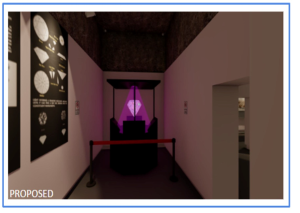
Panna district, historically recognized as the “Diamond Capital of India” due to its ancient diamond mining legacy, is now witnessing the establishment of a dedicated Diamond Museum.
Historical records affirm Panna’s status as a central hub of traditional diamond trade. The museum will preserve this rich legacy while showcasing the cultural, historical, and economic significance of diamonds. It will exhibit historical tools, ornaments, and visual narratives related to Panna’s diamond tradition. Through interactive displays, guided tours, workshops, and lectures, the museum will educate visitors of all ages.
The process of diamond mining, cutting, and polishing will be presented in an engaging manner, along with its scientific and aesthetic aspects. The museum will become a prominent cultural attraction and will add a new dimension to Panna’s tourism potential.
Rani Durgawati Museum, Jabalpur Located just 2 km from Jabalpur Junction, the Rani Durgawati Museum is a must-visit in Jabalpur, Madhya Pradesh. Established in 1976 to honour the brave Gond queen Rani Durgawati, who sacrificed her life for her motherland, the museum is a treasure trove of historical and cultural artefacts.
The double-storeyed building greets visitors with a sculpture of Rani Durgawati on an elephant and paintings of her life. Inside, you'll find several galleries showcasing a variety of artefacts.
The Shaiva Gallery features the eight-armed dancing Lord Ganesha and Kalachuri period sculptures. The Vaishnava Gallery houses Lord Vishnu sculptures, while the Jaina Gallery displays Jain Tirthankaras. The Apsara and Dikpal Gallery on the first floor contains figures reflecting Kalachuri art traditions.
Tulsi Museum Ramvan, Satna Just 16 km from Satna district headquarters, Tulsi Museum Ramvan is a hidden gem for history enthusiasts. Established by Seth Babu Sharda Prasad Ji in memory of his father, the museum began collecting artefacts in 1936, leading to its official formation in 1959 under the Manas Sangha Trust. The museum was donated to the Department of Archaeology and Museums of Madhya Pradesh in 1978 and now houses 2,368 objects across nine rooms.
The collection includes stone sculptures, metal images, copper plates, inscriptions, and coins from significant sites such as Bharhut, Bhumra, and Khajuraho. Notable galleries include the Bharhut Gallery with 81 artefacts from the Buddhist stupa site, the Gupta Period Gallery with sculptures of Lord Shiva and Lord Parshwanath, and the Jaina Gallery with Kalchuri period figures of Tirthankaras.
Other highlights include the Saiva and Vyantara Deities Gallery with sculptures of Uma- Maheshwar and Veenadhari Shiva, and the Vaishnava Gallery featuring Lord Vishnu and his incarnations. The reserve collection boasts two miniature stupas from the Gupta period and numerous sculptures representing various religious traditions.
The museum’s coin collection features 1,135 pieces from the Kushana, Naga, Gupta, Mughal, and regional periods. The Tulsi Library, with 25,000 books and 2,500 ancient manuscripts, offers texts on Vedic literature, mythology, Vaishnava, Saiva, Shakta, Tantra-Mantra, Jainism, Buddhism, Islam, Christianity, and modern literature.
Timings: 10 AM to 5 PM (closed on Mondays and government holidays).
Madhya Pradesh’s state museums are not just buildings filled with artefacts; they are gateways to a glorious past that shaped the present and continues to inspire the future. Each museum offers a unique perspective, from the intricate sculptures of the State Museum in Bhopal to the historical treasures of the Central Museum in Indore, and the regal artefacts of the Maharaja Chhatrasal Museum in Dhubela.
The Tribal Art Gallery highlights the culture of the Gond and Baiga tribes. The first floor also features letters written by Mahatma Gandhi and original photographs of him and other freedom fighters. The Inscription Gallery displays rare inscriptions from the 5th to 12th century AD and a collection of coins dating from the 2nd century BC to 1600 AD.
Timings: 10 AM to 5 PM (closed on Mondays and government holidays).
Adivart Tribal & Folk Art Museum in Khajuraho:
When you wish to explore the Adivart Tribal Museum in Khajuraho you must embark on a journey that would transport you deep into the vibrant world of Madhya Pradesh’s indigenous tribes. This museum, nestled in the heart of Khajuraho, is a treasure trove of cultural richness, offering visitors a two-fold experience. Divided into two parts, it houses a mesmerizing tribal village showcasing the homes of seven major tribes of Madhya Pradesh and an immersive museum that delves into the lives, art and culture of these fascinating communities.
Journey begin with a visit to the tribal village, where you have the privilege of stepping into the homes of seven prominent tribes: Bhil, Gond, Bharia, Kol, Sahariya, Baiga and Korku. Each house was a living testament to the tribe’s unique way of life and their profound connection with nature.
The Bhil tribe’s house welcomed with open arms, adorned with vibrant Bhil paintings that covered its walls. Every corner of the house was meticulously equipped with utensils, furniture and tools that reflected the Bhil people's daily existence. Terracotta utensils and grain cleaning tools highlighted their deep-rooted connection with Mother Nature.
Moving on to the Gond tribe’s house, you will be captivated by Bhitti Chitr, the intricate wall art that adorned their home. Among the treasures within was a fascinating ancient GPS – Khatkhata, used to track their cattle. We also discovered Doriya, a beautifully covered basket used during weddings to send food from the bride’s side. Ancient musical instruments like Chikara, an ancestor of the guitar, showcased the tribe’s rich artistic heritage.
Baiga houses, often built around a central courtyard, are characterised by a triangular roof and high fences to protect against wild animals. The wooden doors and clay wall decorations showcase the craftsmanship of the Baiga people. As we explored the Baiga house, we had the pleasure of witnessing Savni Ji, a national awardee, diligently coating the floor with cow dung, a tradition upheld every 2-3 days to maintain cleanliness. Savini Ji decorated the walls herself and her artistry added a special charm to the house.
The House of Bharias was constructed using wood, straw and bamboo sheets, which the tribe actually source from nearby forests. Bharias, a.k.a. the masters of handcrafted homes, construct their abode in flat regions. The house had a big room with a kitchen on one side. The room was divided into compartments made of clay and bamboo sheets.
Kol house was made using mud and straw and is called “Madhia” or hut. The abodes of the Kol tribe are designed to encourage group living. Each house is divided into compartments, housing the kitchen, sleeping area and essential daily items.
Sahariya hut was constructed from straw, bamboo, wood and mud walls that perfectly reflected their minimalist yet functional approach to life. Sahariya women, renowned for their decorative artistry, adorned the walls with beautiful clay motifs.
The house of Korku was the only two-storeyed house with a carved ‘mohra’ door with two frames that opened to Osari, the living room, which was a long and big room. One of the best features of the Korku house was the unique layout with three main parts: Tala Osari- the front, Manjota – the middle part, and Tala Ura – the back part. Manjota was divided into two parts- in which one part Baranda or Dana Kholi was a windowless room for keeping grains, which can be entered only from the back of a kitchen.
A Dive into Tribal Culture at the Museum After immersing ourselves in the tribal village, we made our way to the museum within the same premises. The vibrant Sanja Art welcomed us into a world of jewellery, tattoos and every detail of tribal life in Madhya Pradesh. The museum provided an in-depth understanding of these culturally enriched communities, showcasing their paintings, musical instruments and the simplicity with which they embrace life.
The captivating displays included intricate dolls that depicted the tribes’ contented lives with minimal resources and their innovative use of nature’s gifts. The museum also featured striking images showcasing the tribes’ beautiful existence.
For those looking to savour the flavours of Madhya Pradesh, the museum also has a canteen that serves Bundeli Cuisines like Dubri, Murka, and Kucha, all made using Mahua. Visitors can also indulge in some retail therapy at Chinhari, the museum’ souvenir shop, which offers a variety of handicrafts, including bell metal, Gond paintings, Pithora paintings, and more.
Additionally, the museum hosts various exhibitions, allowing visitors to delve even deeper into the rich culture of Madhya Pradesh's tribal communities.
A visit to the Adivart Tribal Museum in Khajuraho is not just a sightseeing experience; it’s a journey into the soul of Madhya Pradesh’s tribal culture. It’s an opportunity to appreciate the rich diversity, simplicity and artistry that define these indigenous communities. So, if you find yourself in Khajuraho, don’t miss the chance to embark on this enriching cultural adventure.
Timings: 12:00 Noon to 8 PM. Closed on Mondays and Government of India Declared Holidays.
Museum of Natural Wooden Sculptures – Preserving the Art of Nature Small efforts give you little motivation and little motivation can further take you to achieve greater heights. Well that’s been the case with Munnalal Vishwakarma who never knew that his ability to imagine just a normal looking piece of wood into a certain specific form could help him come up with a museum. Though Vishwakarma never attended school but all that he had with him was an eye, keen observational skills to see ordinary wooden pieces into animal forms, birds, reptiles, God etc.
Munnalal Vishwakarma is a skilled artist from Vidisha whose collection of wooden sculptures are completely natural, untouched by any tool, or not even polished. Vishwakarma has set up an art gallery :Museum of natural wooden sculptures” on Sanchi road that includes more than 500 natural wooden sculptures. One can see natural wooden sculptures like birds, reptiles, Gods and other various human shapes which have been attracting tourists for their natural shapes and sizes.
Spent his childhood in the rural background, Munnalal has been close enough to nature and has roamed around in villages and jungles. Way back in 1988, when young Munnalal Vishwakarma was roaming around in a jungle, he spotted a piece of wood that resembled a Banyan tree.
“Then it was no looking back for Munnalal and he decided to keep hunting for such natural art forms. Prior to 2006 he used to work as a laborer and also hunt for such wooden pieces simultaneously but now he devotes his time adding these natual sculptures to the museum,”shared Munnalal Vishwakarma.
Hs credit were paid off well when Munnalal Vishwakarma marked his place in Limca Book of world records and India Book of records. Munnalal’s efforts in the direction of preserving these natural art forms certainly inspires us to respect nature.
Whether you’re an avid history buff, a casual explorer, or a curious traveler, dive into the stories of ancient dynasties, marvel at timeless art, and witness the evolution of culture and tradition that make Madhya Pradesh a true treasure trove!

Advertisement:














Add Comment