







(On World Lion Day, Union Environment Minister reaffirms India’s commitment to Wildlife and Biodiversity Conservation)
BY DEBASHREE CHAKRABORTY
NEW DELHI | 10 AUGUST 2026
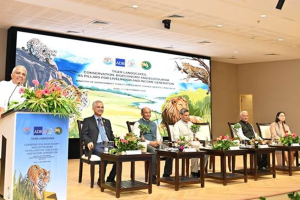
On World Lion Day (10 August 2026), Union Minister for Environment, Forest and Climate Change, Shri Bhupender Yadav, applauded India’s milestone achievements in lion conservation, reiterating the nation’s dedicated focus on preserving wildlife and ecosystems.
Highlighting the global scale of the mission, Lok Sabha Speaker Om Birla shared that the 2026 theme, “Conserving and restoring lions and their natural habitats through global collaborative efforts,” underscores the need for international unity to safeguard endangered big cats, build secure migratory corridors, and mitigate rising human-wildlife conflict.
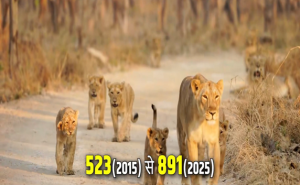
In a celebratory social media post, Minister Yadav revealed that India’s Asiatic lion population surged from 523 in 2015 to 891 in 2025. He credited this remarkable conservation success to the relentless, collaborative efforts of forest personnel, wildlife experts, and local communities who work on the frontlines to protect the species.
India’s successful conservation of the Asiatic Lion highlights its strong commitment to wildlife and biodiversity. The government remains resolved to protecting this natural heritage, ensuring future generations continue to hear the lion’s roar.
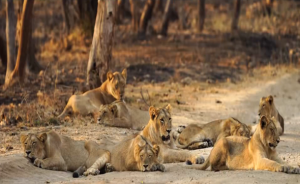
Union Minister of State (EFCC), Shri Kirti Vardhan Singh, noted on social media that India has proven development and nature can coexist. This success stems from safeguarding critical habitats, enhancing conservation initiatives, and encouraging community coexistence.
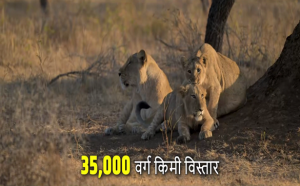
To secure the long-term survival of the species, Prime Minister Shri Narendra Modi launched ‘Project Lion’ on August 15, 2020. Since its launch, the Asiatic Lion’s habitat range has expanded from approximately 30,000 square kilometres to nearly 35,000 square kilometres.
This project takes a holistic, landscape-scale approach to biodiversity conservation. It integrates habitat improvement, wildlife disease monitoring, and veterinary support with scientific population tracking. Furthermore, the initiative leverages technology-aided interventions, strengthens protection measures, and ensures community involvement through equitable benefit sharing.
Monday, August 10, marks World Lion Day 2026, triggering a global call to action to protect the world’s dwindling big cat populations and halt severe habitat loss.
Originally launched in 2013 by conservationists Dereck and Beverly Joubert alongside National Geographic, the annual initiative rallies international support for both African and Asiatic lions. Wildlife experts warn that urgent intervention is critical. Fewer than 25,000 lions now remain in the wild, confined to a devastating 6% of their historic baseline range.
In a stark contrast to their solitary feline counterparts, lions remain the world’s only truly social big cats. While species like tigers, leopards, and jaguars maintain strictly isolated hunting behaviours, lions break the evolutionary mold by operating within highly structured family units known as prides.

Advertisement:

















Add Comment