


( The feature article that talks about Zostel’s journey in Bir and our perspective on Kangra’s evolving tourism landscape, responsible mountain tourism, and the region’s potential for the future)
TTT NEWS NETWORK
KANGRA | 5 SEPTEMBER 2026
Over a decade ago, we chose Bir as the home of our first hostel in Himachal, at a time when it was still a quiet village known largely to a small community of paragliders and long-term backpackers. There was no blueprint for building hospitality in a region that was only beginning to find its place on India’s tourism map. What guided us instead was a simple belief: that Kangra with its mountains, trails, open skies and distinct way of life was a place that deserved to be experienced thoughtfully and responsibly, rather than simply passed through.
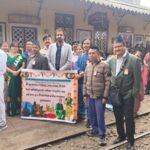
That belief feels newly relevant with the appointment of Shri Sandeep Kumar as Secretary, Tourism and Civil Aviation, Government of Himachal Pradesh. A native of Himachal himself, he brings a lived, personal understanding of the state that goes beyond his professional record. Having previously served as Deputy Commissioner of Kangra and later as Divisional Commissioner of the Kangra Division, he brings something the region has long needed: administrative leadership that understands its geography, its communities and its potential from the ground up, not from a policy document.
For those of us who have spent years building on the ground in this region, this distinction matters enormously. Kangra’s tourism economy is not built on large resorts or standardised experiences. It runs on homestays, local guides, small operators and communities who have quietly shaped what responsible mountain travel looks like long before the term became fashionable. Leadership that understands this texture is leadership that can actually move the needle.
The Chief Minister’s vision of positioning Kangra as Himachal’s tourism capital is ambitious, and rightly so. Bir alone has grown into one of the world’s most recognised paragliding destinations, drawing travellers not just for the adventure but for the slower, more grounded way of life that surrounds it. This is precisely the kind of asset that regenerative tourism, the model the world is increasingly moving towards, is built on. Not extraction, but exchange. Not volume, but value.
We have also seen, up close, how quickly the traveller is changing. Post pandemic, the Indian traveller is no longer chasing checklists and Instagram worthy vantage points alone. They are staying longer, seeking slower itineraries, and actively choosing destinations where their presence adds value rather than strain. Bir has become a quiet case study on reverse migration in this shift, drawing digital nomads, wellness seekers and repeat travellers who return not for novelty but for a sense of belonging. A tourism economy that recognises and nurtures this shift, rather than defaulting to volume driven growth, stands to build something far more durable for Kangra’s future.
At Zostel, our approach in Bir and across Himachal has always been rooted in this same philosophy: build with the community, not around it. We have watched local livelihoods grow alongside our own, and we have seen firsthand how quickly a place can lose what makes it special when growth outpaces thoughtfulness. It is why we remain optimistic about what this leadership change could mean, not just for Kangra’s tourist numbers, but for the quality and sustainability of what tourism in the region actually becomes.
If Himachal gets this right, Kangra will not just be another destination on a map. It will be a working model for what mountain tourism across India, and perhaps Asia, can look like when ambition is matched with understanding. That is the kind of future worth building towards, and one Zostel is glad to be a part of.

Advertisement:









Add Comment